
Featured Cabins
Itinerary
Civitavecchia, Italy
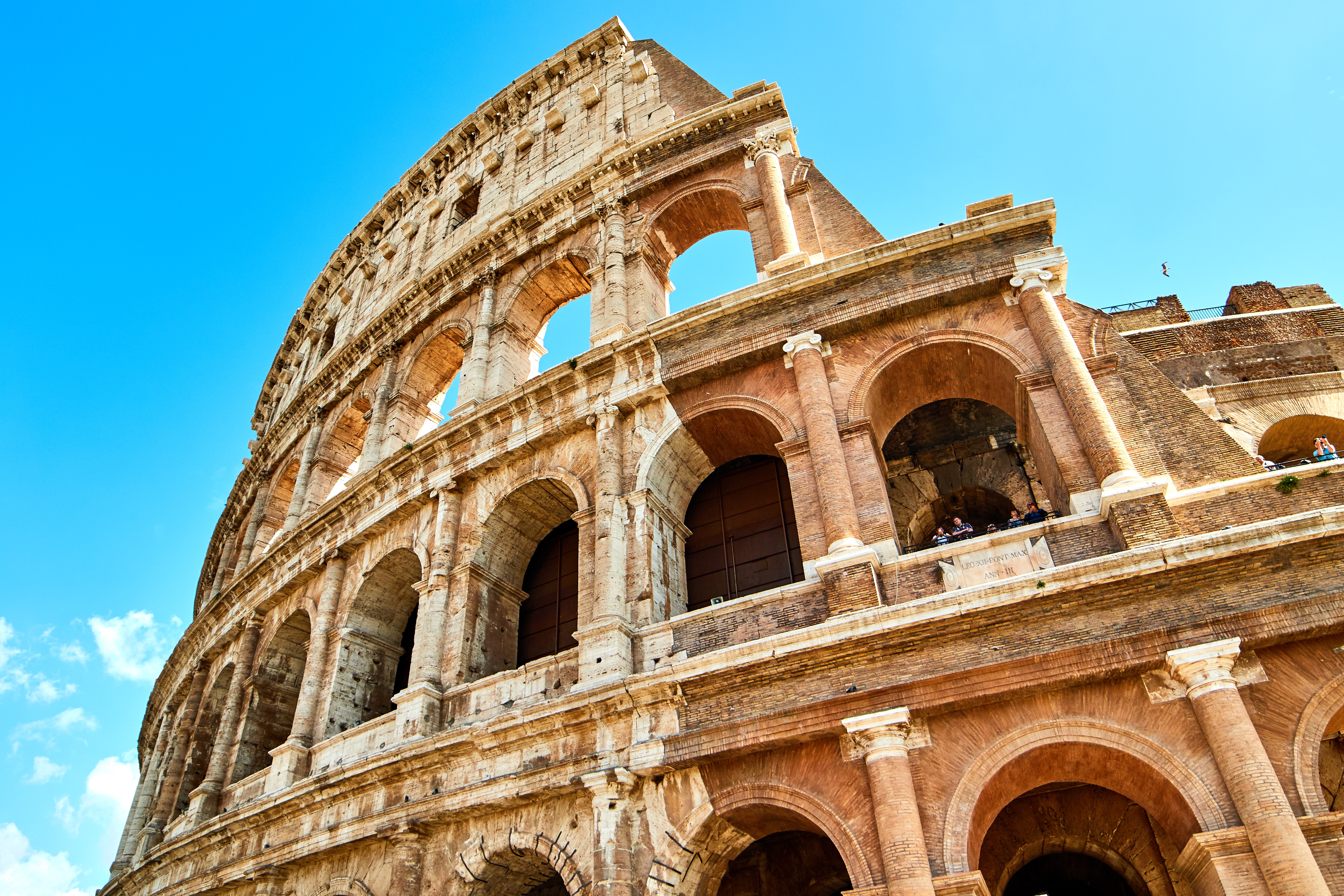
Italy’s vibrant capital lives in the present, but no other city on earth evokes its past so powerfully. For over 2,500 years, emperors, popes, artists, and common citizens have left their mark here. Archaeological remains from ancient Rome, art-stuffed churches, and the treasures of Vatican City vie for your attention, but Rome is also a wonderful place to practice the Italian-perfected il dolce far niente, the sweet art of idleness. Your most memorable experiences may include sitting at a caffè in the Campo de’ Fiori or strolling in a beguiling piazza.
Messina Strait, Italy
Cephalonia, Greece
Corfu, Greece
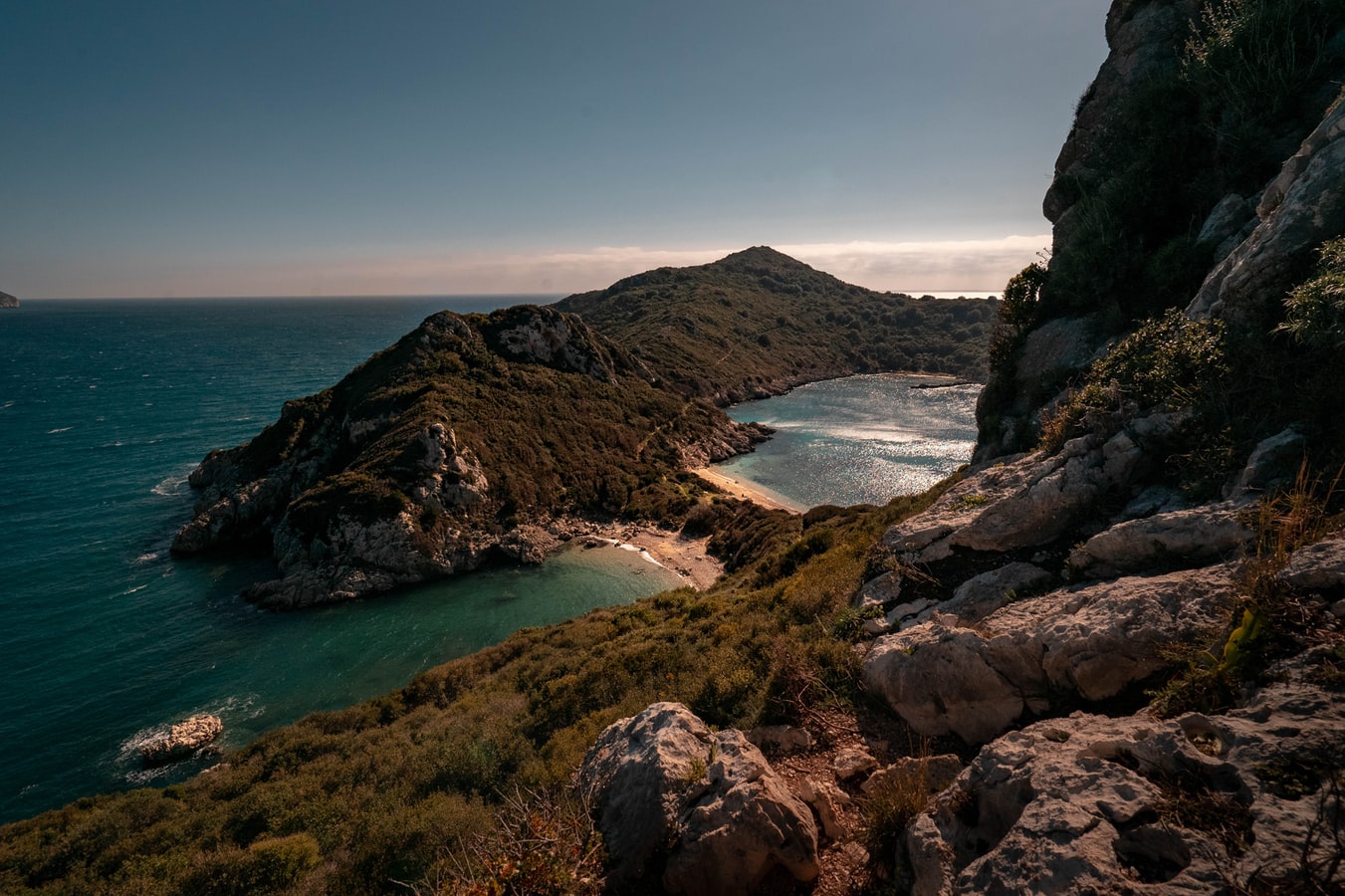
Corfu town today is a vivid tapestry of cultures—a sophisticated weave, where charm, history, and natural beauty blend. Located about midway along the island’s east coast, this spectacularly lively capital is the cultural heart of Corfu and has a remarkable historic center that UNESCO designated as a World Heritage Site in 2007. All ships and planes dock or land near Corfu town, which occupies a small peninsula jutting into the Ionian Sea.Whether arriving by ferry from mainland Greece or Italy, from another island, or directly by plane, catch your breath by first relaxing with a coffee or a gelato in Corfu town’s shaded Liston Arcade, then stroll the narrow lanes of its pedestrians-only quarter. For an overview of the immediate area, and a quick tour of Mon Repos palace, hop on the little tourist train that runs from May to September. Corfu town has a different feel at night, so book a table at one of its famed tavernas to savor the island’s unique cuisine.The best way to get around Corfu town is on foot. The town is small enough so that you can easily walk to every sight. There are local buses, but they do not thread their way into the streets (many now car-free) of the historic center. If you are arriving by ferry or plane, it’s best to take a taxi to your hotel. Expect to pay about €10 from the airport or ferry terminal to a hotel in Corfu town. If there are no taxis waiting, you can call for one.
Kotor, Montenegro
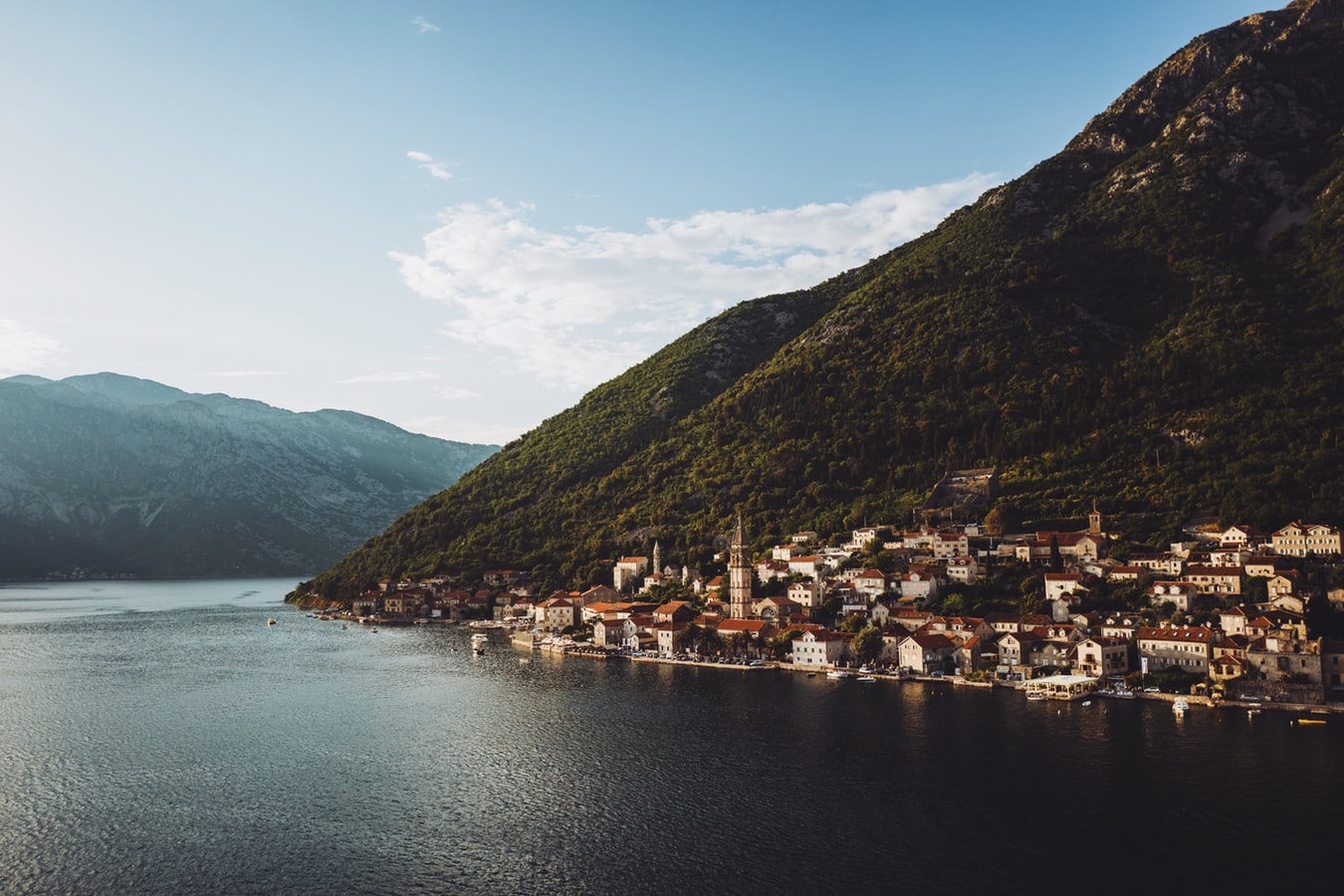
Backed by imposing mountains, tiny Kotor lies hidden from the open sea, tucked into the deepest channel of the Bokor Kotorska (Kotor Bay), which is Europe’s most southerly fjord. To many, this town is more charming than its sister UNESCO World Heritage Site, Dubrovnik, retaining more authenticity, but with fewer tourists and spared the war damage and subsequent rebuilding which has given Dubrovnik something of a Disney feel.Kotor’s medieval Stari Grad (Old Town) is enclosed within well-preserved defensive walls built between the 9th and 18th centuries and is presided over by a proud hilltop fortress. Within the walls, a labyrinth of winding cobbled streets leads through a series of splendid paved piazzas, rimmed by centuries-old stone buildings. The squares are now haunted by strains from buskers but although many now house trendy cafés and chic boutiques, directions are still given medieval-style by reference to the town’s landmark churches.In the Middle Ages, as Serbia’s chief port, Kotor was an important economic and cultural center with its own highly regarded schools of stonemasonry and iconography. From 1391 to 1420 it was an independent city-republic and later, it spent periods under Venetian, Austrian, and French rule, though it was undoubtedly the Venetians who left the strongest impression on the city’s architecture. Since the breakup of Yugoslavia, some 70% of the stone buildings in the romantic Old Town have been snapped up by foreigners, mostly Brits and Russians. Porto Montenegro, a new marina designed to accommodate some of the world’s largest super yachts, opened in nearby Tivat in 2011, and along the bay are other charming seaside villages, all with better views of the bay than the vista from Kotor itself where the waterside is congested with cruise ships and yachts. Try sleepy Muo or the settlement of Prčanj in one direction around the bay, or Perast and the Roman mosaics of Risan in the other direction.
Split, Croatia
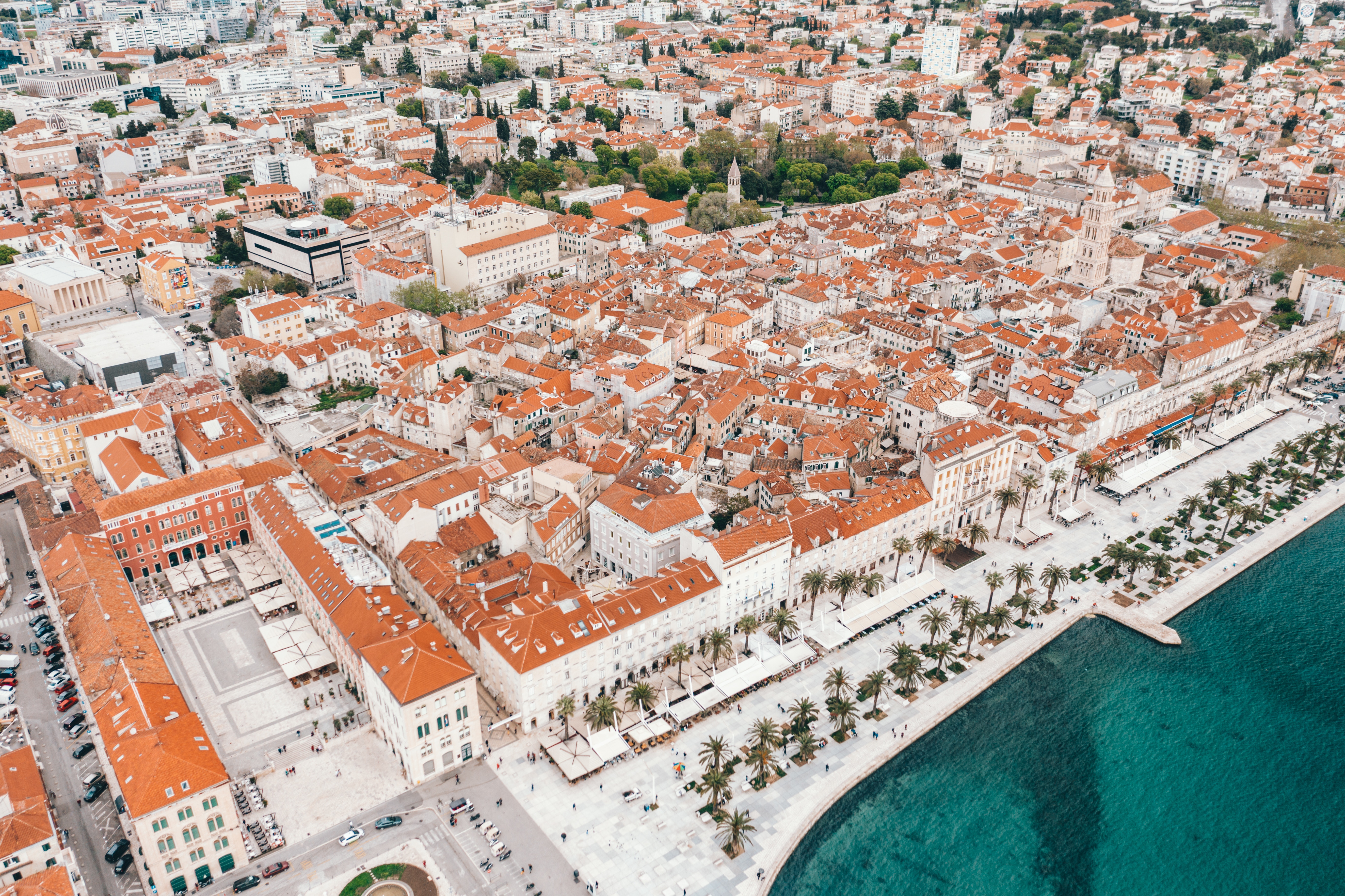
Split’s ancient core is so spectacular and unusual that a visit is more than worth your time. The heart of the city lies within the walls of Roman emperor Diocletian’s retirement palace, which was built in the 3rd century AD. Diocletian, born in the nearby Roman settlement of Salona in AD 245, achieved a brilliant career as a soldier and became emperor at the age of 40. In 295 he ordered this vast palace to be built in his native Dalmatia, and when it was completed he stepped down from the throne and retired to his beloved homeland. Upon his death, he was laid to rest in an octagonal mausoleum, around which Split’s magnificent cathedral was built.In 615, when Salona was sacked by barbarian tribes, those fortunate enough to escape found refuge within the stout palace walls and divided up the vast imperial apartments into more modest living quarters. Thus, the palace developed into an urban center, and by the 11th century the settlement had expanded beyond the ancient walls.Under the rule of Venice (1420–1797), Split—as a gateway to the Balkan interior—became one of the Adriatic’s main trading ports, and the city’s splendid Renaissance palaces bear witness to the affluence of those times. When the Habsburgs took control during the 19th century, an overland connection to Central Europe was established by the construction of the Split–Zagreb–Vienna railway line.After World War II, the Tito years saw a period of rapid urban expansion: industrialization accelerated and the suburbs extended to accommodate high-rise apartment blocks. Today the historic center of Split is included on UNESCO’s list of World Heritage Sites.
Civitavecchia, Italy
Italy’s vibrant capital lives in the present, but no other city on earth evokes its past so powerfully. For over 2,500 years, emperors, popes, artists, and common citizens have left their mark here. Archaeological remains from ancient Rome, art-stuffed churches, and the treasures of Vatican City vie for your attention, but Rome is also a wonderful place to practice the Italian-perfected il dolce far niente, the sweet art of idleness. Your most memorable experiences may include sitting at a caffè in the Campo de’ Fiori or strolling in a beguiling piazza.
Messina Strait, Italy
Cephalonia, Greece
Corfu, Greece
Corfu town today is a vivid tapestry of cultures—a sophisticated weave, where charm, history, and natural beauty blend. Located about midway along the island’s east coast, this spectacularly lively capital is the cultural heart of Corfu and has a remarkable historic center that UNESCO designated as a World Heritage Site in 2007. All ships and planes dock or land near Corfu town, which occupies a small peninsula jutting into the Ionian Sea.Whether arriving by ferry from mainland Greece or Italy, from another island, or directly by plane, catch your breath by first relaxing with a coffee or a gelato in Corfu town’s shaded Liston Arcade, then stroll the narrow lanes of its pedestrians-only quarter. For an overview of the immediate area, and a quick tour of Mon Repos palace, hop on the little tourist train that runs from May to September. Corfu town has a different feel at night, so book a table at one of its famed tavernas to savor the island’s unique cuisine.The best way to get around Corfu town is on foot. The town is small enough so that you can easily walk to every sight. There are local buses, but they do not thread their way into the streets (many now car-free) of the historic center. If you are arriving by ferry or plane, it’s best to take a taxi to your hotel. Expect to pay about €10 from the airport or ferry terminal to a hotel in Corfu town. If there are no taxis waiting, you can call for one.
Kotor, Montenegro
Backed by imposing mountains, tiny Kotor lies hidden from the open sea, tucked into the deepest channel of the Bokor Kotorska (Kotor Bay), which is Europe’s most southerly fjord. To many, this town is more charming than its sister UNESCO World Heritage Site, Dubrovnik, retaining more authenticity, but with fewer tourists and spared the war damage and subsequent rebuilding which has given Dubrovnik something of a Disney feel.Kotor’s medieval Stari Grad (Old Town) is enclosed within well-preserved defensive walls built between the 9th and 18th centuries and is presided over by a proud hilltop fortress. Within the walls, a labyrinth of winding cobbled streets leads through a series of splendid paved piazzas, rimmed by centuries-old stone buildings. The squares are now haunted by strains from buskers but although many now house trendy cafés and chic boutiques, directions are still given medieval-style by reference to the town’s landmark churches.In the Middle Ages, as Serbia’s chief port, Kotor was an important economic and cultural center with its own highly regarded schools of stonemasonry and iconography. From 1391 to 1420 it was an independent city-republic and later, it spent periods under Venetian, Austrian, and French rule, though it was undoubtedly the Venetians who left the strongest impression on the city’s architecture. Since the breakup of Yugoslavia, some 70% of the stone buildings in the romantic Old Town have been snapped up by foreigners, mostly Brits and Russians. Porto Montenegro, a new marina designed to accommodate some of the world’s largest super yachts, opened in nearby Tivat in 2011, and along the bay are other charming seaside villages, all with better views of the bay than the vista from Kotor itself where the waterside is congested with cruise ships and yachts. Try sleepy Muo or the settlement of Prčanj in one direction around the bay, or Perast and the Roman mosaics of Risan in the other direction.
Split, Croatia
Split’s ancient core is so spectacular and unusual that a visit is more than worth your time. The heart of the city lies within the walls of Roman emperor Diocletian’s retirement palace, which was built in the 3rd century AD. Diocletian, born in the nearby Roman settlement of Salona in AD 245, achieved a brilliant career as a soldier and became emperor at the age of 40. In 295 he ordered this vast palace to be built in his native Dalmatia, and when it was completed he stepped down from the throne and retired to his beloved homeland. Upon his death, he was laid to rest in an octagonal mausoleum, around which Split’s magnificent cathedral was built.In 615, when Salona was sacked by barbarian tribes, those fortunate enough to escape found refuge within the stout palace walls and divided up the vast imperial apartments into more modest living quarters. Thus, the palace developed into an urban center, and by the 11th century the settlement had expanded beyond the ancient walls.Under the rule of Venice (1420–1797), Split—as a gateway to the Balkan interior—became one of the Adriatic’s main trading ports, and the city’s splendid Renaissance palaces bear witness to the affluence of those times. When the Habsburgs took control during the 19th century, an overland connection to Central Europe was established by the construction of the Split–Zagreb–Vienna railway line.After World War II, the Tito years saw a period of rapid urban expansion: industrialization accelerated and the suburbs extended to accommodate high-rise apartment blocks. Today the historic center of Split is included on UNESCO’s list of World Heritage Sites.
Trieste, Italy
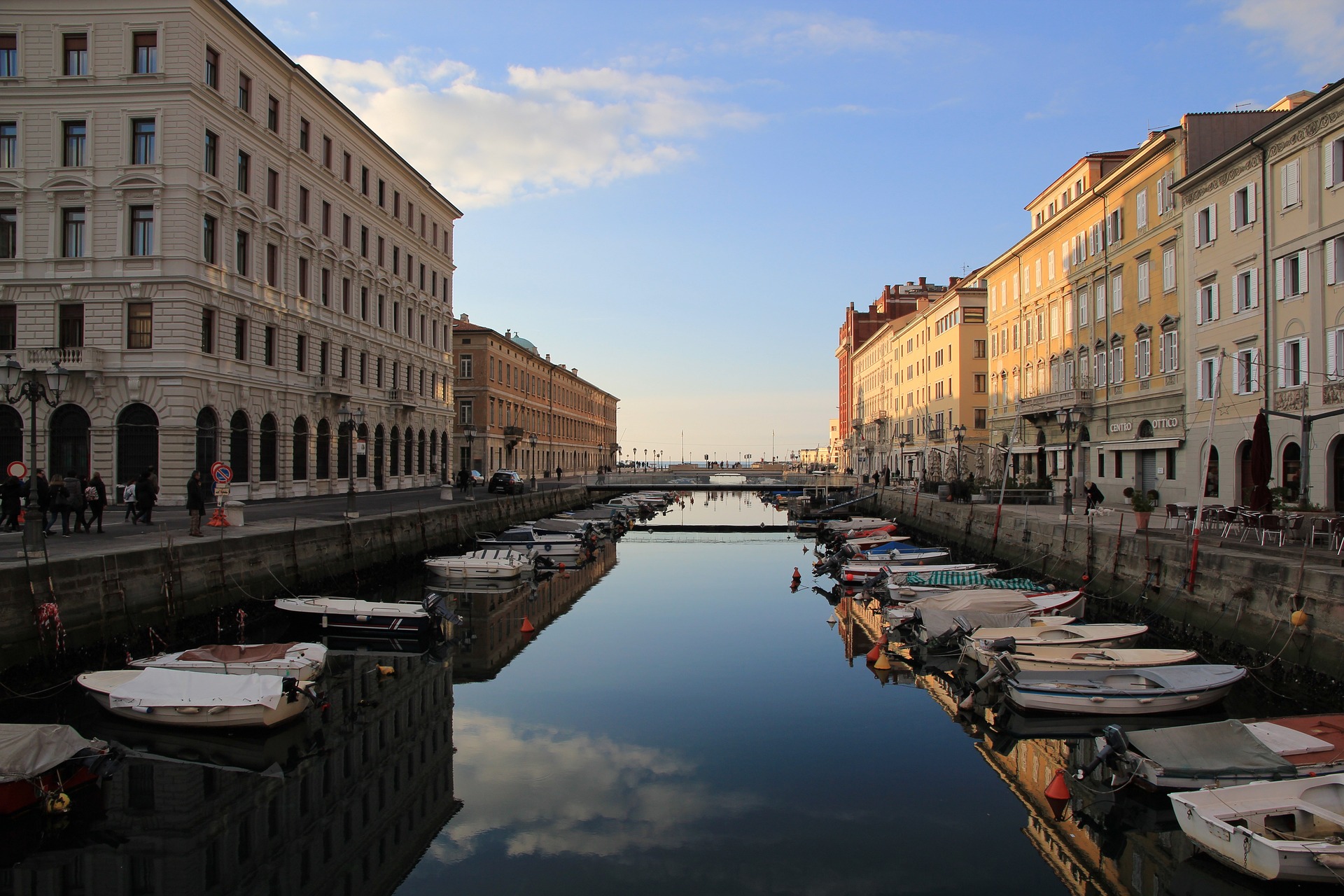
Up until the end of World War I, Trieste was the only port of the vast Austro-Hungarian Empire and therefore a major industrial and financial center. In the early years of the 20th century, Trieste and its surroundings also became famous by their association with some of the most important names of Italian literature, such as Italo Svevo, and English and German letters. James Joyce drew inspiration from the city’s multiethnic population, and Rainer Maria Rilke was inspired by the seacoast west of the city. Although it has lost its importance as a port and a center of finance, it has never fully lost its roll as an intellectual center. The streets hold a mix of monumental, neoclassical, and art-nouveau architecture built by the Austrians during Trieste’s days of glory, granting an air of melancholy stateliness to a city that lives as much in the past as the present.
Trieste, Italy
Up until the end of World War I, Trieste was the only port of the vast Austro-Hungarian Empire and therefore a major industrial and financial center. In the early years of the 20th century, Trieste and its surroundings also became famous by their association with some of the most important names of Italian literature, such as Italo Svevo, and English and German letters. James Joyce drew inspiration from the city’s multiethnic population, and Rainer Maria Rilke was inspired by the seacoast west of the city. Although it has lost its importance as a port and a center of finance, it has never fully lost its roll as an intellectual center. The streets hold a mix of monumental, neoclassical, and art-nouveau architecture built by the Austrians during Trieste’s days of glory, granting an air of melancholy stateliness to a city that lives as much in the past as the present.
Civitavecchia, Italy
Italy’s vibrant capital lives in the present, but no other city on earth evokes its past so powerfully. For over 2,500 years, emperors, popes, artists, and common citizens have left their mark here. Archaeological remains from ancient Rome, art-stuffed churches, and the treasures of Vatican City vie for your attention, but Rome is also a wonderful place to practice the Italian-perfected il dolce far niente, the sweet art of idleness. Your most memorable experiences may include sitting at a caffè in the Campo de’ Fiori or strolling in a beguiling piazza.
Messina Strait, Italy
Cephalonia, Greece
Corfu, Greece
Corfu town today is a vivid tapestry of cultures—a sophisticated weave, where charm, history, and natural beauty blend. Located about midway along the island’s east coast, this spectacularly lively capital is the cultural heart of Corfu and has a remarkable historic center that UNESCO designated as a World Heritage Site in 2007. All ships and planes dock or land near Corfu town, which occupies a small peninsula jutting into the Ionian Sea.Whether arriving by ferry from mainland Greece or Italy, from another island, or directly by plane, catch your breath by first relaxing with a coffee or a gelato in Corfu town’s shaded Liston Arcade, then stroll the narrow lanes of its pedestrians-only quarter. For an overview of the immediate area, and a quick tour of Mon Repos palace, hop on the little tourist train that runs from May to September. Corfu town has a different feel at night, so book a table at one of its famed tavernas to savor the island’s unique cuisine.The best way to get around Corfu town is on foot. The town is small enough so that you can easily walk to every sight. There are local buses, but they do not thread their way into the streets (many now car-free) of the historic center. If you are arriving by ferry or plane, it’s best to take a taxi to your hotel. Expect to pay about €10 from the airport or ferry terminal to a hotel in Corfu town. If there are no taxis waiting, you can call for one.
Kotor, Montenegro
Backed by imposing mountains, tiny Kotor lies hidden from the open sea, tucked into the deepest channel of the Bokor Kotorska (Kotor Bay), which is Europe’s most southerly fjord. To many, this town is more charming than its sister UNESCO World Heritage Site, Dubrovnik, retaining more authenticity, but with fewer tourists and spared the war damage and subsequent rebuilding which has given Dubrovnik something of a Disney feel.Kotor’s medieval Stari Grad (Old Town) is enclosed within well-preserved defensive walls built between the 9th and 18th centuries and is presided over by a proud hilltop fortress. Within the walls, a labyrinth of winding cobbled streets leads through a series of splendid paved piazzas, rimmed by centuries-old stone buildings. The squares are now haunted by strains from buskers but although many now house trendy cafés and chic boutiques, directions are still given medieval-style by reference to the town’s landmark churches.In the Middle Ages, as Serbia’s chief port, Kotor was an important economic and cultural center with its own highly regarded schools of stonemasonry and iconography. From 1391 to 1420 it was an independent city-republic and later, it spent periods under Venetian, Austrian, and French rule, though it was undoubtedly the Venetians who left the strongest impression on the city’s architecture. Since the breakup of Yugoslavia, some 70% of the stone buildings in the romantic Old Town have been snapped up by foreigners, mostly Brits and Russians. Porto Montenegro, a new marina designed to accommodate some of the world’s largest super yachts, opened in nearby Tivat in 2011, and along the bay are other charming seaside villages, all with better views of the bay than the vista from Kotor itself where the waterside is congested with cruise ships and yachts. Try sleepy Muo or the settlement of Prčanj in one direction around the bay, or Perast and the Roman mosaics of Risan in the other direction.
Split, Croatia
Split’s ancient core is so spectacular and unusual that a visit is more than worth your time. The heart of the city lies within the walls of Roman emperor Diocletian’s retirement palace, which was built in the 3rd century AD. Diocletian, born in the nearby Roman settlement of Salona in AD 245, achieved a brilliant career as a soldier and became emperor at the age of 40. In 295 he ordered this vast palace to be built in his native Dalmatia, and when it was completed he stepped down from the throne and retired to his beloved homeland. Upon his death, he was laid to rest in an octagonal mausoleum, around which Split’s magnificent cathedral was built.In 615, when Salona was sacked by barbarian tribes, those fortunate enough to escape found refuge within the stout palace walls and divided up the vast imperial apartments into more modest living quarters. Thus, the palace developed into an urban center, and by the 11th century the settlement had expanded beyond the ancient walls.Under the rule of Venice (1420–1797), Split—as a gateway to the Balkan interior—became one of the Adriatic’s main trading ports, and the city’s splendid Renaissance palaces bear witness to the affluence of those times. When the Habsburgs took control during the 19th century, an overland connection to Central Europe was established by the construction of the Split–Zagreb–Vienna railway line.After World War II, the Tito years saw a period of rapid urban expansion: industrialization accelerated and the suburbs extended to accommodate high-rise apartment blocks. Today the historic center of Split is included on UNESCO’s list of World Heritage Sites.
Trieste, Italy
Up until the end of World War I, Trieste was the only port of the vast Austro-Hungarian Empire and therefore a major industrial and financial center. In the early years of the 20th century, Trieste and its surroundings also became famous by their association with some of the most important names of Italian literature, such as Italo Svevo, and English and German letters. James Joyce drew inspiration from the city’s multiethnic population, and Rainer Maria Rilke was inspired by the seacoast west of the city. Although it has lost its importance as a port and a center of finance, it has never fully lost its roll as an intellectual center. The streets hold a mix of monumental, neoclassical, and art-nouveau architecture built by the Austrians during Trieste’s days of glory, granting an air of melancholy stateliness to a city that lives as much in the past as the present.
Cabin Options
Standard Inside
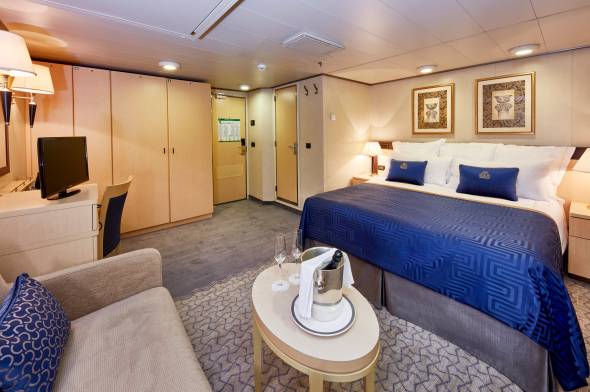
Britannia Deluxe Inside
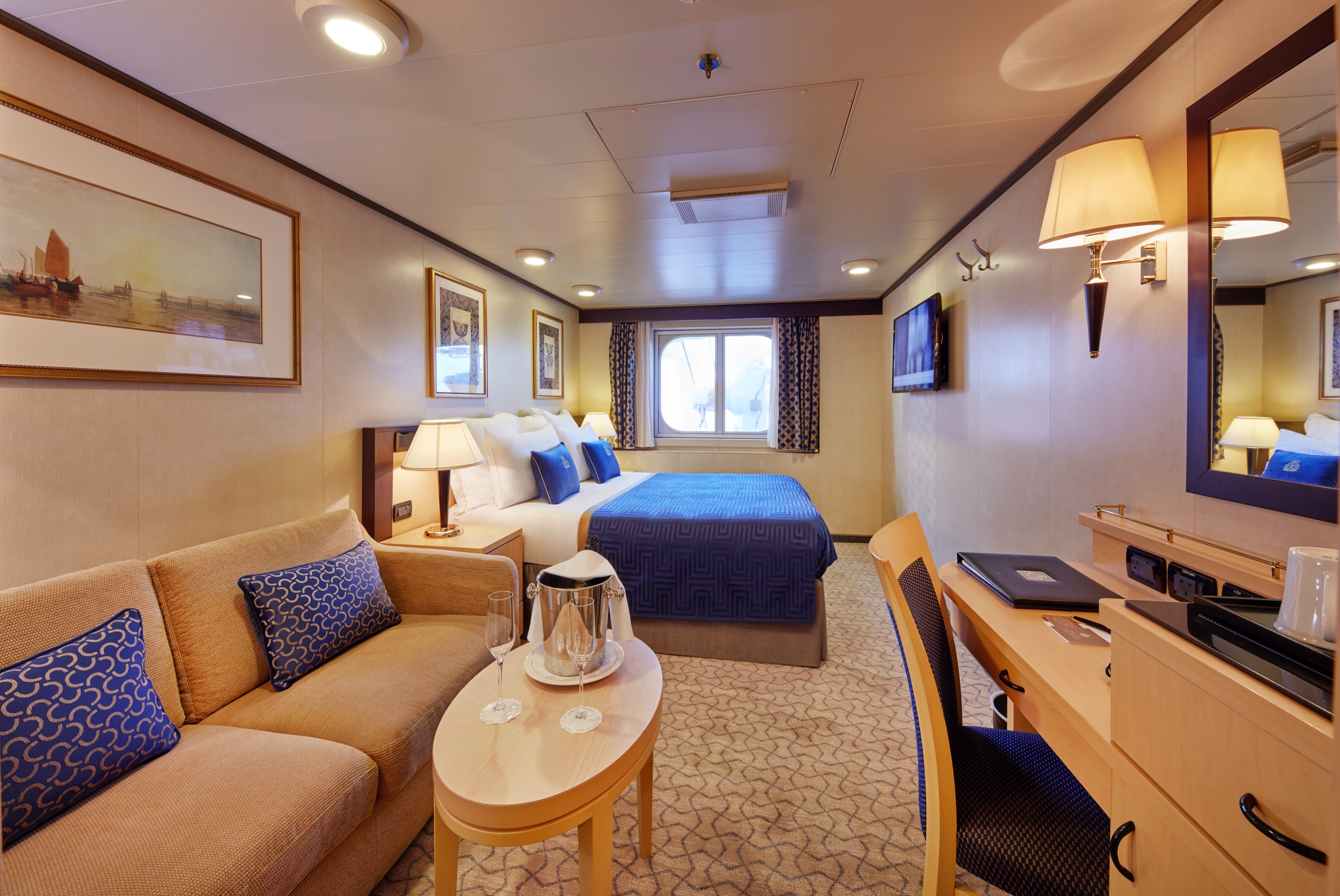
Britannia Oceanview (obstructed view)
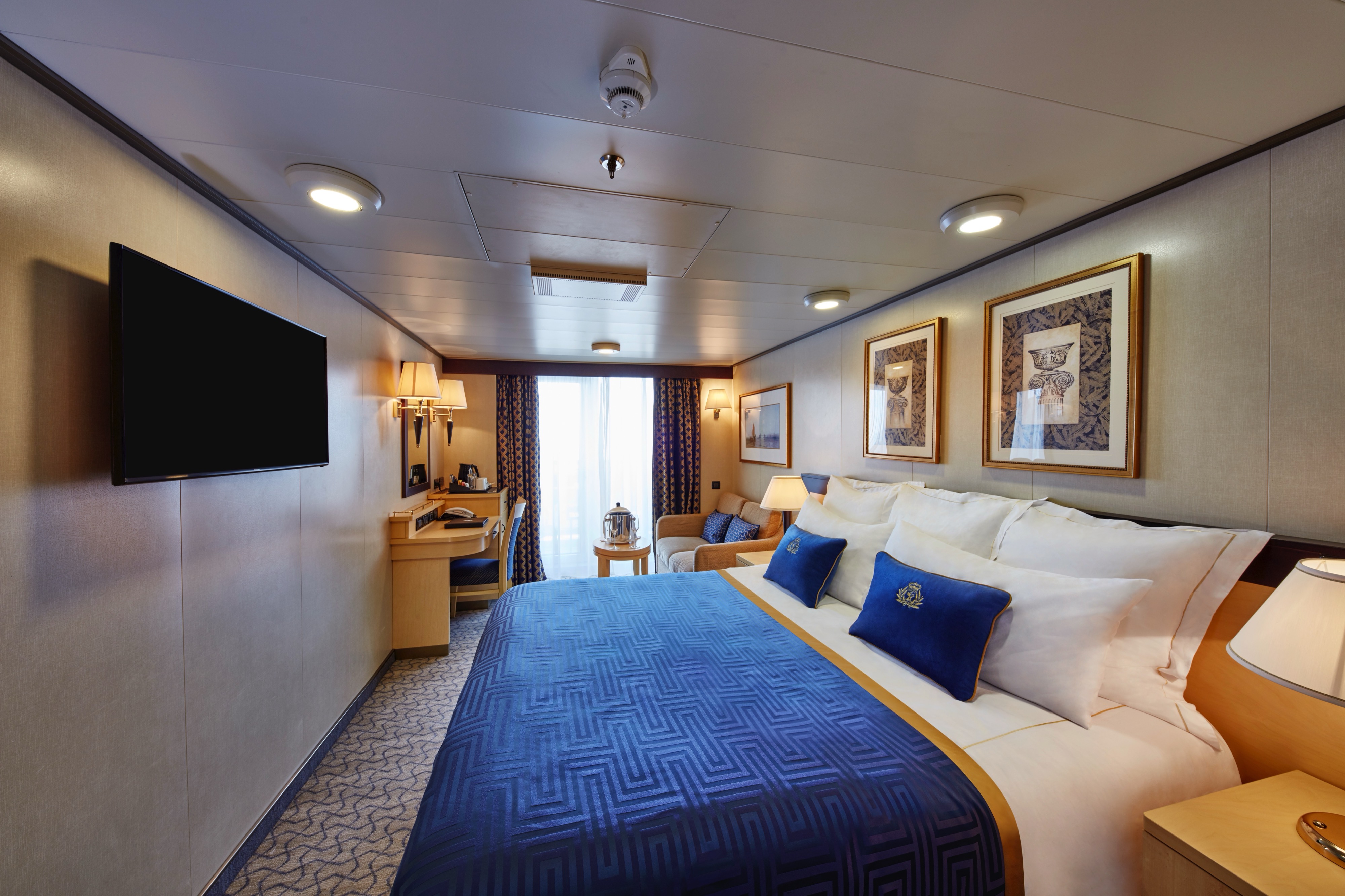
Britannia Balcony (partially obstructed view)
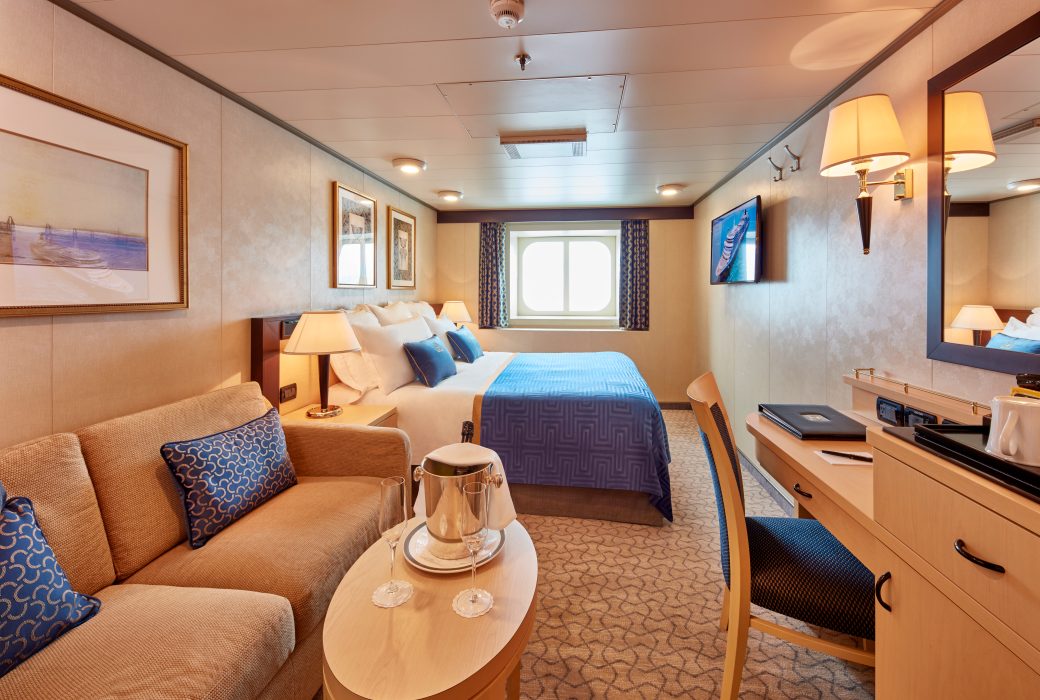
Britannia Oceanview
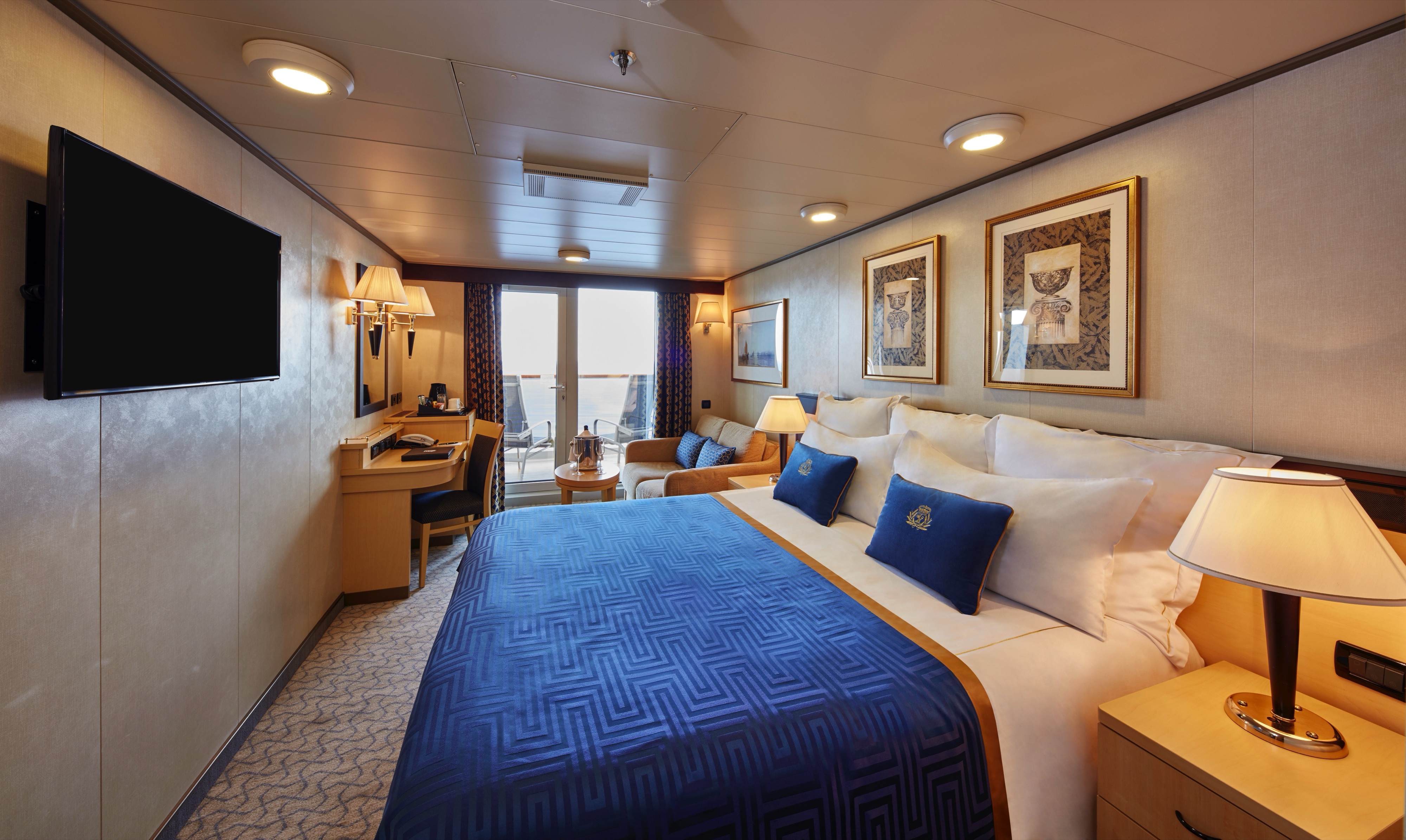
Britannia Balcony
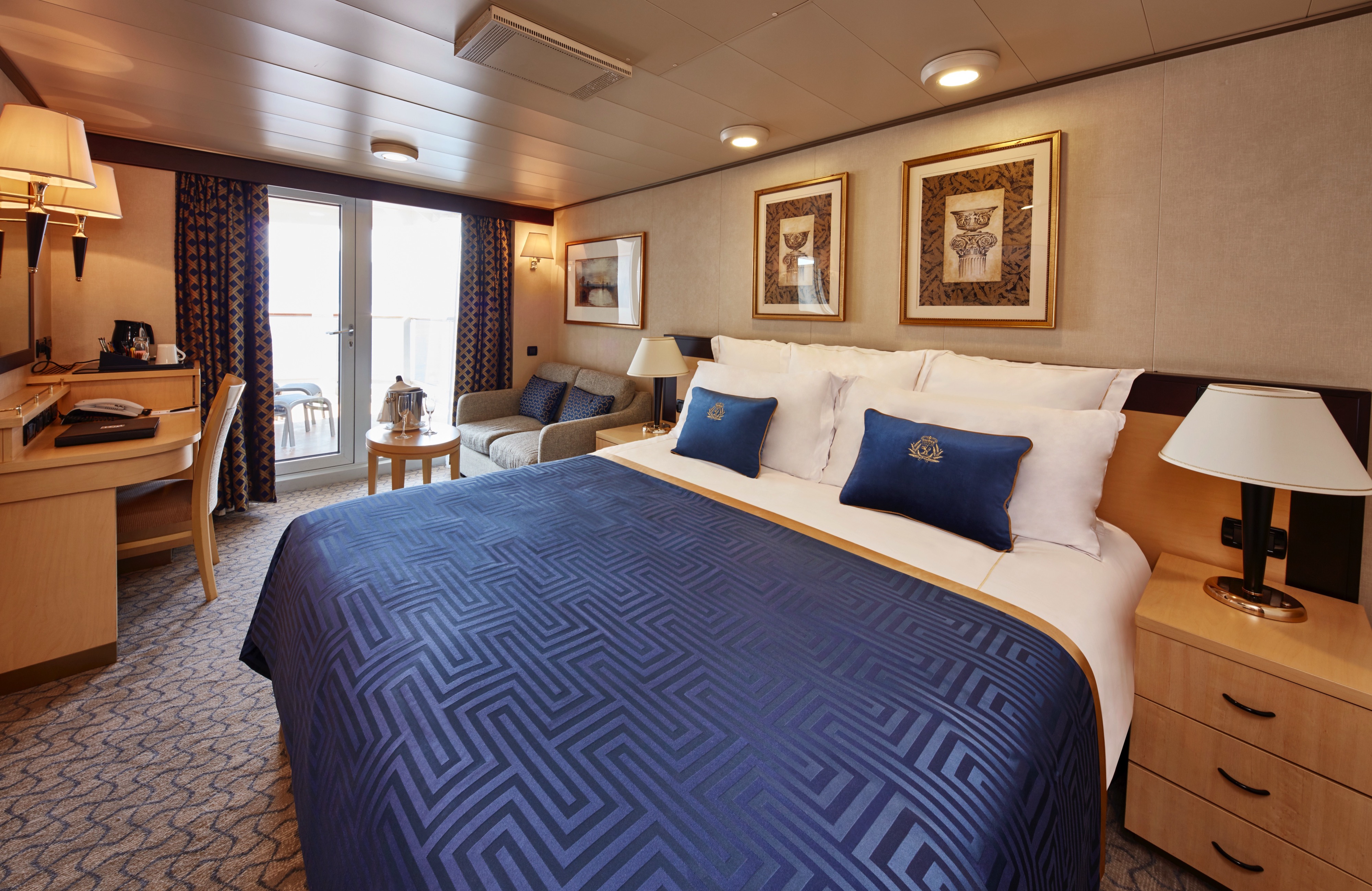
Britannia Club Balcony
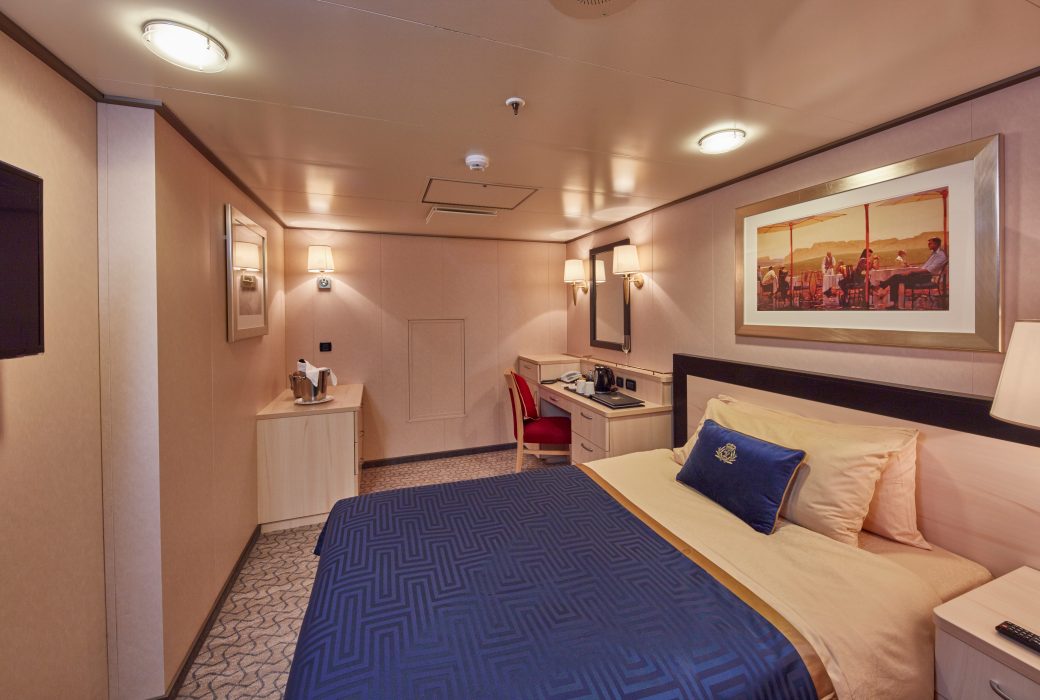
Britannia Single Inside
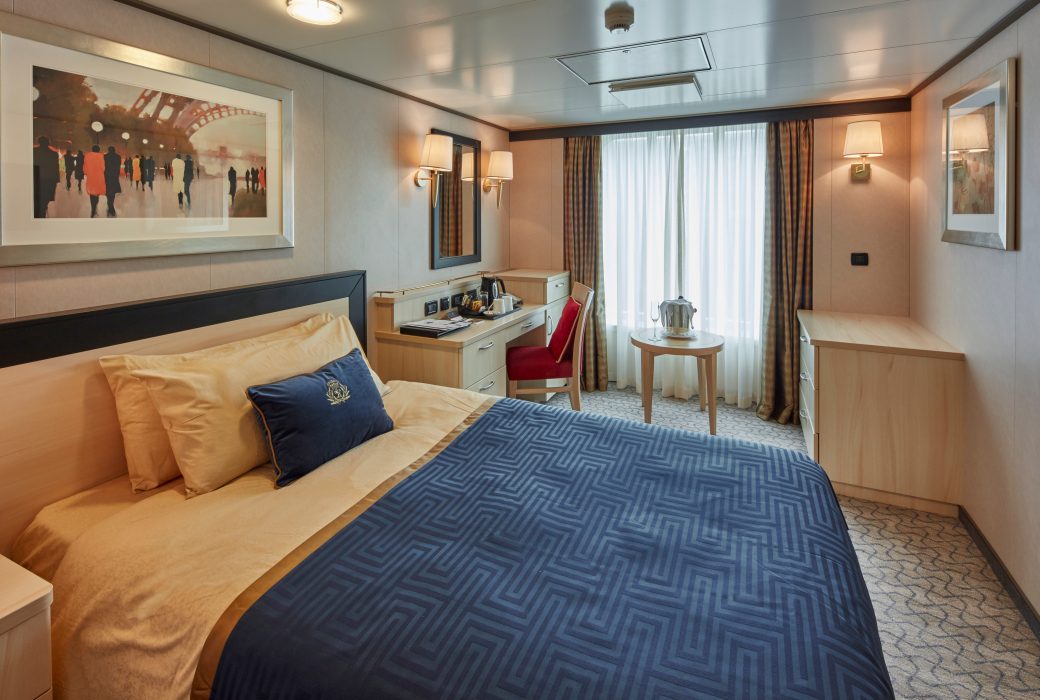
Britannia Single Oceanview
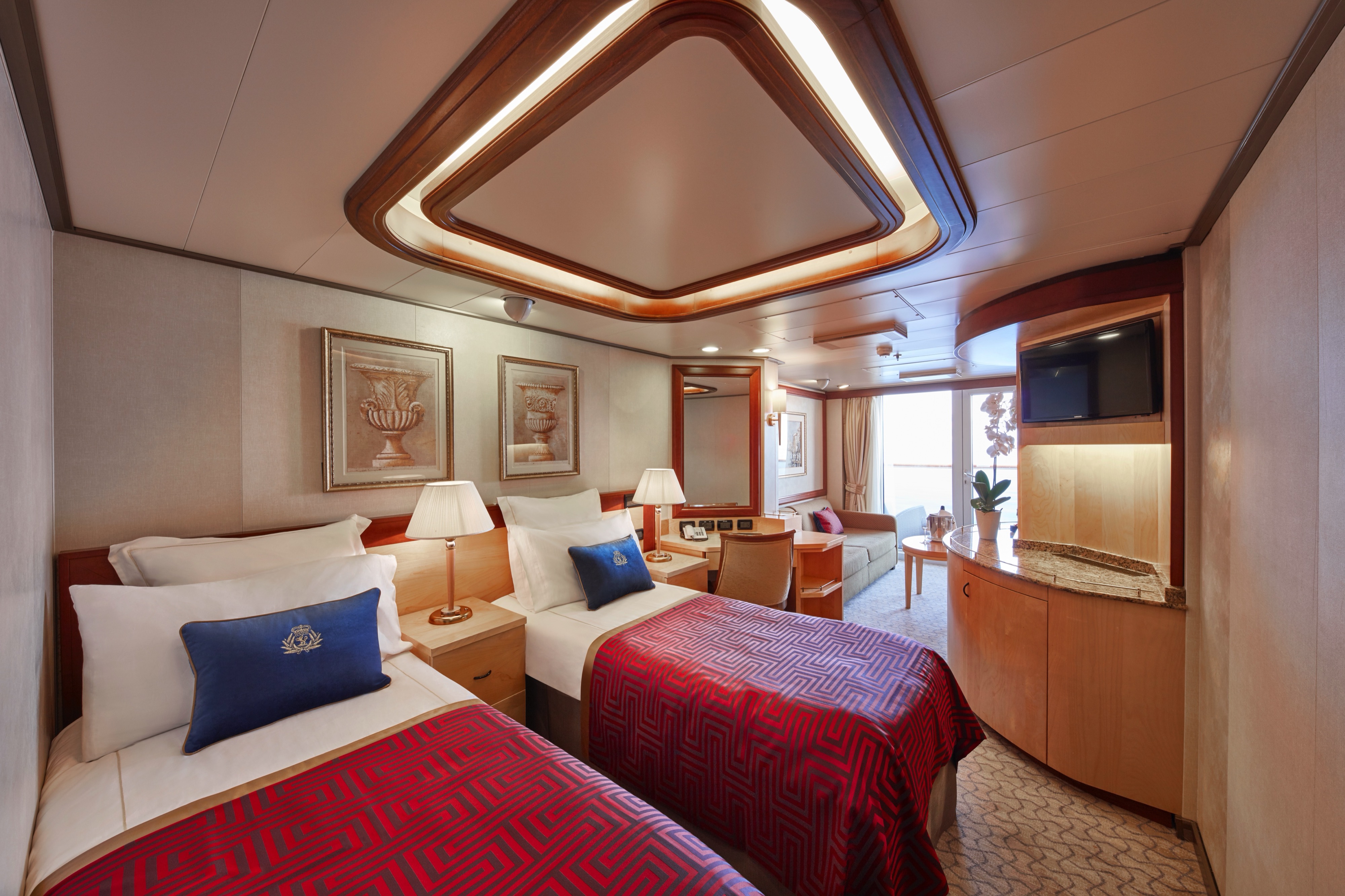
Princess Grill Princess Suite
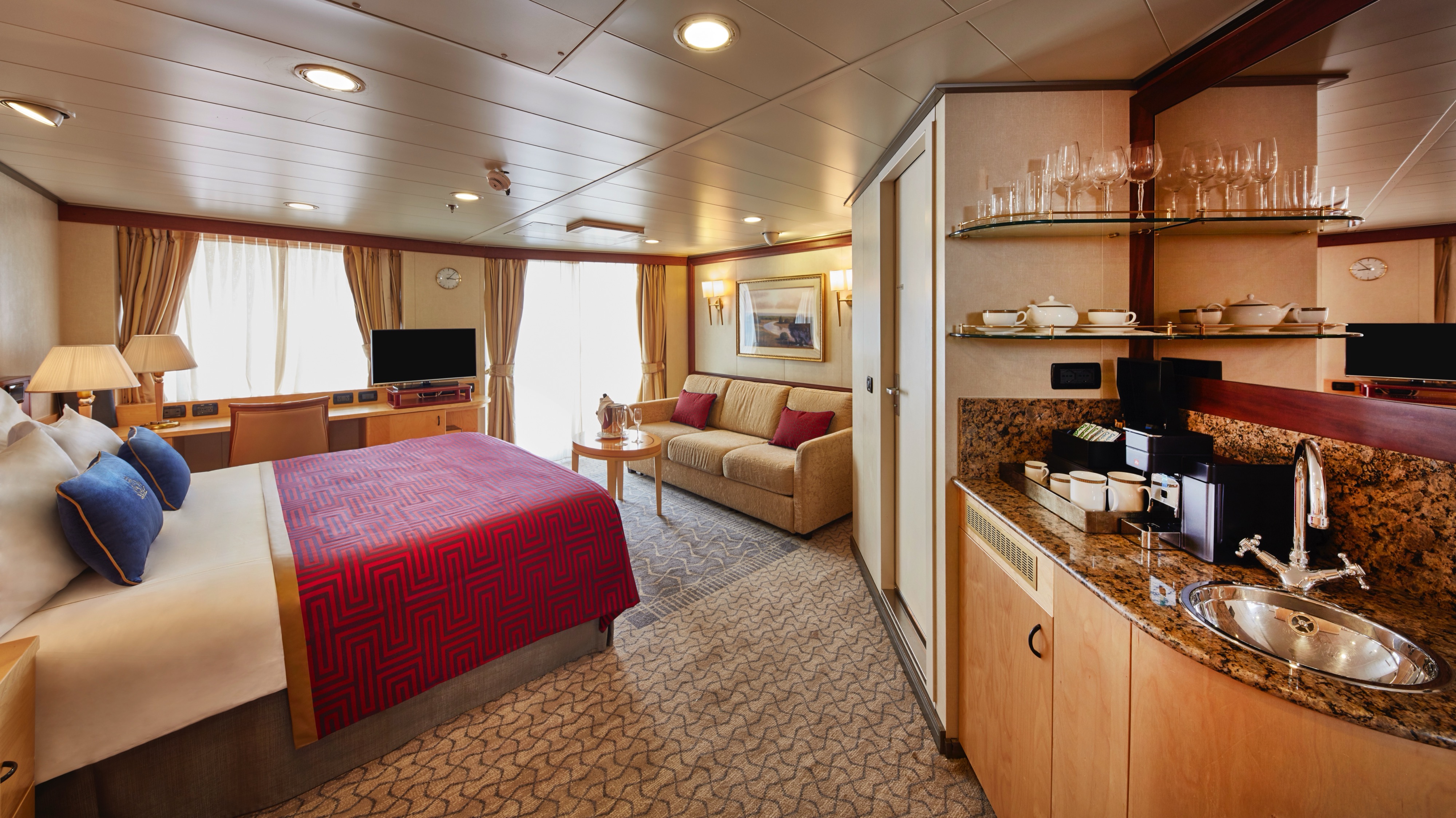
Queens Grill Queens Suite
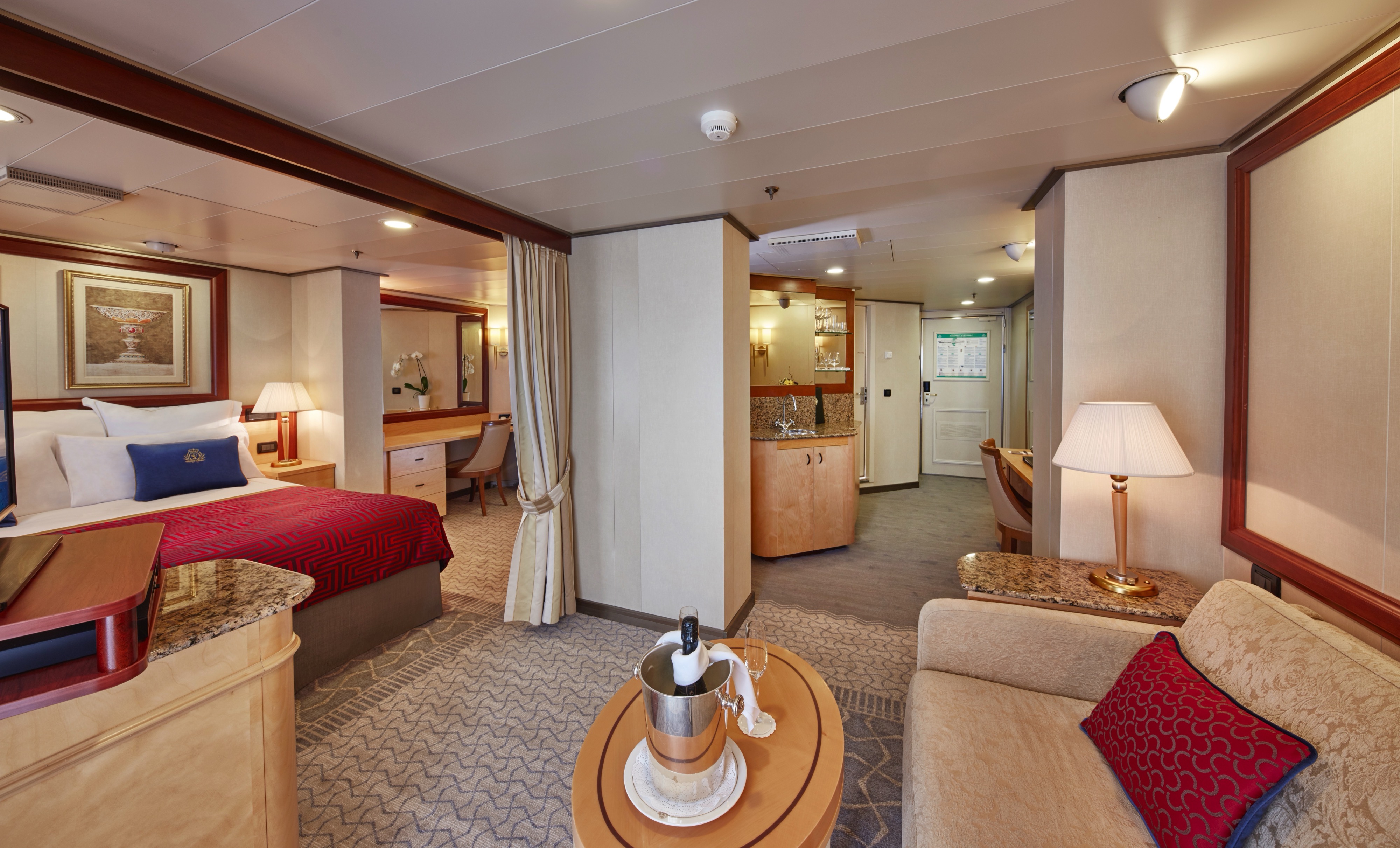
Queens Grill Penthouse
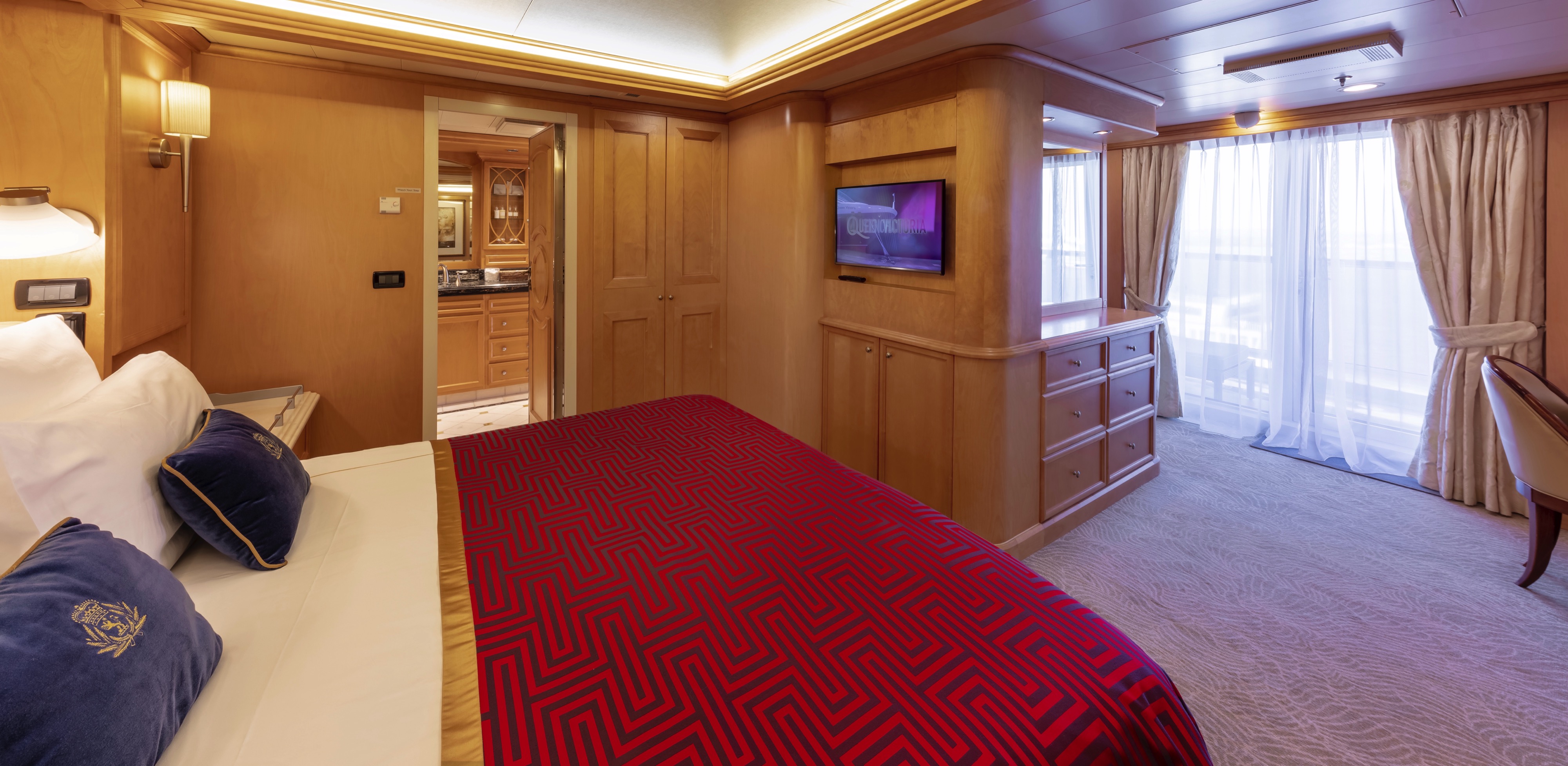
Queens Grill Master Suite
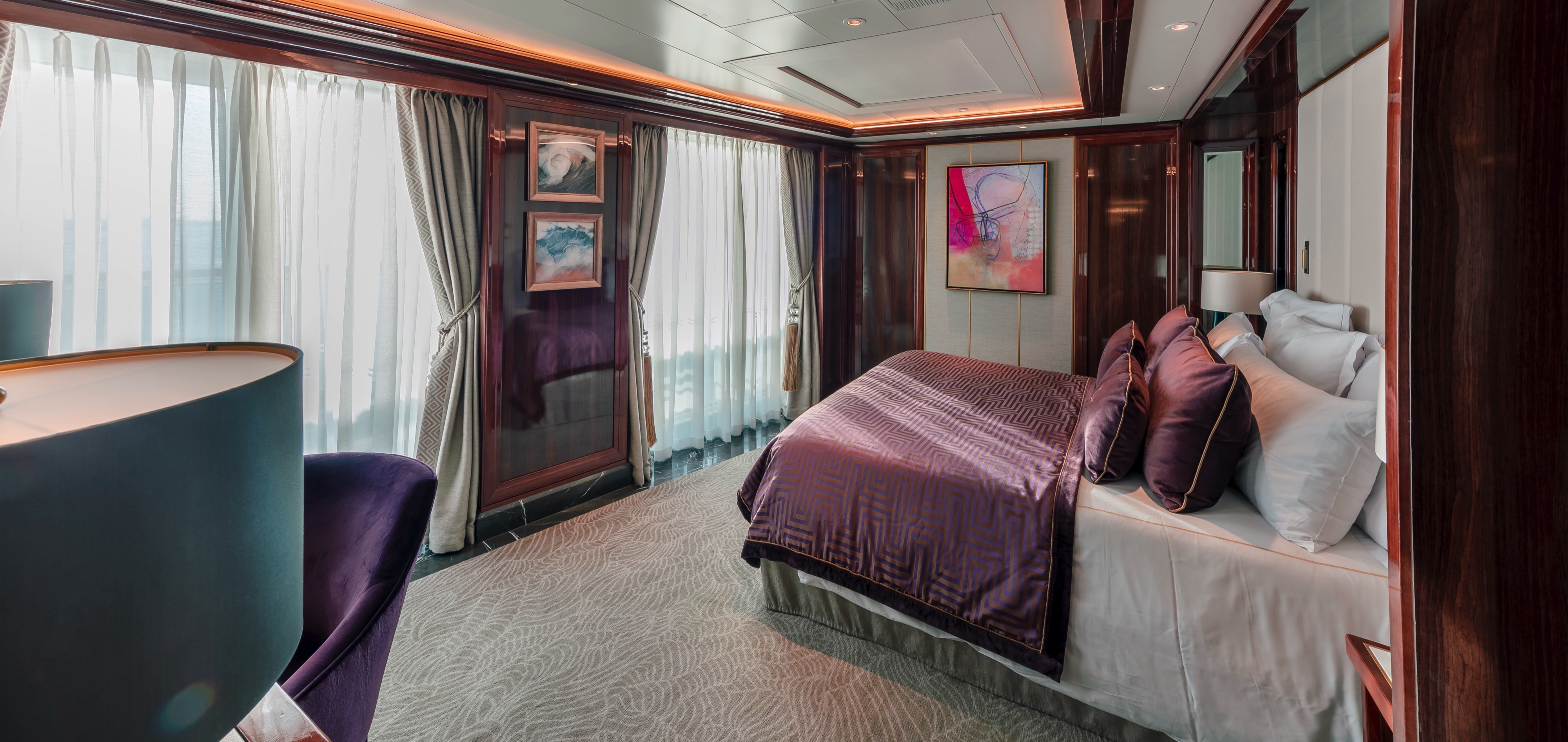
Queens Grill Grand Duplex
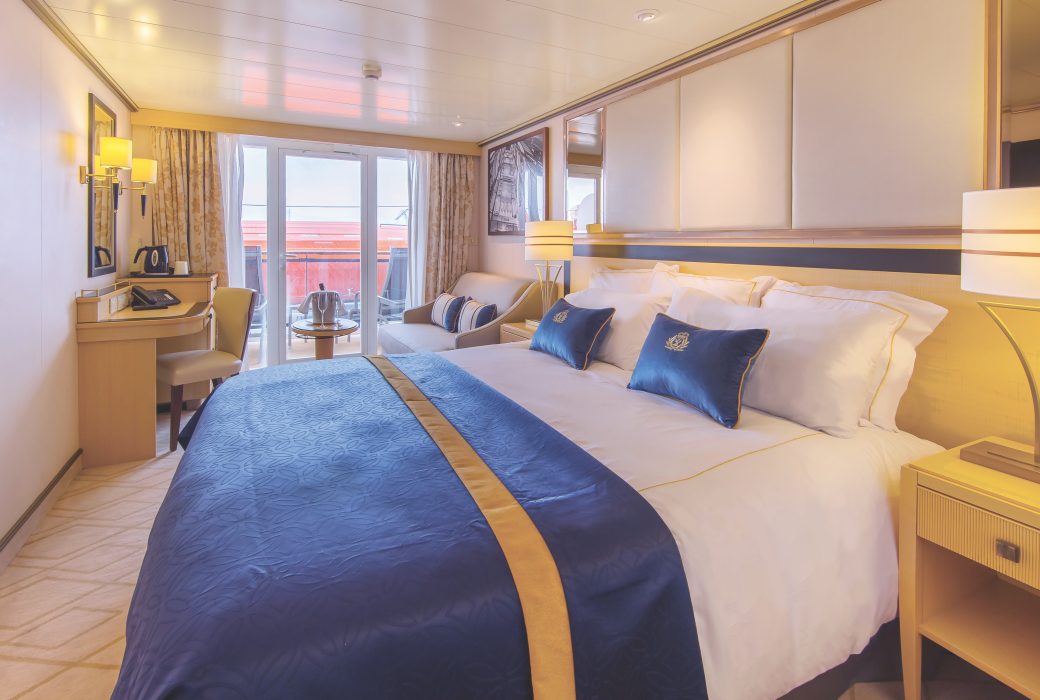
Britannia Balcony (obstructed view)
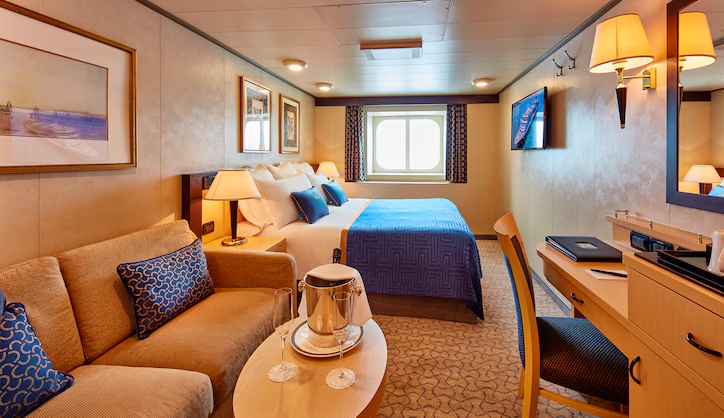
Britannia Deluxe Oceanview
Ship Facilities
Queen's Grill
The pinnacle of fine dining at sea, exclusively for guests staying in our Queens Grill Suites.
Drawing inspiration from the world’s finest kitchens, the Queens Grill restaurant offers a true taste of fine dining on board, elevated by a front of house team for whom nothing is too much trouble.
Open for breakfast, lunch and dinner daily, with a Grills Afternoon Tea served separately in the Grills Lounge, a visit to the Queens Grill always feels like a special occasion.
You’ll be dining among your fellow Queens Grill guests, with a table reserved for your exclusive use throughout your voyage. There’s no need to book. Simply arrive whenever you’re ready and your table will be waiting. You may even choose to take your meal in your suite, should you wish.
Each day introduces a coveted line-up of à la carte dishes, complemented by an ‘always-available’ menu of appetisers, entrees, and desserts, executed with exemplary flair and finesse.
Alternatively, opt for one of our chef’s speciality sharing dishes (orderable in advance at breakfast or lunchtimes). From beef wellington to rack of lamb, the choice is truly indulgent. Each dish (along with select offerings on our menu) is finished and presented to you table-side, only heightening the sense of theatre that’s a signature of Queens Grill dining.
Dining at the Queens Grill restaurant is exclusive to Queens Grill guests and included within your Cunard fare. The restaurant operates relaxed dress by day and smart attire (jacket optional) for dinner service after 6.00pm, except on Gala Evenings when we invite you to dress in black tie.
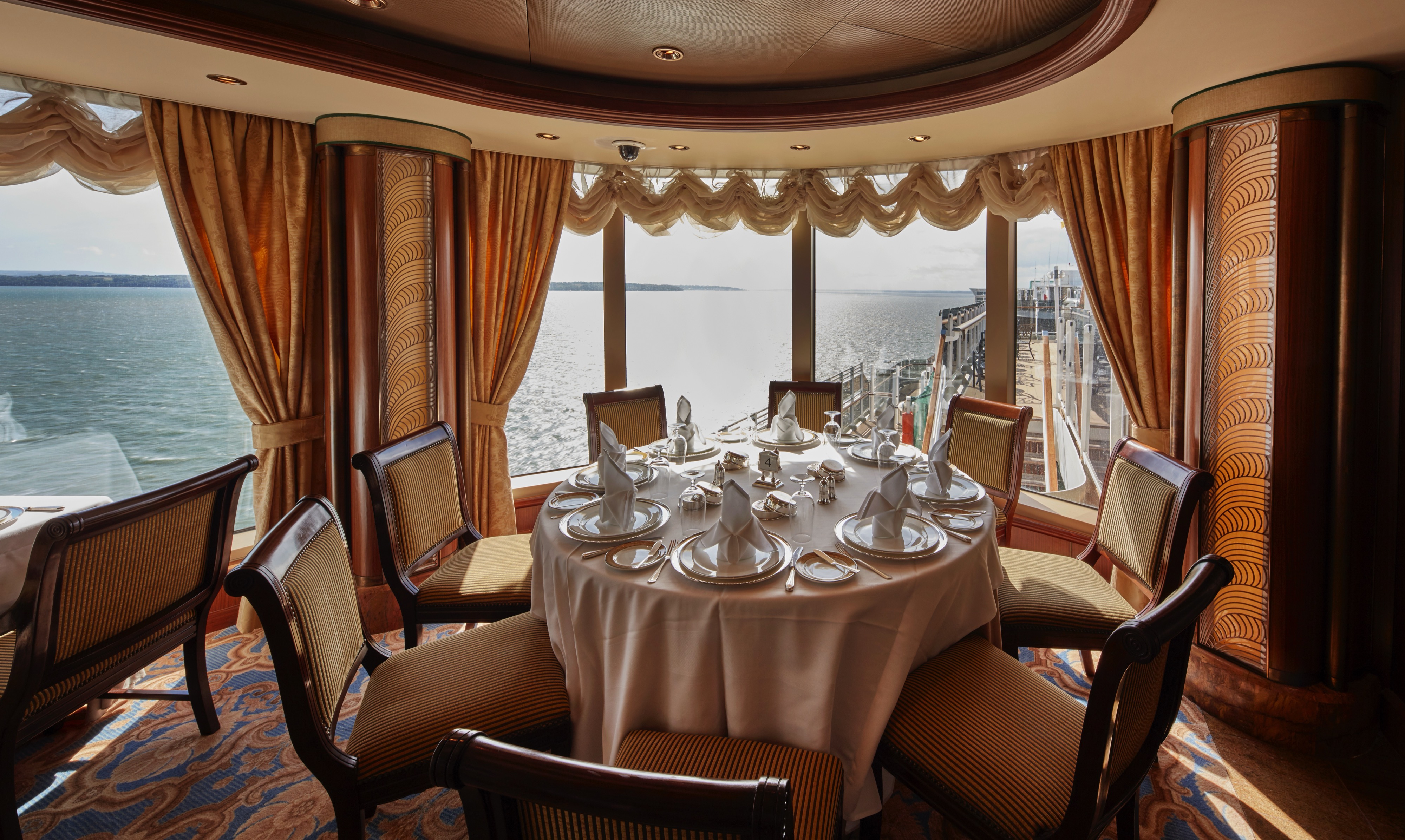
Princess Grill
Imaginative cooking and flawless service create a dining experience fit for royalty.
For the exclusive use of guests in our Princess Grill Suites, this exquisite restaurant offers à la carte dining at an elevated level.
With a dining room to rival the world’s most luxurious hotels and a menu that showcases classical flavour pairings, creatively reimagined, the Princess Grill restaurant is among the most prestigious of our on board dining experiences. Discreet but attentive service and a raft of personal touches make every meal special.
You’ll find a comprehensive selection of continental and cooked dishes ready to rouse you each morning, whilst lunchtimes introduce a delicious four course menu alongside lighter options.
Evenings are a particularly grand affair, with the theatre of tableside serving inspiring a greater sense of occasion. Your table for dinner is reserved throughout your voyage, with no need to book; simply take your seat whenever you wish, between 6.30pm and 9.00pm.
Dining at the Princess Grill restaurant is included in your fare if you’re staying in one of our Princess Grill Suites. Relaxed dress is welcomed at breakfast and lunch, and smart attire (jacket optional) after 6.00pm, except on Gala Evenings when we invite you to dress in black tie.

Britannia Restaurant
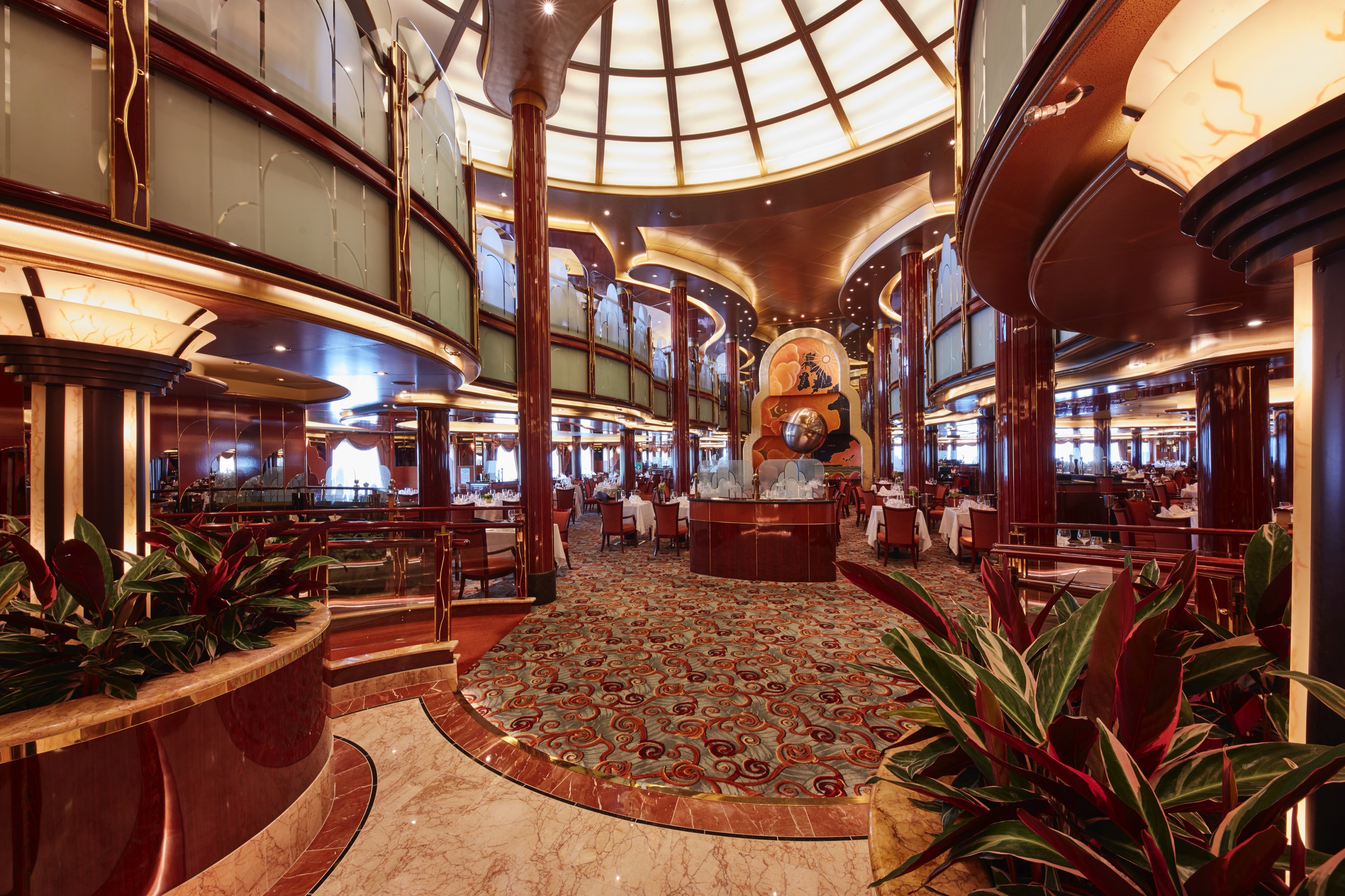
This grand two-tiered restaurant is the main dining room for guests staying in Queen Victoria’s Britannia Staterooms. Welcoming diners for breakfast, lunch, and dinner, taking your seat at the linen-dressed tables, always feels like an event. You’ll find a new a la carte lunch and dinner menu to temp you each day of your cruise, always with a choice of meat, fish, and vegan options. Breakfast at the Britannia Restaurant offers a mix of continental and cooked favourites, such as eggs benedict, fresh fruit, and our chef’s signature English breakfast.
Steakhouse at The Verandah
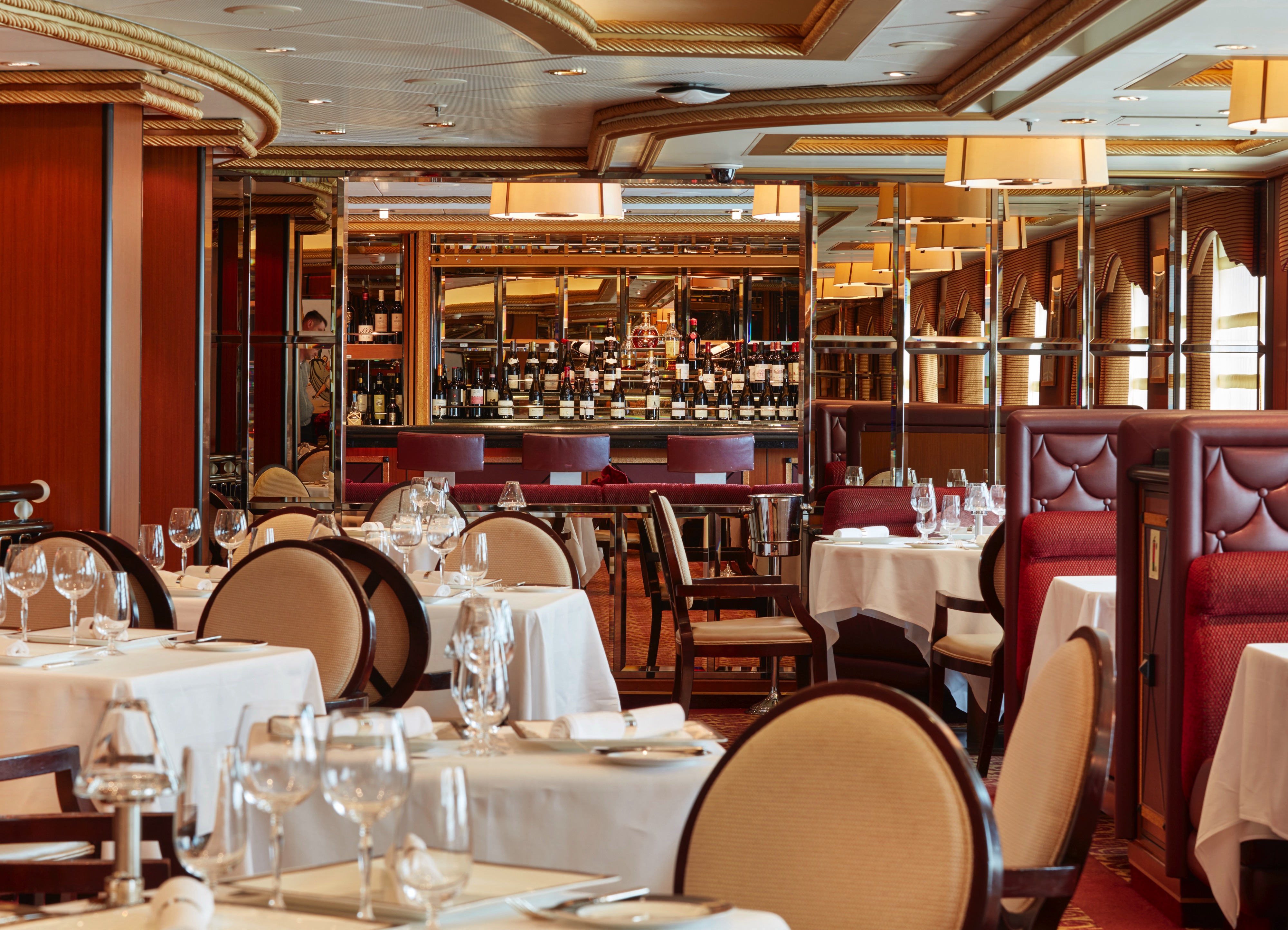
If you find yourself seeking an elevated gourmet experience on board Queen Victoria, look no further than The Verandah. This intimate dining venue offers an extraordinary gastronomic experience led by the simplicity of exceptional ingredients. From tiered platters of fruit de mer, laden with oysters, lobster, and crab, to succulent Black Angus and Wagyu steaks, accompanied by your choice of steak knife, each mouthful at The Verandah is a culinary masterpiece. Feast on a symphony of the finest ingredients sourced from land and sea. Will you make this gastronomic discovery a destination on your next Queen Victoria cruise?
The Lido
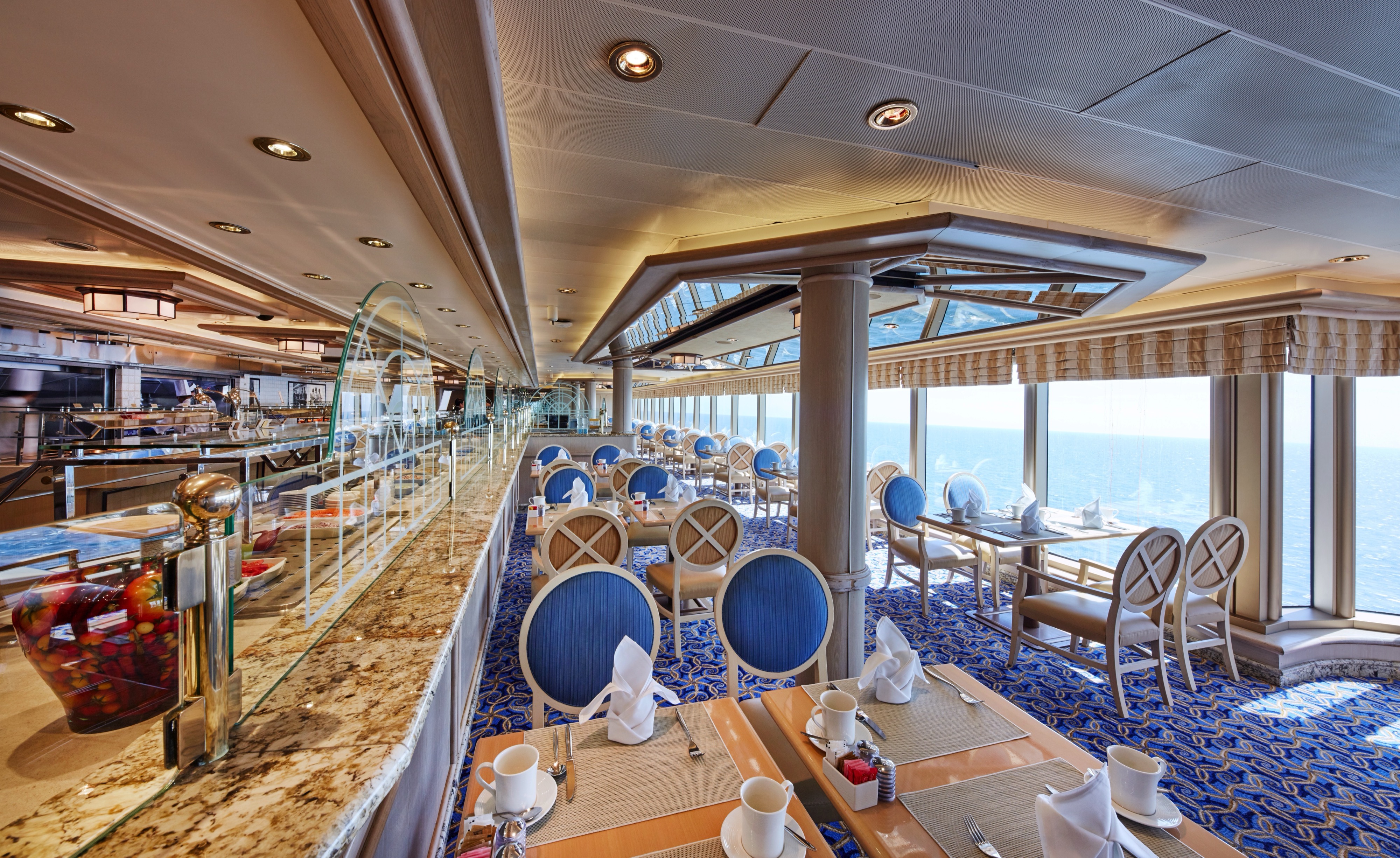
When you’re in the mood for a more informal dining experience, The Lido buffet is sure to appeal. This casual but considered dining spot offers a relaxed approach to dining, with self-service food stations showcasing an array of culinary delights. Whether you’re craving something quintessentially British or a dish inspired by the ports on your cruise, you’ll find it here. Hot dishes are updated daily, while fresh hand-rolled sushi and salads are always available at lunchtime. From 3pm, the Lido tempts you with Afternoon Tea favourites, including finger sandwiches, scones, and cakes. Towards the end of the evening, the Lido offers a late-night buffet, where you can indulge in one final culinary adventure before retiring to bed.
The Pavilion Wellness Cafe
The Pavilion Wellness Café will offer fresh, nourishing options in a relaxed setting. Enjoy smoothies, juices, salads, grain bowls, and light bites throughout your voyage.
Chart Room
Resplendent with its brushed gold accents, the Chart Room’s symmetrical interiors offer a timeless nod to the romance and geometry of Art Deco design. You’ll find this striking bar directly off the Grand Lobby, opposite Steakhouse at The Verandah on Deck 2. It’s a wonderful venue to visit on Gala Evenings when the sight of tuxedo-attired gentlemen and women in evening gowns evokes the spirit of a bygone era. The signature drink selection includes a range of custom cocktails inspired by the Zodiac. Ask the bartender to mix you up your birth sign or defy convention and let your tastebuds choose.
Commodore Club
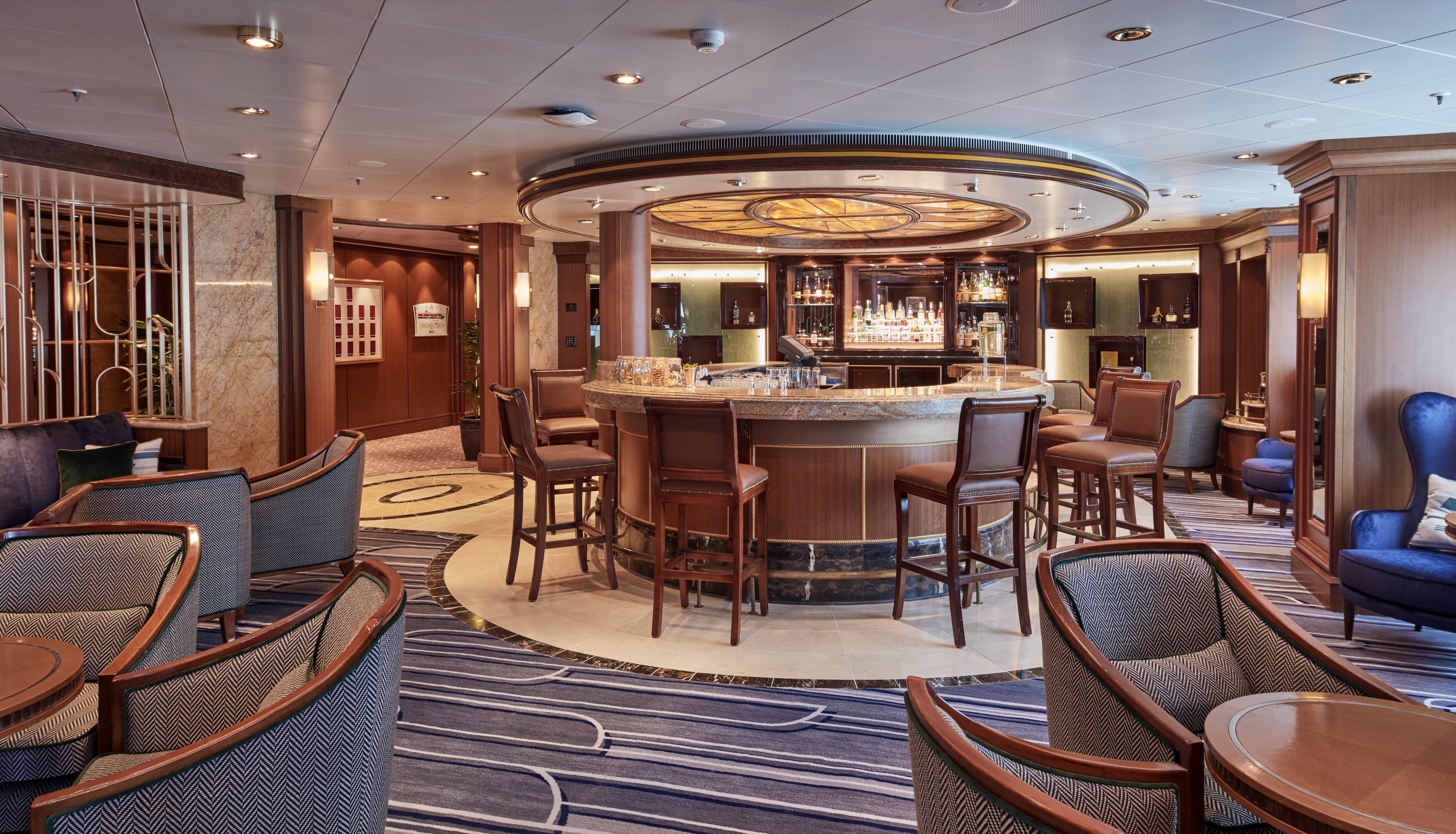
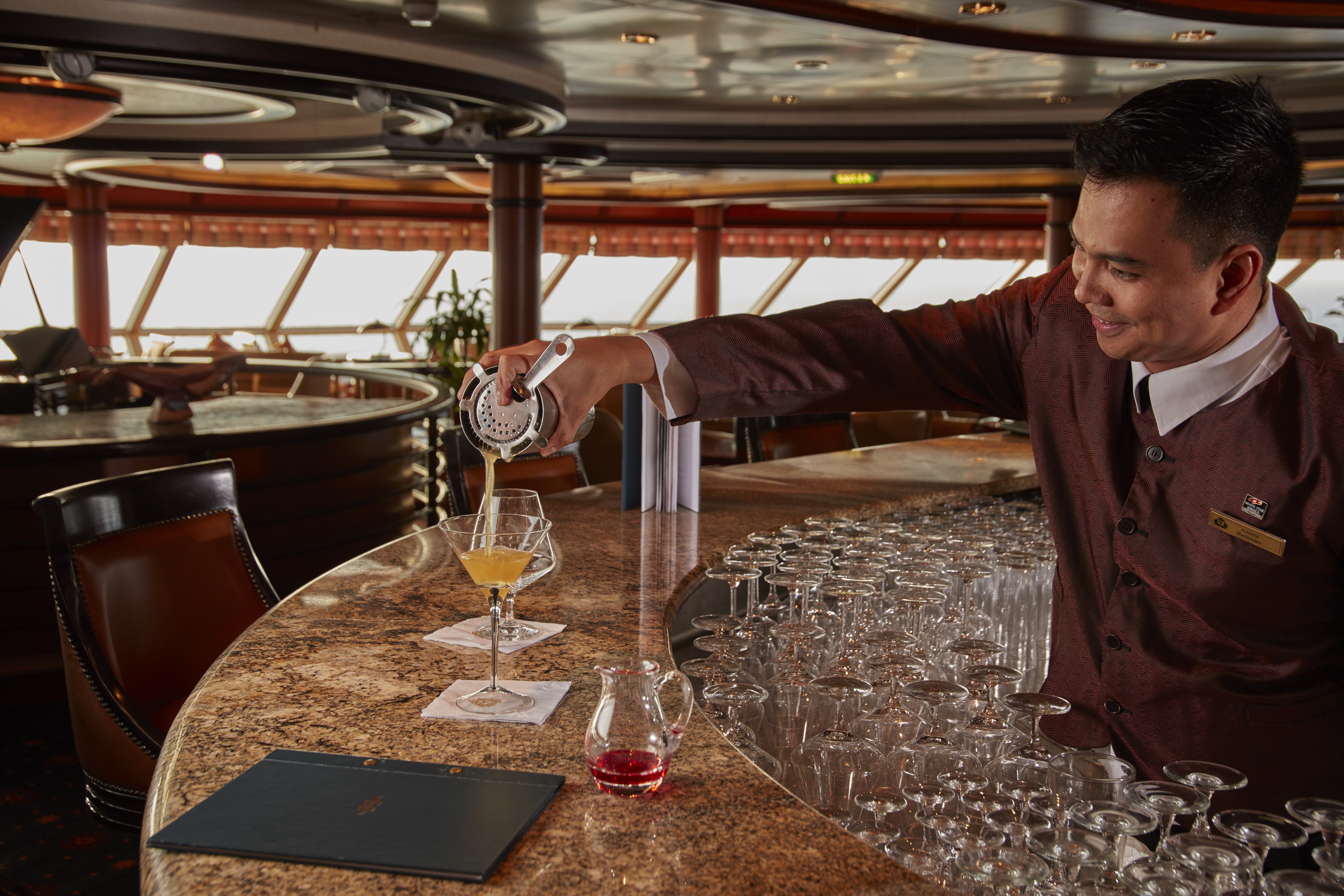
For a Queen Victoria bar with the best sea views, look no further than the Commodore Club. A sophisticated lounge with picture height windows, the Commodore Club offers ocean panoramas like nowhere else on board. You’ll find this popular bar at the bow of Deck 10, above the Bridge. While a full drinks service is offered, the speciality here is a selection of Commodore cocktails, inspired by seven of our fleet’s most decorated Captains. Canapés are served on early evening visits and the atmosphere here is always one of elegance, with soothing background music courtesy of a live pianist.
Yacht Club
When the rest of the ship is winding down, Queen Victoria’s Yacht Club can always be counted on to keep the party going. Open for Insights talks, choir rehearsals, and dance classes during the day, this nautical themed lounge-bar takes on a whole new persona come nightfall. The home of karaoke and late-night DJs on board, you’ll find the decks spinning at the Yacht Club long after our other bars and lounges have called it a night. Sink into one of the low-slung sofas and tap along to the sounds filling the air or join your fellow revellers on the dance floor, putting all inhibitions aside in true holiday spirit.
Golden Lion
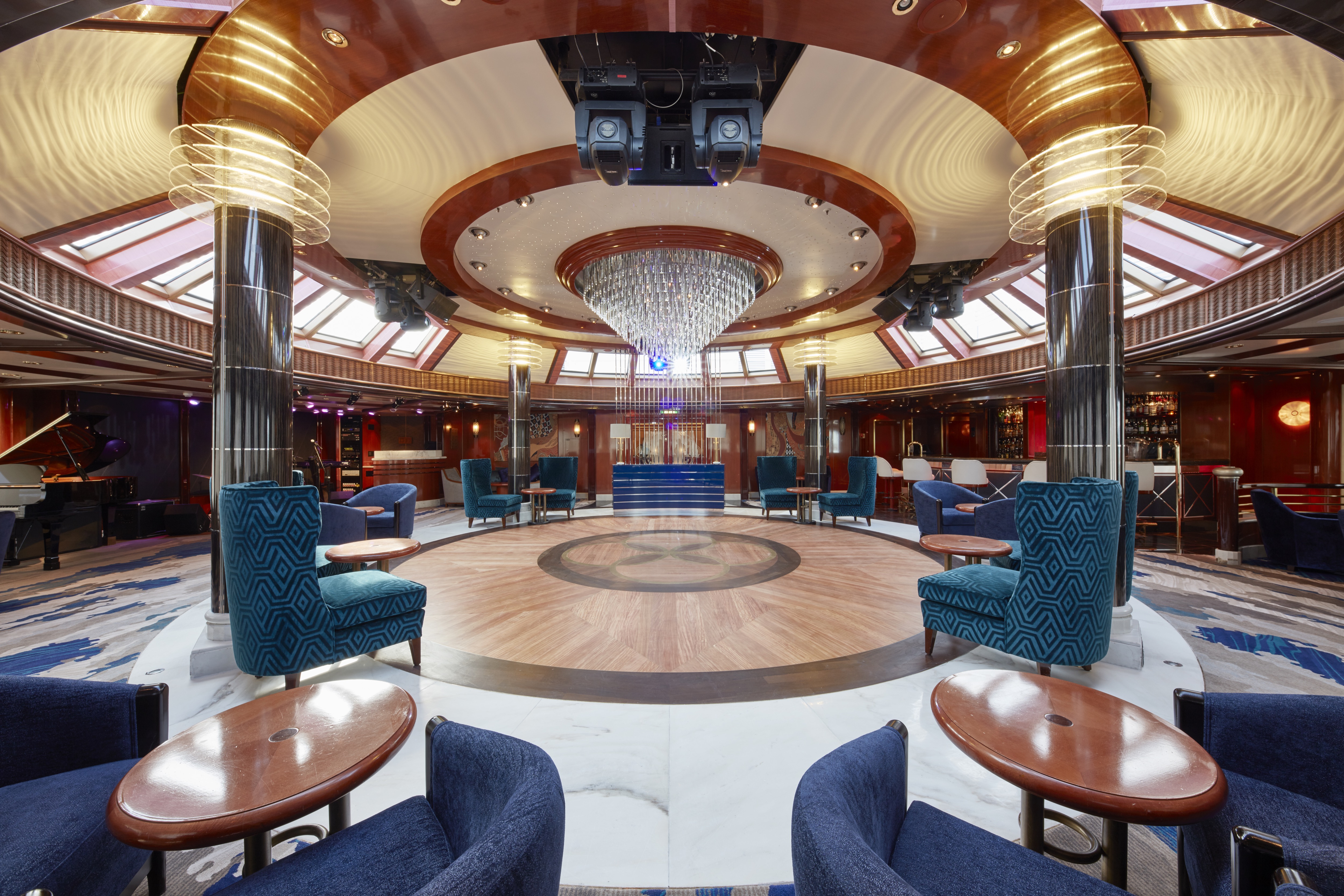
You’ll find all the warmth and conviviality of a traditional English pub at Queen Victoria’s Golden Lion. With hearty food and beers on draught, a visit here feels just as welcoming as stepping into your local. Relaxed dress is welcome at all times of day, even on Gala Evenings, and there’s live music and pub quizzes to keep you entertained. Well, who doesn’t love a bit of friendly competition? A complimentary menu featuring fish and chips, pie and mash, and our signature Cunard Ploughman’s is available at lunchtimes, while the drinks selection includes a range of Cunard own-brand ales and a choice of Bloody Marys.
Queens Room
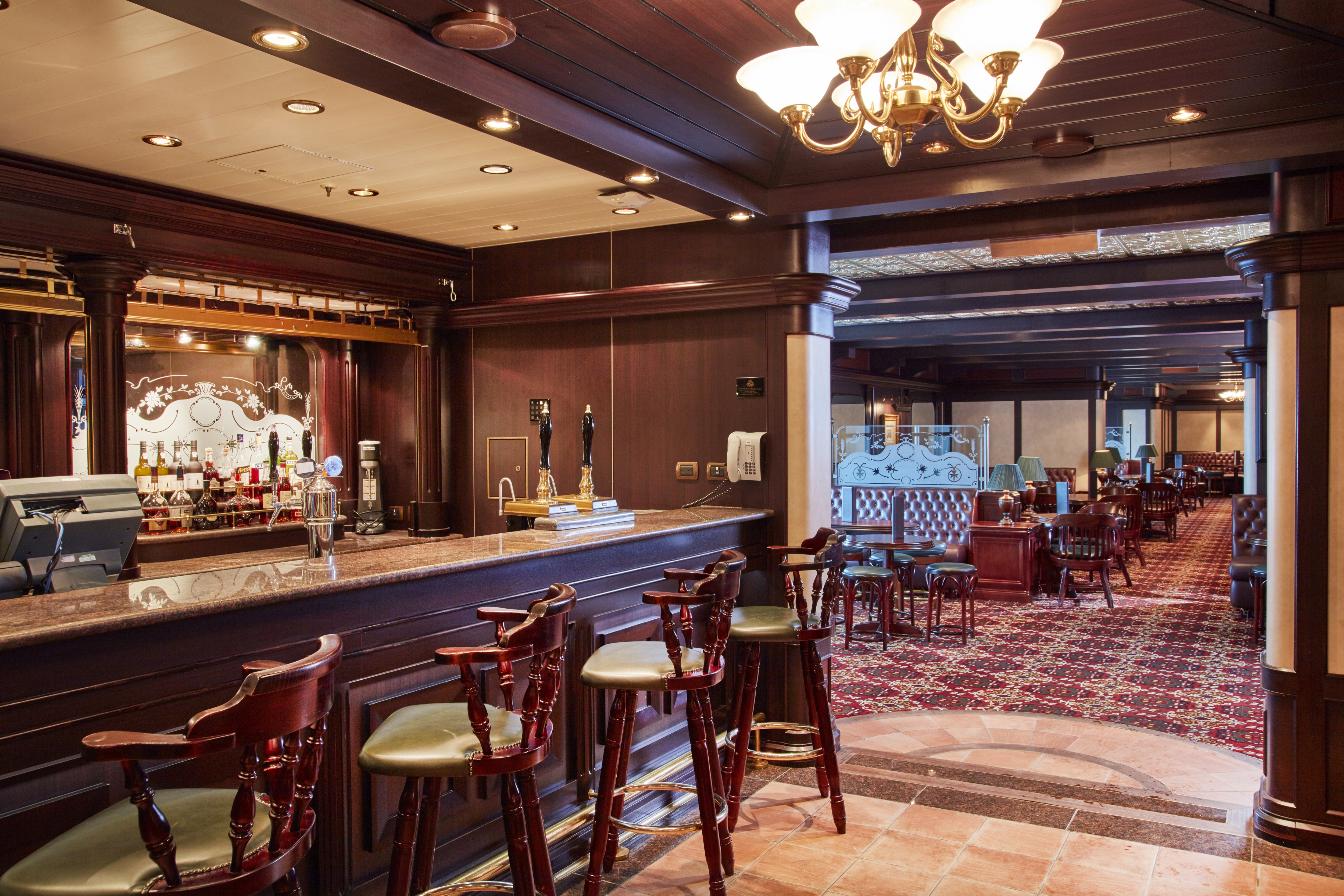
With its spacious dancefloor, the Queens Room is home to dance classes, Gala Evenings, and our much-loved Afternoon Tea. Following Queen Victoria’s refit, this elegant venue will be refreshed with details inspired by Queen Victoria’s orange blossom brooch and wedding bouquet.
Illustrative render of proposed Queen Victoria refit enhancements. Final design and finishes may vary.
Grand Lobby
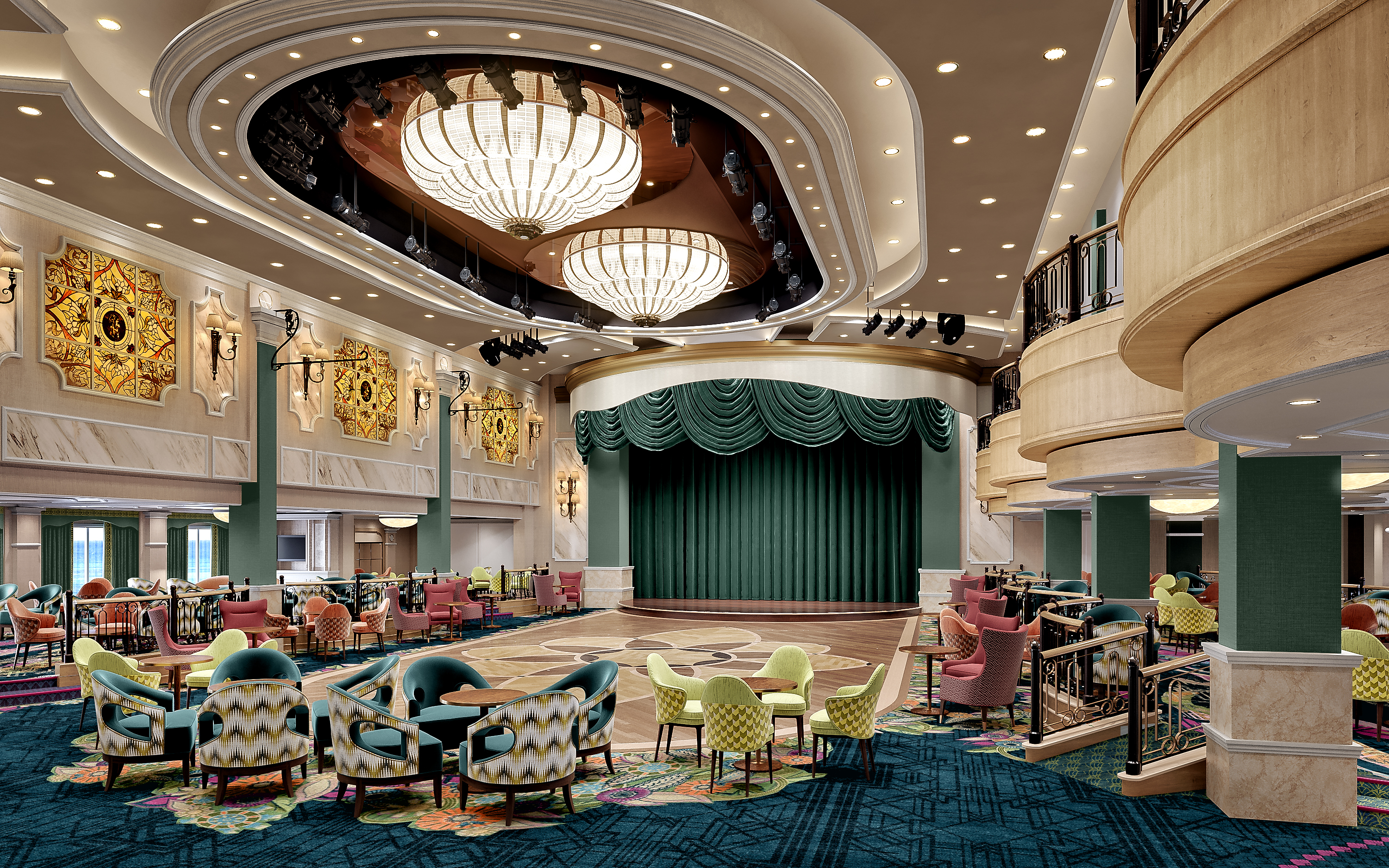
The Grand Lobby will be enriched with rich, regal design details, creating an even more striking sense of arrival on board.
Illustrative render of proposed Queen Victoria refit enhancements. Final design and finishes may vary.
Mareel Wellness & Beauty Spa
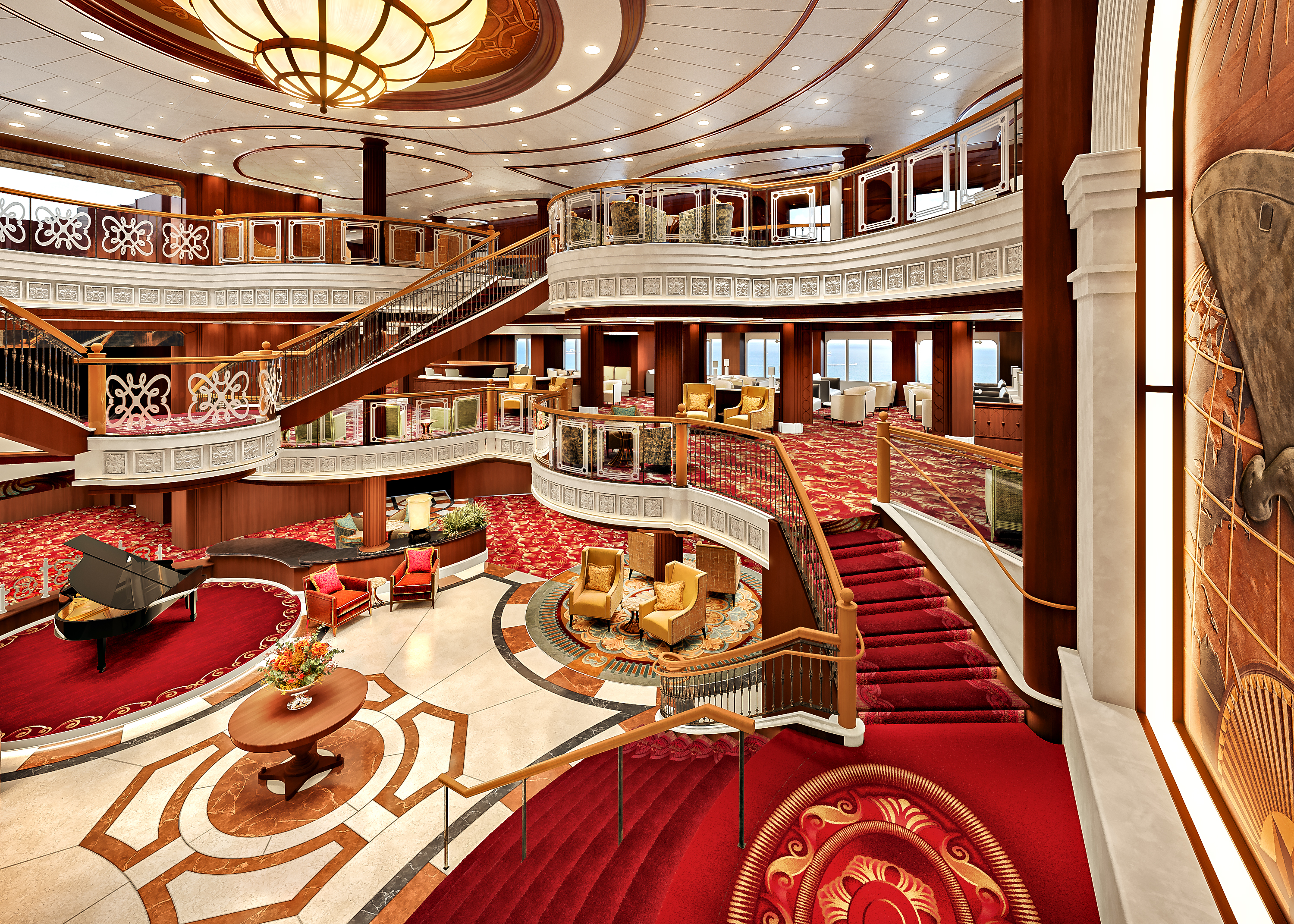
A haven of serenity and indulgence awaits you at Queen Victoria’s on board spa, Mareel Wellness & Beauty, where expert therapists guide you on a journey of vitality and relaxation. Select your favourites from a bespoke menu of rejuvenating treatments and therapies, each offering their own transformative benefits. Soothing massages and invigorating facials. Nourishing body wraps and scrubs. Every experience at Mareel is a celebration of self-care and indulgence.
Fitness Centre
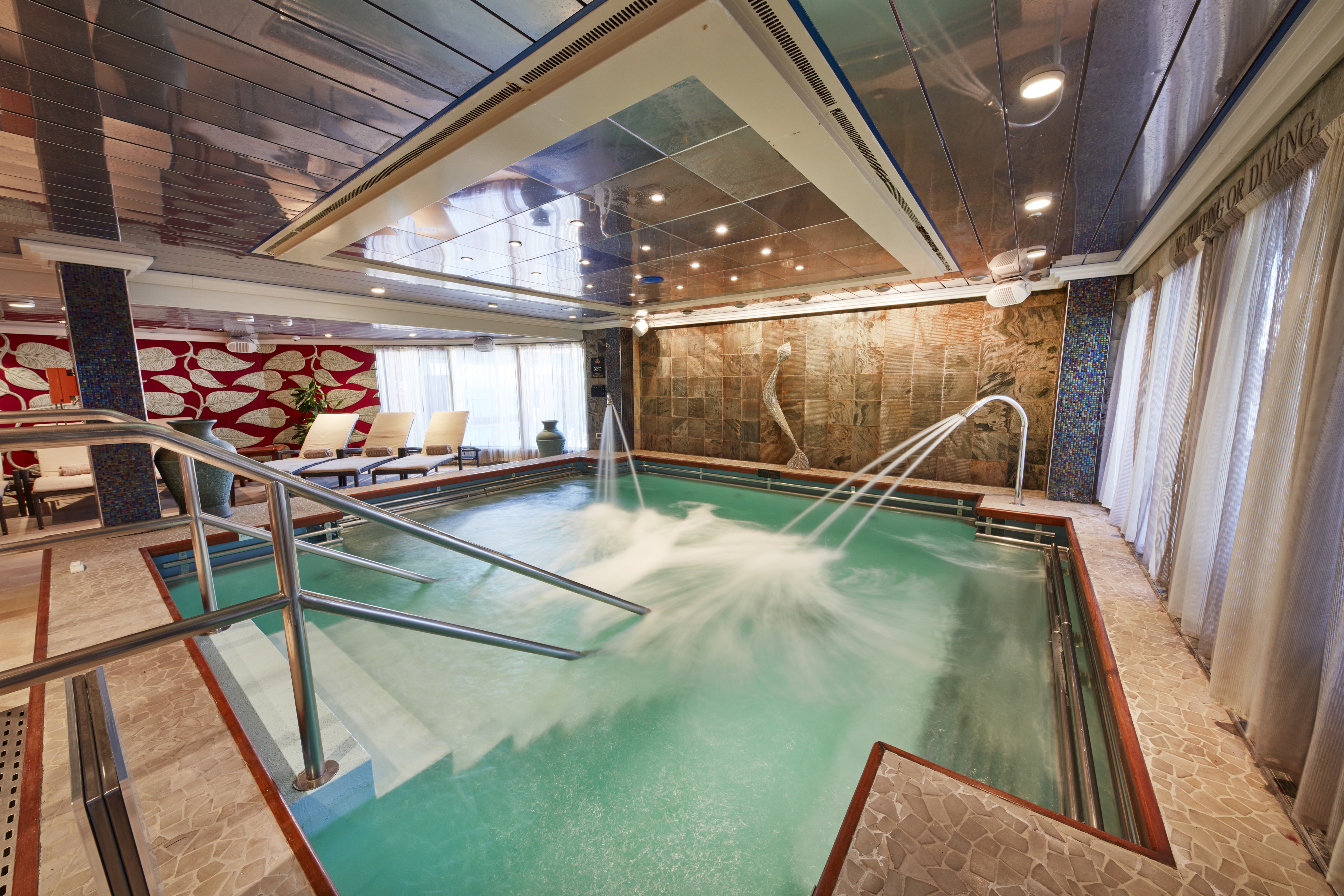
Finesse your fitness with a visit to Queen Victoria’s fitness centre. Equipped with the latest cardio and strength-training equipment, this enhanced gym and studio space has everything you need to stay active at sea. Whether you prefer a high-intensity workout or a gentle yoga class, you’ll find an activity to suit your fitness style and pace. Join a group class for added motivation, or book a person training session with one of our qualified instructors to tailor your workout to your unique body goals.
Night Nursery
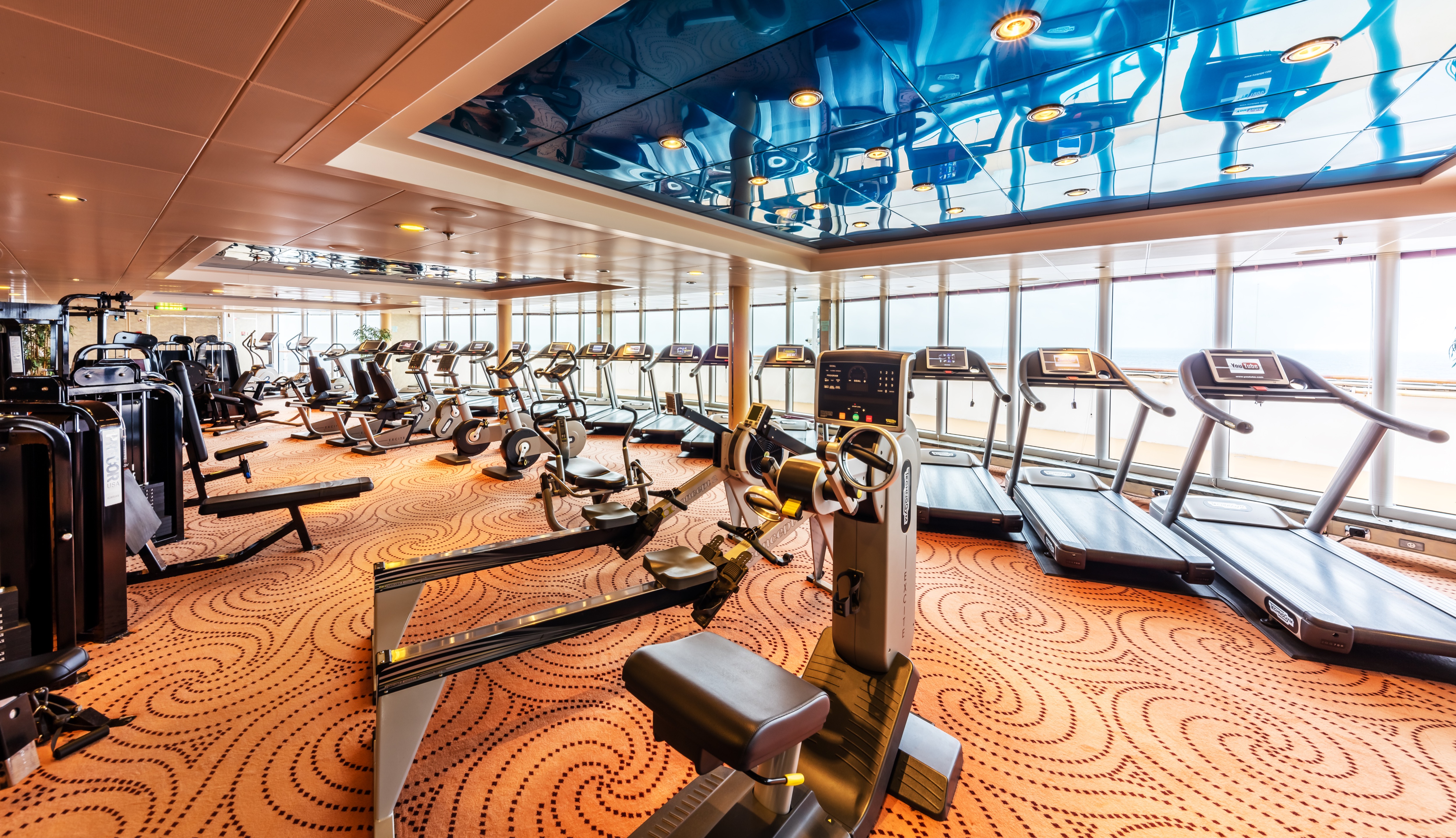
Enjoy your holiday even more, knowing that your little ones have a safe place to sleep each evening.
There’s a great sense of freedom to be had when you can enjoy drinks, dinner or a show knowing that your little ones are sleeping soundly. Available on a first come first served basis, our free of charge Night Nursery equips you with a pager so we can contact you if need be or, if you let us know your plans, we’ll come and find you. For that extra peace of mind professional childminders are on hand. Suitable for children aged 6 to 23 months and open from 6pm to 11pm.
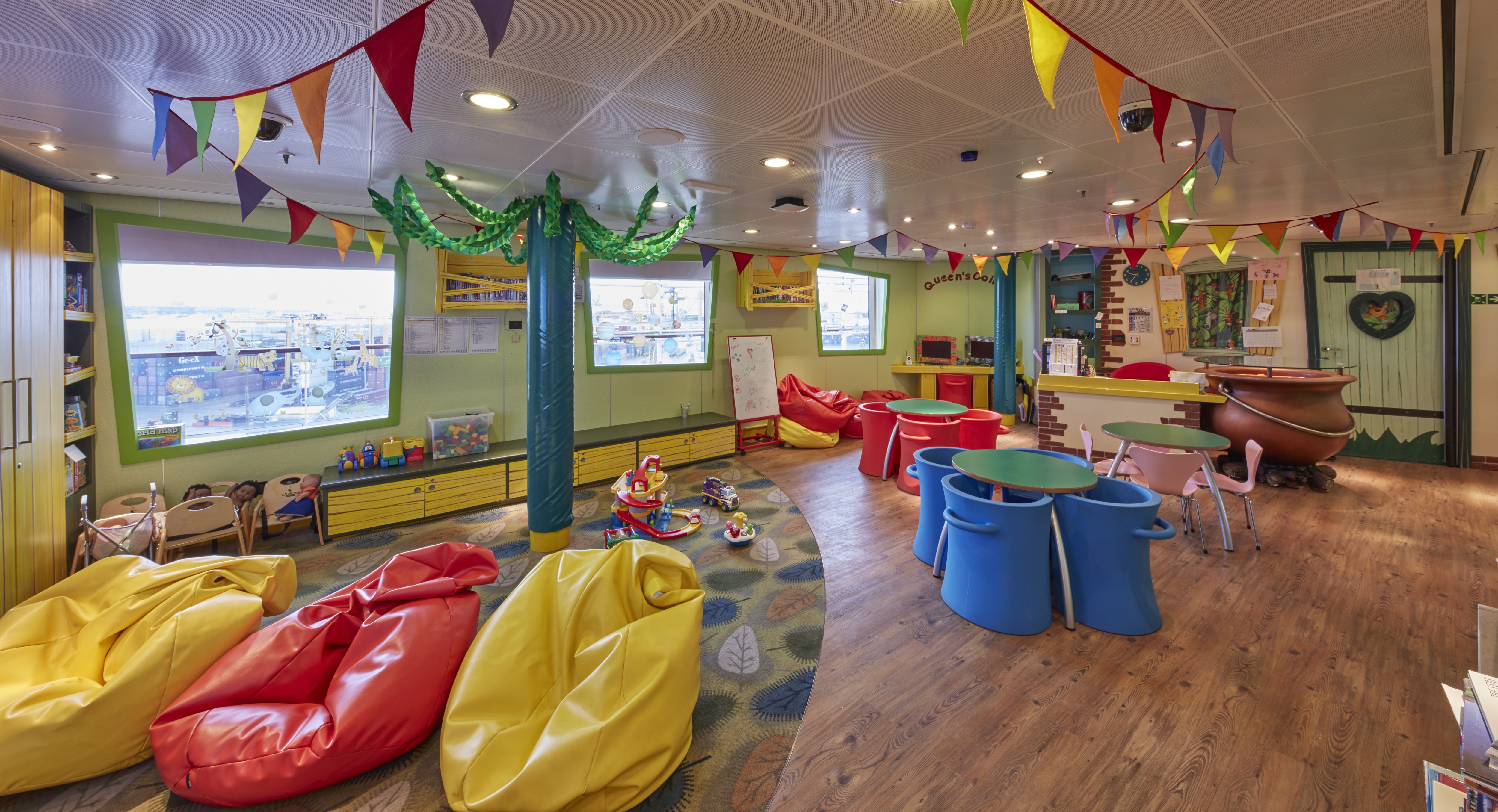
Play Zone
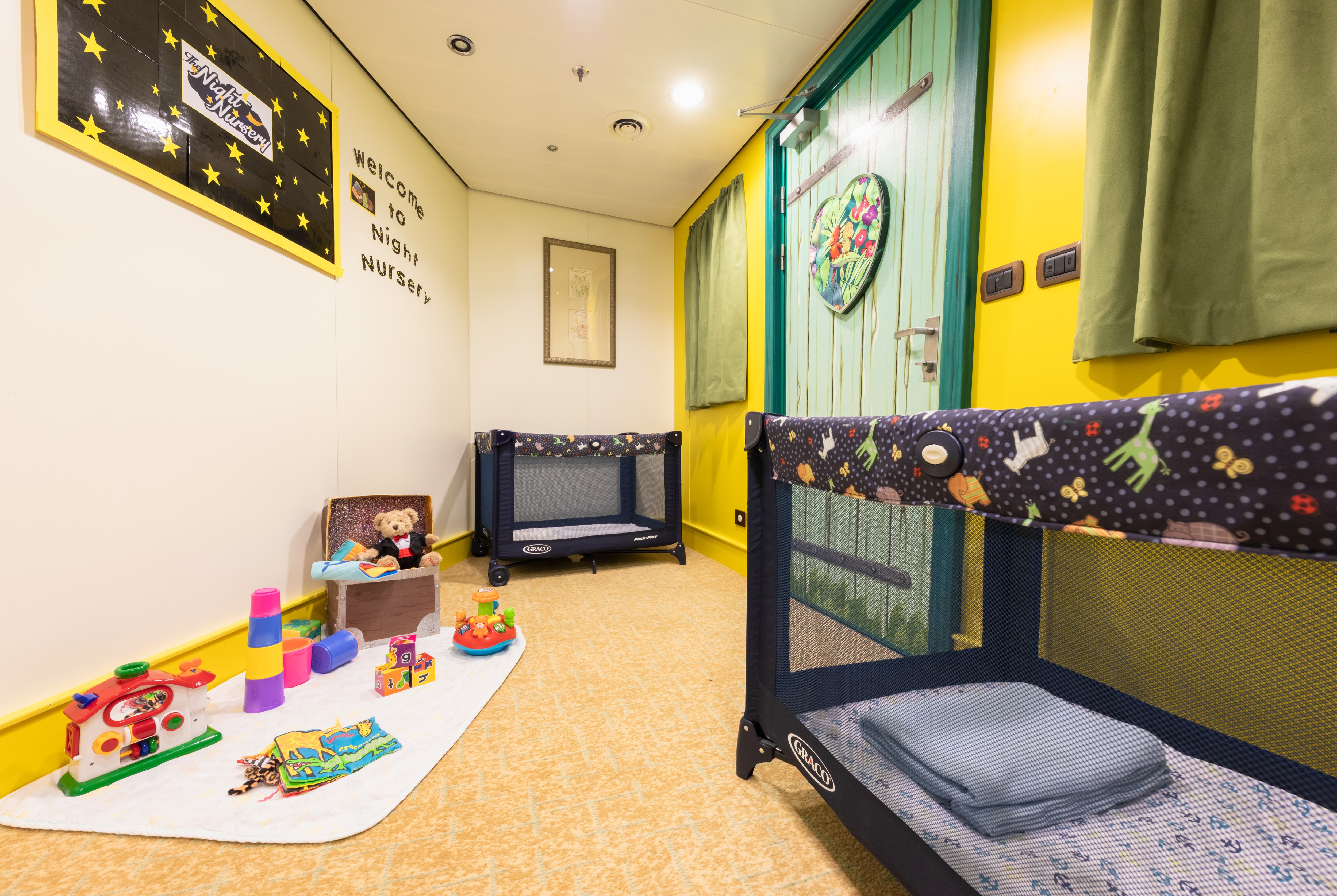
Children aged 2 to 7 will love the activities and themed days in this supervised haven.
The Play Zone is a fully supervised play area which younger members of your family will just love. They’re sure to have a fun-filled holiday with the structured activities provided by our fully trained Youth Team – including themed days, arts and crafts, games, books, puzzles, toys and computer games. There’s even a sheltered outdoor play area with a range of play equipment such as cars and tricycles. Infants from 6 months to 23 months are welcome to join in the fun, with parental supervision.
Access to The Play Zone is included in your fare.
Kids Zone
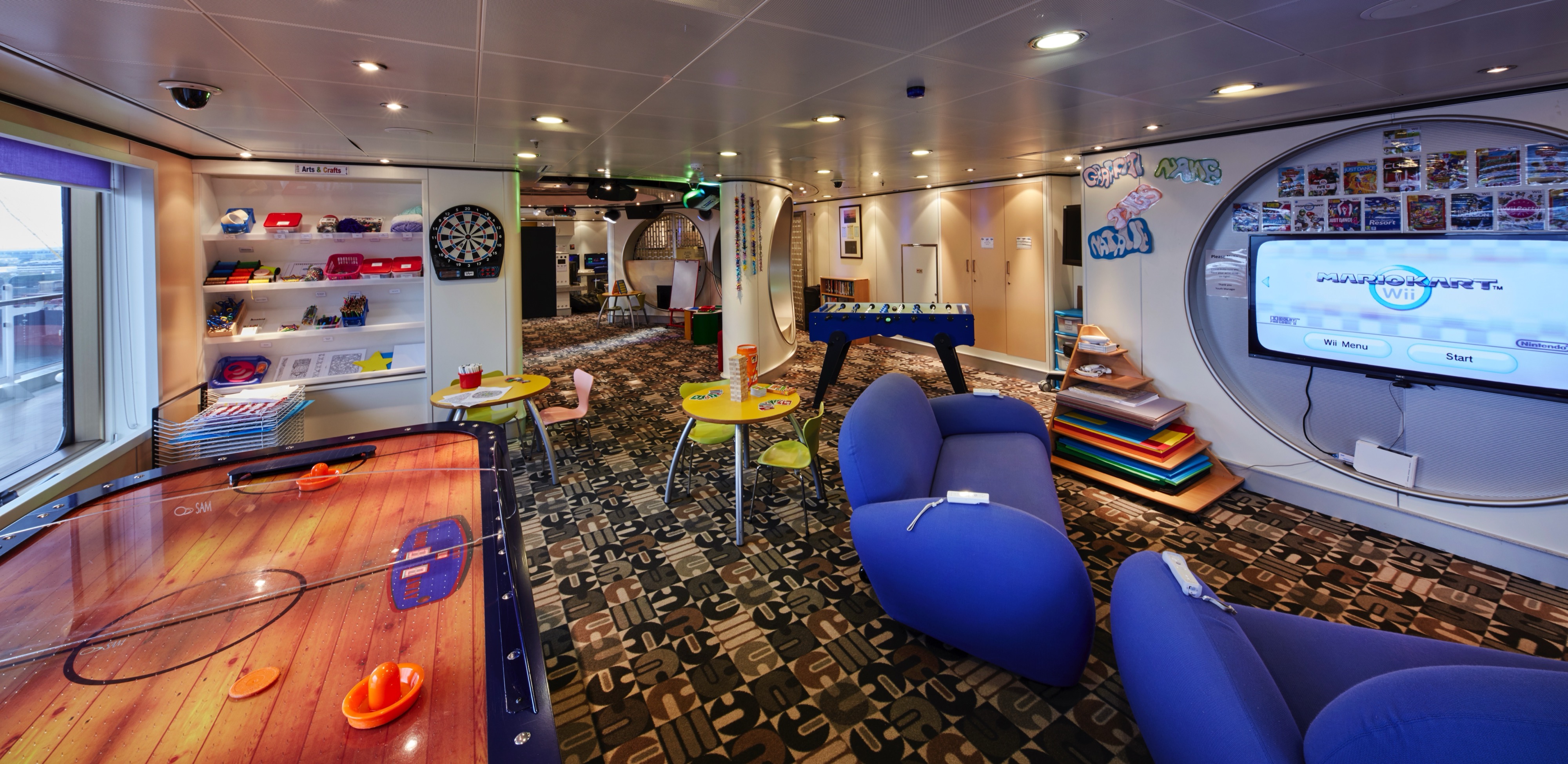
The varied activities running here throughout the day are just the thing for 8 to 12 year olds.
Kids aged 8 to 12 will experience the time of their lives with the games and activities available in this dedicated area. Our Youth Team provides the supervision and organises events so that each action-packed day has something for everyone including sports, arts and crafts, friendly challenges and, of course, games consoles. Note that the exact age groupings will depend on the number of children travelling on any particular voyage.
Access to The Kids’ Zone is included in your fare.
Our ships offer a range of entertainment and activities tailored to children of specific age groups in our children’s clubs on voyages of up to 29 nights. For voyages that sail for 30 nights or longer, including World Voyages, our teams will not be on board to manage the children’s club, however the areas will be open for parents to stay and play with their children, and enjoy the facilities together.
Teen Zone
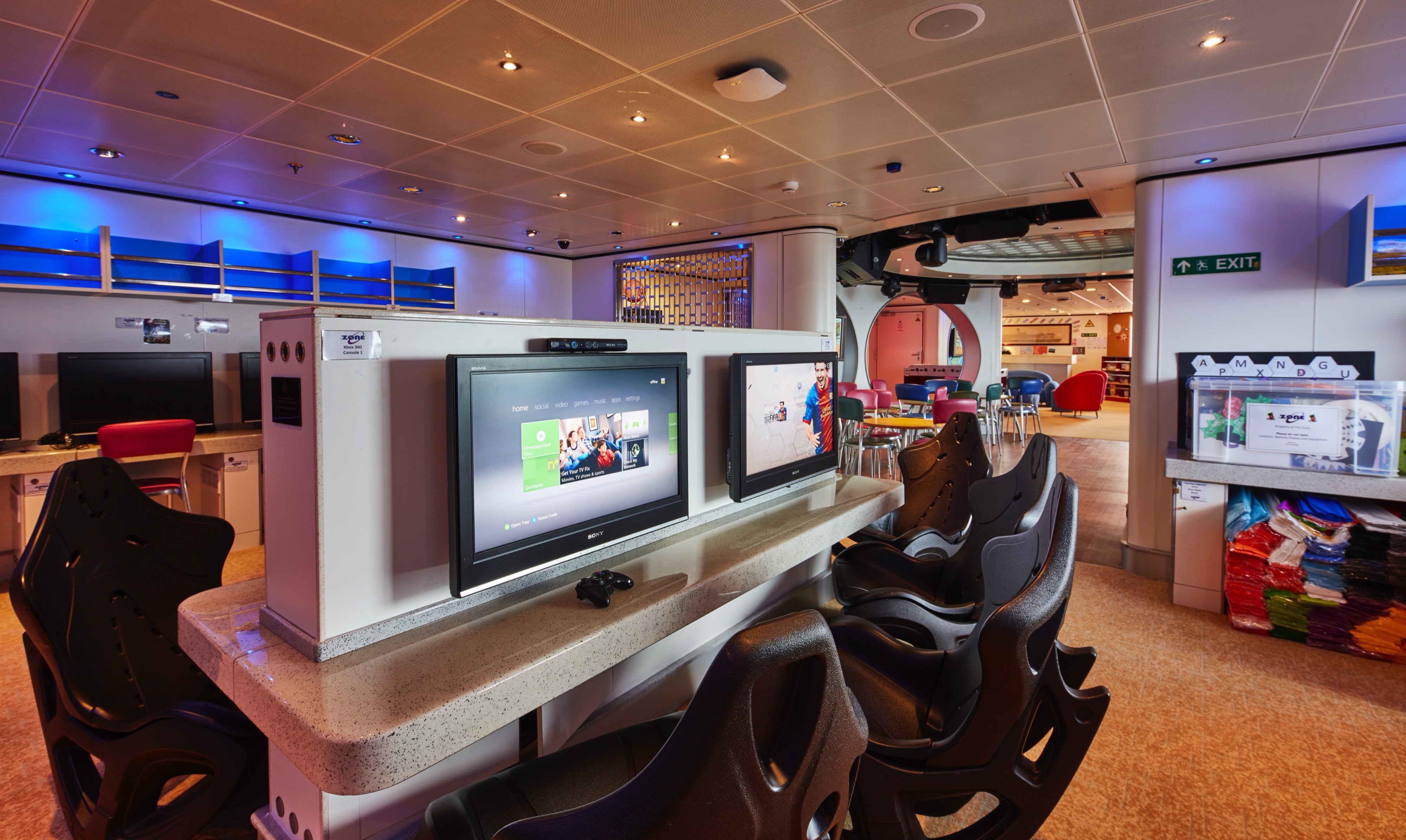
Teenagers 13 to 17 will have a great time with the sports, discos and games we run around the ship.
Teens in your party will have a whale of a time in this dedicated club for 13 to 17 year-olds. They can enjoy deck sports, discos, gaming consoles, quizzes and much more – ensuring an action-packed holiday. They’ll also appreciate the special Teen Zone area where they can challenge each other to the latest video games as well as the table tennis tournaments and team games we organise. Note that the exact age groupings will depend on the number of children travelling on any particular voyage.
Access to The Teen Zone is included in your fare.
Queen's Grill
The pinnacle of fine dining at sea, exclusively for guests staying in our Queens Grill Suites.
Drawing inspiration from the world’s finest kitchens, the Queens Grill restaurant offers a true taste of fine dining on board, elevated by a front of house team for whom nothing is too much trouble.
Open for breakfast, lunch and dinner daily, with a Grills Afternoon Tea served separately in the Grills Lounge, a visit to the Queens Grill always feels like a special occasion.
You’ll be dining among your fellow Queens Grill guests, with a table reserved for your exclusive use throughout your voyage. There’s no need to book. Simply arrive whenever you’re ready and your table will be waiting. You may even choose to take your meal in your suite, should you wish.
Each day introduces a coveted line-up of à la carte dishes, complemented by an ‘always-available’ menu of appetisers, entrees, and desserts, executed with exemplary flair and finesse.
Alternatively, opt for one of our chef’s speciality sharing dishes (orderable in advance at breakfast or lunchtimes). From beef wellington to rack of lamb, the choice is truly indulgent. Each dish (along with select offerings on our menu) is finished and presented to you table-side, only heightening the sense of theatre that’s a signature of Queens Grill dining.
Dining at the Queens Grill restaurant is exclusive to Queens Grill guests and included within your Cunard fare. The restaurant operates relaxed dress by day and smart attire (jacket optional) for dinner service after 6.00pm, except on Gala Evenings when we invite you to dress in black tie.
Princess Grill
Imaginative cooking and flawless service create a dining experience fit for royalty.
For the exclusive use of guests in our Princess Grill Suites, this exquisite restaurant offers à la carte dining at an elevated level.
With a dining room to rival the world’s most luxurious hotels and a menu that showcases classical flavour pairings, creatively reimagined, the Princess Grill restaurant is among the most prestigious of our on board dining experiences. Discreet but attentive service and a raft of personal touches make every meal special.
You’ll find a comprehensive selection of continental and cooked dishes ready to rouse you each morning, whilst lunchtimes introduce a delicious four course menu alongside lighter options.
Evenings are a particularly grand affair, with the theatre of tableside serving inspiring a greater sense of occasion. Your table for dinner is reserved throughout your voyage, with no need to book; simply take your seat whenever you wish, between 6.30pm and 9.00pm.
Dining at the Princess Grill restaurant is included in your fare if you’re staying in one of our Princess Grill Suites. Relaxed dress is welcomed at breakfast and lunch, and smart attire (jacket optional) after 6.00pm, except on Gala Evenings when we invite you to dress in black tie.
Britannia Restaurant
This grand two-tiered restaurant is the main dining room for guests staying in Queen Victoria’s Britannia Staterooms. Welcoming diners for breakfast, lunch, and dinner, taking your seat at the linen-dressed tables, always feels like an event. You’ll find a new a la carte lunch and dinner menu to temp you each day of your cruise, always with a choice of meat, fish, and vegan options. Breakfast at the Britannia Restaurant offers a mix of continental and cooked favourites, such as eggs benedict, fresh fruit, and our chef’s signature English breakfast.
Steakhouse at The Verandah
If you find yourself seeking an elevated gourmet experience on board Queen Victoria, look no further than The Verandah. This intimate dining venue offers an extraordinary gastronomic experience led by the simplicity of exceptional ingredients. From tiered platters of fruit de mer, laden with oysters, lobster, and crab, to succulent Black Angus and Wagyu steaks, accompanied by your choice of steak knife, each mouthful at The Verandah is a culinary masterpiece. Feast on a symphony of the finest ingredients sourced from land and sea. Will you make this gastronomic discovery a destination on your next Queen Victoria cruise?
The Lido
When you’re in the mood for a more informal dining experience, The Lido buffet is sure to appeal. This casual but considered dining spot offers a relaxed approach to dining, with self-service food stations showcasing an array of culinary delights. Whether you’re craving something quintessentially British or a dish inspired by the ports on your cruise, you’ll find it here. Hot dishes are updated daily, while fresh hand-rolled sushi and salads are always available at lunchtime. From 3pm, the Lido tempts you with Afternoon Tea favourites, including finger sandwiches, scones, and cakes. Towards the end of the evening, the Lido offers a late-night buffet, where you can indulge in one final culinary adventure before retiring to bed.
The Pavilion Wellness Cafe
The Pavilion Wellness Café will offer fresh, nourishing options in a relaxed setting. Enjoy smoothies, juices, salads, grain bowls, and light bites throughout your voyage.
Chart Room
Resplendent with its brushed gold accents, the Chart Room’s symmetrical interiors offer a timeless nod to the romance and geometry of Art Deco design. You’ll find this striking bar directly off the Grand Lobby, opposite Steakhouse at The Verandah on Deck 2. It’s a wonderful venue to visit on Gala Evenings when the sight of tuxedo-attired gentlemen and women in evening gowns evokes the spirit of a bygone era. The signature drink selection includes a range of custom cocktails inspired by the Zodiac. Ask the bartender to mix you up your birth sign or defy convention and let your tastebuds choose.
Commodore Club
For a Queen Victoria bar with the best sea views, look no further than the Commodore Club. A sophisticated lounge with picture height windows, the Commodore Club offers ocean panoramas like nowhere else on board. You’ll find this popular bar at the bow of Deck 10, above the Bridge. While a full drinks service is offered, the speciality here is a selection of Commodore cocktails, inspired by seven of our fleet’s most decorated Captains. Canapés are served on early evening visits and the atmosphere here is always one of elegance, with soothing background music courtesy of a live pianist.
Yacht Club
When the rest of the ship is winding down, Queen Victoria’s Yacht Club can always be counted on to keep the party going. Open for Insights talks, choir rehearsals, and dance classes during the day, this nautical themed lounge-bar takes on a whole new persona come nightfall. The home of karaoke and late-night DJs on board, you’ll find the decks spinning at the Yacht Club long after our other bars and lounges have called it a night. Sink into one of the low-slung sofas and tap along to the sounds filling the air or join your fellow revellers on the dance floor, putting all inhibitions aside in true holiday spirit.
Golden Lion
You’ll find all the warmth and conviviality of a traditional English pub at Queen Victoria’s Golden Lion. With hearty food and beers on draught, a visit here feels just as welcoming as stepping into your local. Relaxed dress is welcome at all times of day, even on Gala Evenings, and there’s live music and pub quizzes to keep you entertained. Well, who doesn’t love a bit of friendly competition? A complimentary menu featuring fish and chips, pie and mash, and our signature Cunard Ploughman’s is available at lunchtimes, while the drinks selection includes a range of Cunard own-brand ales and a choice of Bloody Marys.
Queens Room
With its spacious dancefloor, the Queens Room is home to dance classes, Gala Evenings, and our much-loved Afternoon Tea. Following Queen Victoria’s refit, this elegant venue will be refreshed with details inspired by Queen Victoria’s orange blossom brooch and wedding bouquet.
Illustrative render of proposed Queen Victoria refit enhancements. Final design and finishes may vary.
Grand Lobby
The Grand Lobby will be enriched with rich, regal design details, creating an even more striking sense of arrival on board.
Illustrative render of proposed Queen Victoria refit enhancements. Final design and finishes may vary.
Mareel Wellness & Beauty Spa
A haven of serenity and indulgence awaits you at Queen Victoria’s on board spa, Mareel Wellness & Beauty, where expert therapists guide you on a journey of vitality and relaxation. Select your favourites from a bespoke menu of rejuvenating treatments and therapies, each offering their own transformative benefits. Soothing massages and invigorating facials. Nourishing body wraps and scrubs. Every experience at Mareel is a celebration of self-care and indulgence.
Fitness Centre
Finesse your fitness with a visit to Queen Victoria’s fitness centre. Equipped with the latest cardio and strength-training equipment, this enhanced gym and studio space has everything you need to stay active at sea. Whether you prefer a high-intensity workout or a gentle yoga class, you’ll find an activity to suit your fitness style and pace. Join a group class for added motivation, or book a person training session with one of our qualified instructors to tailor your workout to your unique body goals.
Night Nursery
Enjoy your holiday even more, knowing that your little ones have a safe place to sleep each evening.
There’s a great sense of freedom to be had when you can enjoy drinks, dinner or a show knowing that your little ones are sleeping soundly. Available on a first come first served basis, our free of charge Night Nursery equips you with a pager so we can contact you if need be or, if you let us know your plans, we’ll come and find you. For that extra peace of mind professional childminders are on hand. Suitable for children aged 6 to 23 months and open from 6pm to 11pm.
Play Zone
Children aged 2 to 7 will love the activities and themed days in this supervised haven.
The Play Zone is a fully supervised play area which younger members of your family will just love. They’re sure to have a fun-filled holiday with the structured activities provided by our fully trained Youth Team – including themed days, arts and crafts, games, books, puzzles, toys and computer games. There’s even a sheltered outdoor play area with a range of play equipment such as cars and tricycles. Infants from 6 months to 23 months are welcome to join in the fun, with parental supervision.
Access to The Play Zone is included in your fare.
Kids Zone
The varied activities running here throughout the day are just the thing for 8 to 12 year olds.
Kids aged 8 to 12 will experience the time of their lives with the games and activities available in this dedicated area. Our Youth Team provides the supervision and organises events so that each action-packed day has something for everyone including sports, arts and crafts, friendly challenges and, of course, games consoles. Note that the exact age groupings will depend on the number of children travelling on any particular voyage.
Access to The Kids’ Zone is included in your fare.
Our ships offer a range of entertainment and activities tailored to children of specific age groups in our children’s clubs on voyages of up to 29 nights. For voyages that sail for 30 nights or longer, including World Voyages, our teams will not be on board to manage the children’s club, however the areas will be open for parents to stay and play with their children, and enjoy the facilities together.
Teen Zone
Teenagers 13 to 17 will have a great time with the sports, discos and games we run around the ship.
Teens in your party will have a whale of a time in this dedicated club for 13 to 17 year-olds. They can enjoy deck sports, discos, gaming consoles, quizzes and much more – ensuring an action-packed holiday. They’ll also appreciate the special Teen Zone area where they can challenge each other to the latest video games as well as the table tennis tournaments and team games we organise. Note that the exact age groupings will depend on the number of children travelling on any particular voyage.
Access to The Teen Zone is included in your fare.
About the Ship
Deck Plans

- Staterooms
- Royal Court Theatre (Lower)
- Connexions
- Grand Lobby
- Pursers Office
- Tour Office

- Royal Court Theatre (Middle)
- Stateroom
- Golden Lion Pub
- Queens Room
- Queens Arcade
- Voyage Sales Office
- Cunardia
- Library (Lower)
- The Verandah Restaurant
- Chart Room
- Britannia Restaurant (Lower)
- Britannia Club

- Royal Court Theatre (Upper)
- Promenade Deck
- Shops
- Royal Arcade
- Art Gallery
- Connexions
- Cunardia Gallery
- Library (Upper)
- Grand Lobby
- The Book Shop
- The Alcove
- Midship’s Lounge
- Britannia Restaurant (Upper)

- Penthouses
- Queen Suites
- Princess Suites
- Staterooms

- Penthouses
- Queens Suites
- Princess Suites
- Staterooms

- Grand Suites
- Penthouses
- Princess Suites
- Staterooms

- Royal Suites
- Queens Suites
- Princess Suites
- Staterooms
- Laundrette

- Grand Master
- Queen Suites
- Princess Suites
- Penthouses

- Royal Spa
- Fitness Centre
- Aerobic Area
- Spa Reception
- Hair Salon
- Thermal Suites
- Pavilion Bar
- Hydropool
- Wellness Café at the Pavilion
- Pavilion Bar
- Pavilion Pool
- Winter Garden
- The Lido Restaurant
- Lido Pool Grill
- Stage
- Lido Pool Bar
- Lido Pool
- Whirpools

- The Commodore Club
- Royal Spa & Fitness Centre (Upper)
- Churchills Lounge
- Admirals Lounge
- Yatch Club
- Children’s Outdoor Area
- Teens Outdoor Area
- The Play Zone
- The Zone
Britannia Deluxe Oceanview Staterooms

- Sports Deck
- The Terrace
- The Grills Lounge
- The Courtyard
- Queens Grill
- Princess Grill

- The Grill’s Upper Terrace
- Staterooms
- Royal Court Theatre (Lower)
- Connexions
- Grand Lobby
- Pursers Office
- Tour Office
- Royal Court Theatre (Middle)
- Stateroom
- Golden Lion Pub
- Queens Room
- Queens Arcade
- Voyage Sales Office
- Cunardia
- Library (Lower)
- The Verandah Restaurant
- Chart Room
- Britannia Restaurant (Lower)
- Britannia Club
- Royal Court Theatre (Upper)
- Promenade Deck
- Shops
- Royal Arcade
- Art Gallery
- Connexions
- Cunardia Gallery
- Library (Upper)
- Grand Lobby
- The Book Shop
- The Alcove
- Midship’s Lounge
- Britannia Restaurant (Upper)
- Penthouses
- Queen Suites
- Princess Suites
- Staterooms
- Penthouses
- Queens Suites
- Princess Suites
- Staterooms
- Grand Suites
- Penthouses
- Princess Suites
- Staterooms
- Royal Suites
- Queens Suites
- Princess Suites
- Staterooms
- Laundrette
- Grand Master
- Queen Suites
- Princess Suites
- Penthouses
- Royal Spa
- Fitness Centre
- Aerobic Area
- Spa Reception
- Hair Salon
- Thermal Suites
- Pavilion Bar
- Hydropool
- Wellness Café at the Pavilion
- Pavilion Bar
- Pavilion Pool
- Winter Garden
- The Lido Restaurant
- Lido Pool Grill
- Stage
- Lido Pool Bar
- Lido Pool
- Whirpools
- The Commodore Club
- Royal Spa & Fitness Centre (Upper)
- Churchills Lounge
- Admirals Lounge
- Yatch Club
- Children’s Outdoor Area
- Teens Outdoor Area
- The Play Zone
- The Zone
Britannia Deluxe Oceanview Staterooms
- Sports Deck
- The Terrace
- The Grills Lounge
- The Courtyard
- Queens Grill
- Princess Grill
- The Grill’s Upper Terrace