Featured Cabins
Itinerary
Seattle, Washington, United States
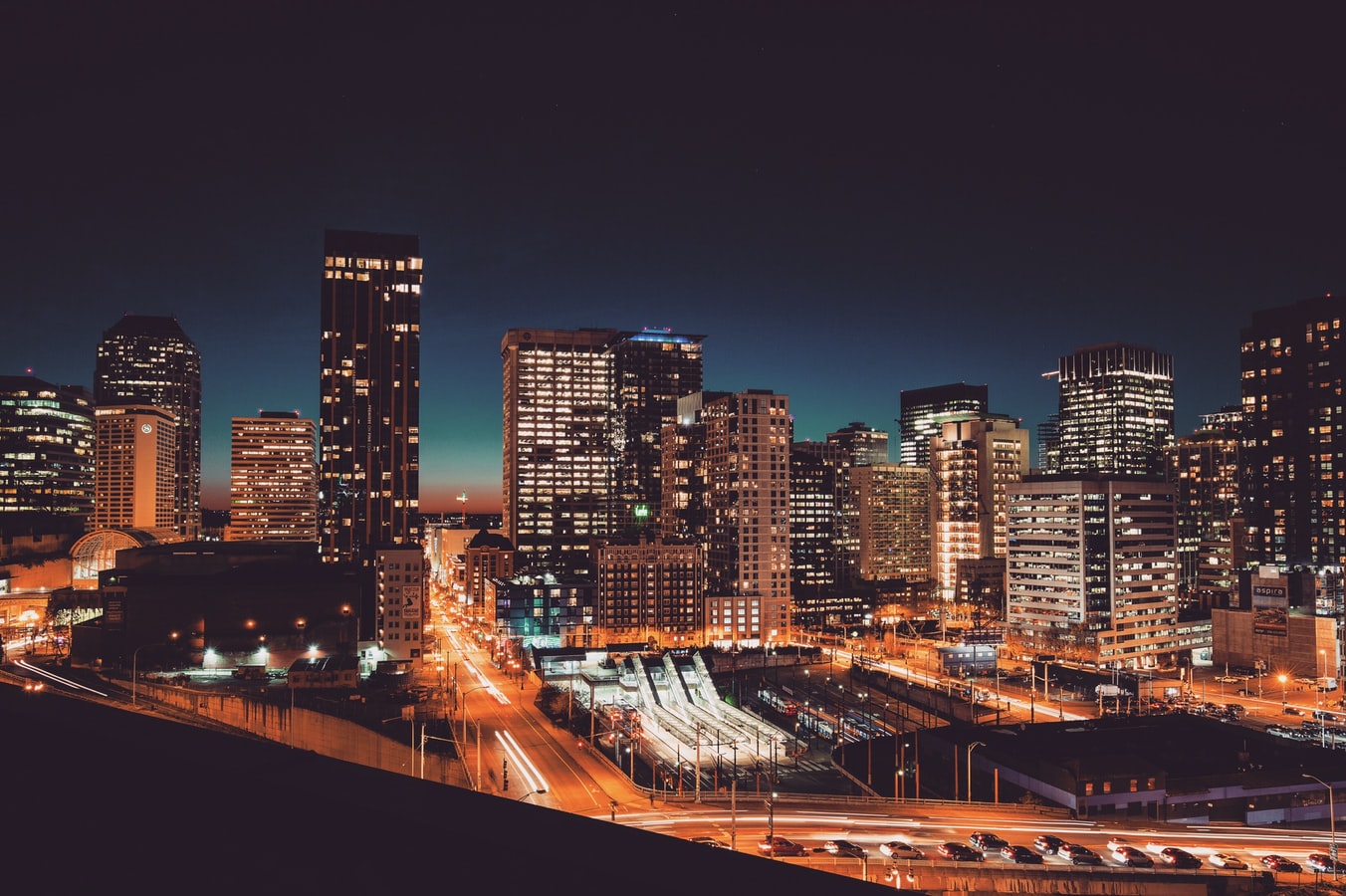
Seattle is a scenic seaport city in western Washington, situated on an isthmus between Puget Sound to the west and Lake Washington to the east. It is the largest city in Washington. Five pioneer families from Illinois first settled the area in 1851, and named the town after a friendly Suquamish Indian chief. It was incorporated as a city in 1869, and grew quickly after the Great Northern Railway arrived in 1893, especially during the Alaska Gold Rush of 1897. When the Panama Canal opened in 1914, Seattle became a major Pacific port of entry, and today it is the region’s commercial and transportation hub and the centre of manufacturing, trade, and finance, with an estimated 684,451 residents as of 2015.
Ketchikan, Alaska, United States
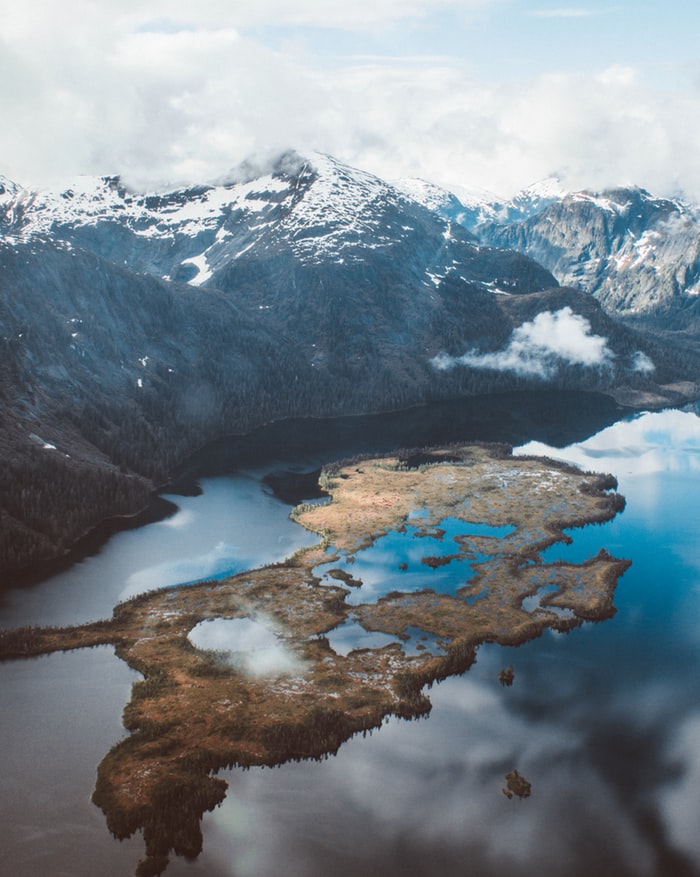
Ketchikan is famous for its colorful totem poles, rainy skies, steep–as–San Francisco streets, and lush island setting. Some 13,500 people call the town home, and, in the summer, cruise ships crowd the shoreline, floatplanes depart noisily for Misty Fiords National Monument, and salmon-laden commercial fishing boats motor through Tongass Narrows. In the last decade Ketchikan’s rowdy, blue-collar heritage of logging and fishing has been softened by the loss of many timber-industry jobs and the dramatic rise of cruise-ship tourism. With some effort, though, visitors can still glimpse the rugged frontier spirit that once permeated this hardscrabble cannery town. Art lovers should make a beeline for Ketchikan: the arts community here is very active. Travelers in search of the perfect piece of Alaska art will find an incredible range of pieces to choose from.The town is at the foot of 3,000-foot Deer Mountain, near the southeastern corner of Revillagigedo (locals shorten it to Revilla) Island. Prior to the arrival of white miners and fishermen in 1885, the Tlingit used the site at the mouth of Ketchikan Creek as a summer fish camp. Gold discoveries just before the turn of the 20th century brought more immigrants, and valuable timber and commercial fishing resources spurred new industries. By the 1930s the town bragged that it was the “salmon-canning capital of the world.” You will still find some of Southeast’s best salmon fishing around here. Ketchikan is the first bite of Alaska that many travelers taste. Despite its imposing backdrop, hillside homes, and many staircases, the town is relatively easy to walk through. Favorite downtown stops include the Spruce Mill Development shops and Creek Street. A bit farther away you’ll find the Totem Heritage Center. Out of town (but included on most bus tours) are two longtime favorites: Totem Bight State Historical Park to the north and Saxman Totem Park to the south.
Juneau, Alaska, United States
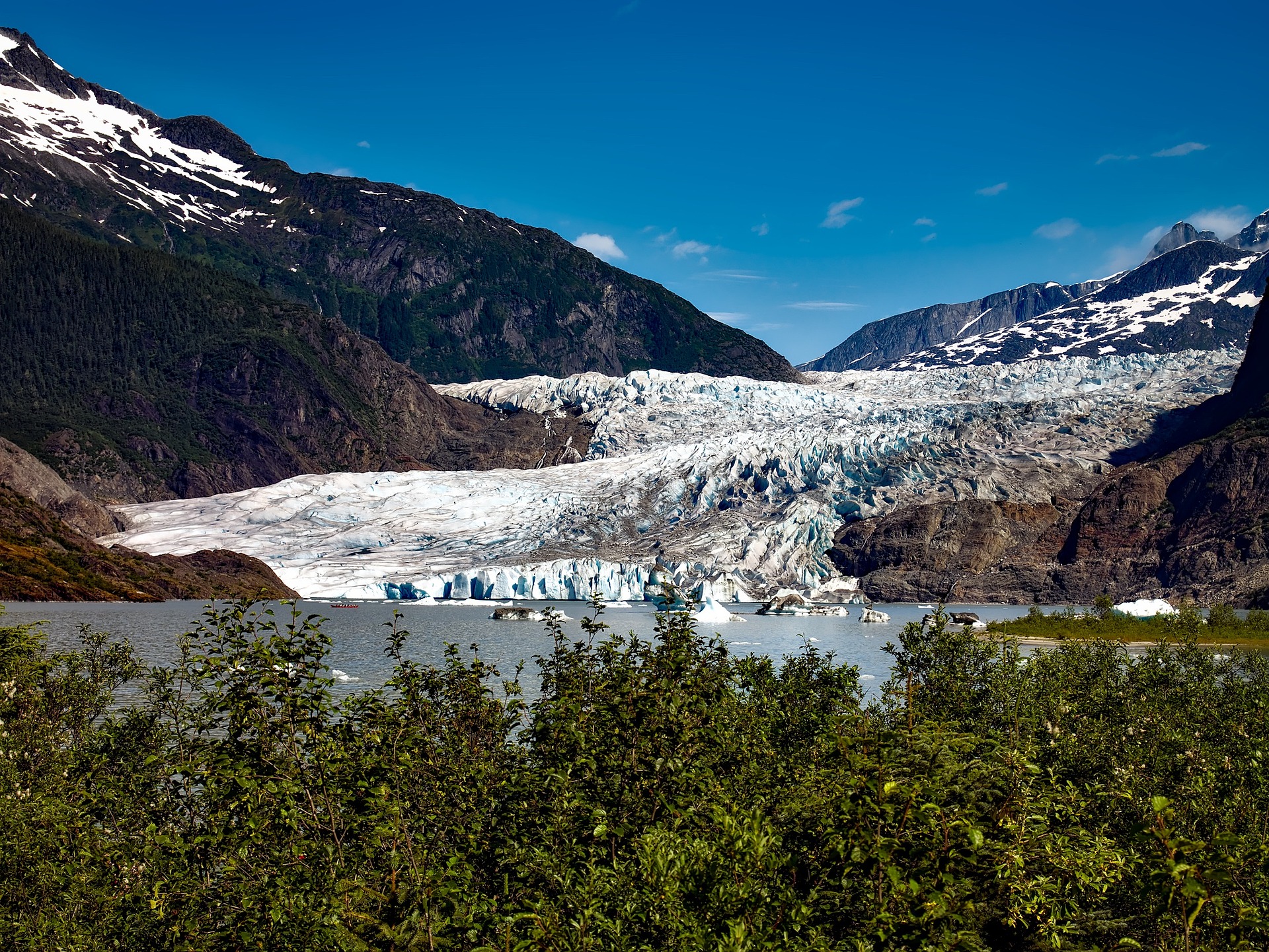
Juneau, Alaska’s capital and third-largest city, is on the North American mainland but can’t be reached by road. Bounded by steep mountains and water, the city’s geographic isolation and compact size make it much more akin to an island community such as Sitka than to other Alaskan urban centers, such as Fairbanks or Anchorage. Juneau is full of contrasts. Its dramatic hillside location and historic downtown buildings provide a frontier feeling, but the city’s cosmopolitan nature comes through in fine museums, noteworthy restaurants, and a literate and outdoorsy populace. The finest of the museums, the Alaska State Museum, is scheduled to reopen in May 2016 on its old site as the expanded Alaska State Library, Archives, and Museum (SLAM) following several years of planning and exhibit research. Another new facility, the Walter Soboleff Center, offers visitors a chance to learn about the indigenous cultures of Southeast Alaska–-Tlingit, Haida, and Tsimshian. Other highlights include the Mt. Roberts Tramway, plenty of densely forested wilderness areas, quiet bays for sea kayaking, and even a famous drive-up glacier, Mendenhall Glacier. For goings-on, pick up the Juneau Empire (www.juneauempire.com), which keeps tabs on state politics, business, sports, and local news.
Glacier Bay National Park, Alaska, United States
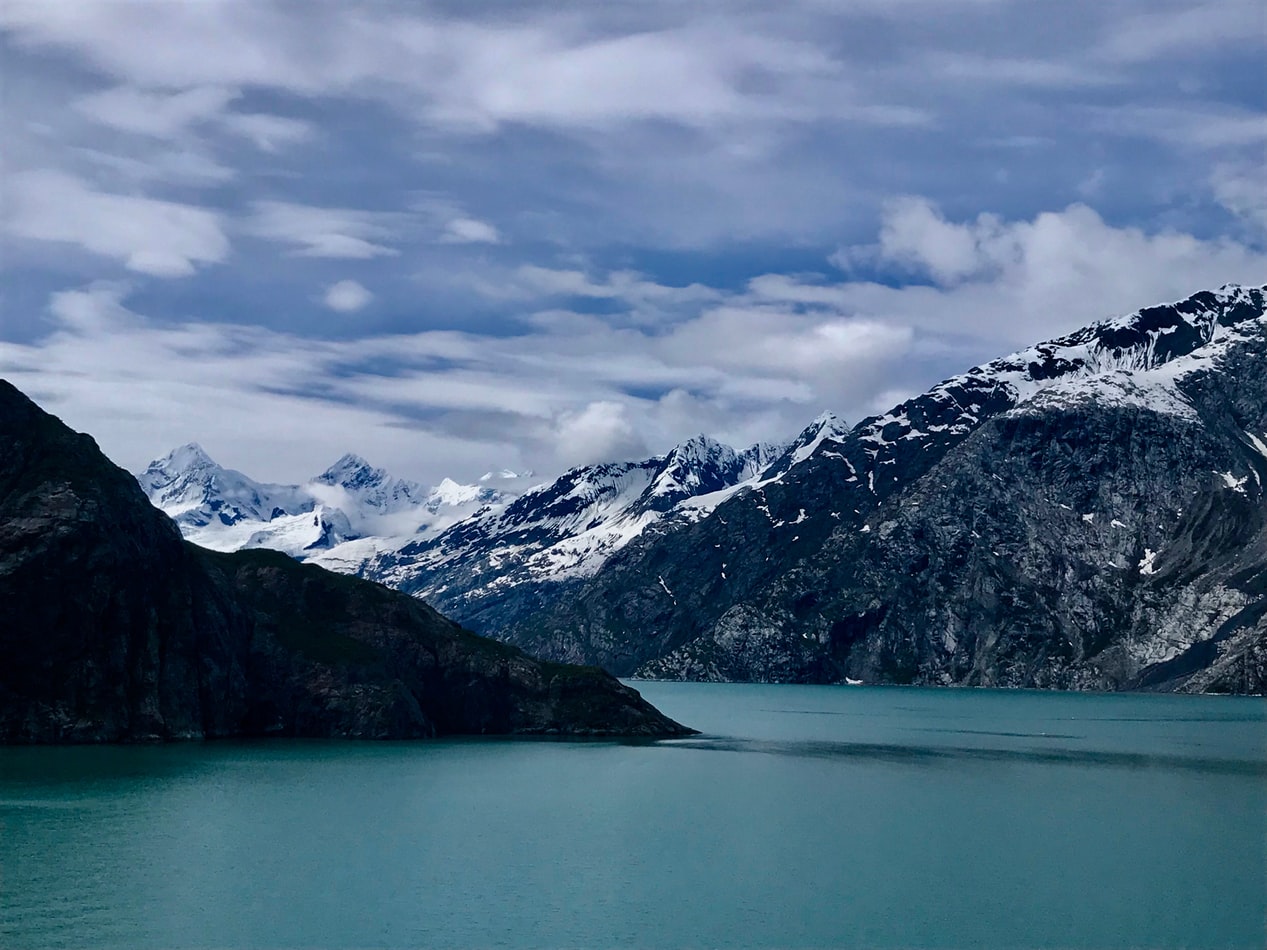
Located in Southeast Alaska, west of the capital city of Juneau, Glacier Bay is a beautiful National Park full of snow capped mountains, tidewater glaciers and wildlife. Experience wildlife in all its beauty from boat trips for whale watching and hiking through the trails of the Park. It is a protected area full of wonder to be explored.
Victoria, British Columbia, Canada
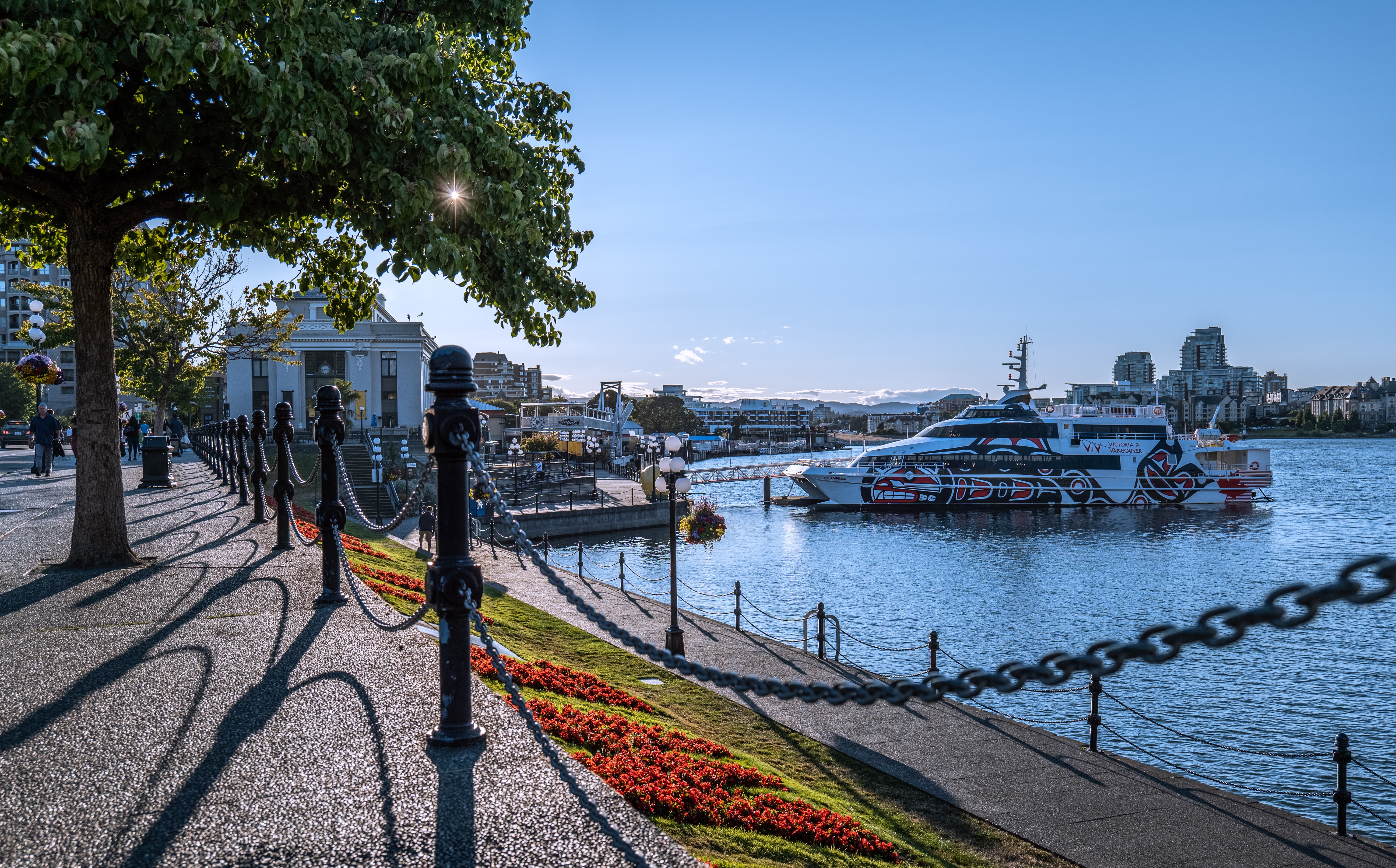
Victoria, the capital of a province whose license plates brazenly label it “The Best Place on Earth,” is a walkable, livable seaside city of fragrant gardens, waterfront paths, engaging museums, and beautifully restored 19th-century architecture. In summer, the Inner Harbour—Victoria’s social and cultural center—buzzes with visiting yachts, horse-and-carriage rides, street entertainers, and excursion boats heading out to visit pods of friendly local whales. Yes, it might be a bit touristy, but Victoria’s good looks, gracious pace, and manageable size are instantly beguiling, especially if you stand back to admire the mountains and ocean beyond. At the southern tip of Vancouver Island, Victoria dips slightly below the 49th parallel. That puts it farther south than most of Canada, giving it the mildest climate in the country, with virtually no snow and less than half the rain of Vancouver. The city’s geography, or at least its place names, can cause confusion. Just to clarify: the city of Victoria is on Vancouver Island (not Victoria Island). The city of Vancouver is on the British Columbia mainland, not on Vancouver Island. At any rate, that upstart city of Vancouver didn’t even exist in 1843 when Victoria, then called Fort Victoria, was founded as the westernmost trading post of the British-owned Hudson’s Bay Company. Victoria was the first European settlement on Vancouver Island, and in 1868 it became the capital of British Columbia. The British weren’t here alone, of course. The local First Nations people—the Songhees, the Saanich, and the Sooke—had already lived in the areas for thousands of years before anyone else arrived. Their art and culture are visible throughout southern Vancouver Island. You can see this in private and public galleries, in the totems at Thunderbird Park, in the striking collections at the Royal British Columbia Museum, and at the Quw’utsun’Cultural and Conference Centre in nearby Duncan. Spanish explorers were the first foreigners to explore the area, although they left little more than place names (Galiano Island and Cordova Bay, for example). The thousands of Chinese immigrants drawn by the gold rushes of the late 19th century had a much greater impact, founding Canada’s oldest Chinatown and adding an Asian influence that’s still quite pronounced in Victoria’s multicultural mix. Despite its role as the provincial capital, Victoria was largely eclipsed, economically, by Vancouver throughout the 20th century. This, as it turns out, was all to the good, helping to preserve Victoria’s historic downtown and keeping the city largely free of skyscrapers and highways. For much of the 20th century, Victoria was marketed to tourists as “The Most British City in Canada,” and it still has more than its share of Anglo-themed pubs, tea shops, and double-decker buses. These days, however, Victorians prefer to celebrate their combined indigenous, Asian, and European heritage, and the city’s stunning wilderness backdrop. Locals do often venture out for afternoon tea, but they’re just as likely to nosh on dim sum or tapas. Decades-old shops sell imported linens and tweeds, but newer upstarts offer local designs in hemp and organic cotton. And let’s not forget that fabric prevalent among locals: Gore-Tex. The outdoors is ever present here. You can hike, bike, kayak, sail, or whale-watch straight from the city center, and forests, beaches, offshore islands, and wilderness parklands lie just minutes away. A little farther afield, there’s surfing near Sooke, wine touring in the Cowichan Valley, and kayaking among the Gulf Islands.
Seattle, Washington, United States
Seattle is a scenic seaport city in western Washington, situated on an isthmus between Puget Sound to the west and Lake Washington to the east. It is the largest city in Washington. Five pioneer families from Illinois first settled the area in 1851, and named the town after a friendly Suquamish Indian chief. It was incorporated as a city in 1869, and grew quickly after the Great Northern Railway arrived in 1893, especially during the Alaska Gold Rush of 1897. When the Panama Canal opened in 1914, Seattle became a major Pacific port of entry, and today it is the region’s commercial and transportation hub and the centre of manufacturing, trade, and finance, with an estimated 684,451 residents as of 2015.
Ketchikan, Alaska, United States
Ketchikan is famous for its colorful totem poles, rainy skies, steep–as–San Francisco streets, and lush island setting. Some 13,500 people call the town home, and, in the summer, cruise ships crowd the shoreline, floatplanes depart noisily for Misty Fiords National Monument, and salmon-laden commercial fishing boats motor through Tongass Narrows. In the last decade Ketchikan’s rowdy, blue-collar heritage of logging and fishing has been softened by the loss of many timber-industry jobs and the dramatic rise of cruise-ship tourism. With some effort, though, visitors can still glimpse the rugged frontier spirit that once permeated this hardscrabble cannery town. Art lovers should make a beeline for Ketchikan: the arts community here is very active. Travelers in search of the perfect piece of Alaska art will find an incredible range of pieces to choose from.The town is at the foot of 3,000-foot Deer Mountain, near the southeastern corner of Revillagigedo (locals shorten it to Revilla) Island. Prior to the arrival of white miners and fishermen in 1885, the Tlingit used the site at the mouth of Ketchikan Creek as a summer fish camp. Gold discoveries just before the turn of the 20th century brought more immigrants, and valuable timber and commercial fishing resources spurred new industries. By the 1930s the town bragged that it was the “salmon-canning capital of the world.” You will still find some of Southeast’s best salmon fishing around here. Ketchikan is the first bite of Alaska that many travelers taste. Despite its imposing backdrop, hillside homes, and many staircases, the town is relatively easy to walk through. Favorite downtown stops include the Spruce Mill Development shops and Creek Street. A bit farther away you’ll find the Totem Heritage Center. Out of town (but included on most bus tours) are two longtime favorites: Totem Bight State Historical Park to the north and Saxman Totem Park to the south.
Juneau, Alaska, United States
Juneau, Alaska’s capital and third-largest city, is on the North American mainland but can’t be reached by road. Bounded by steep mountains and water, the city’s geographic isolation and compact size make it much more akin to an island community such as Sitka than to other Alaskan urban centers, such as Fairbanks or Anchorage. Juneau is full of contrasts. Its dramatic hillside location and historic downtown buildings provide a frontier feeling, but the city’s cosmopolitan nature comes through in fine museums, noteworthy restaurants, and a literate and outdoorsy populace. The finest of the museums, the Alaska State Museum, is scheduled to reopen in May 2016 on its old site as the expanded Alaska State Library, Archives, and Museum (SLAM) following several years of planning and exhibit research. Another new facility, the Walter Soboleff Center, offers visitors a chance to learn about the indigenous cultures of Southeast Alaska–-Tlingit, Haida, and Tsimshian. Other highlights include the Mt. Roberts Tramway, plenty of densely forested wilderness areas, quiet bays for sea kayaking, and even a famous drive-up glacier, Mendenhall Glacier. For goings-on, pick up the Juneau Empire (www.juneauempire.com), which keeps tabs on state politics, business, sports, and local news.
Glacier Bay National Park, Alaska, United States
Located in Southeast Alaska, west of the capital city of Juneau, Glacier Bay is a beautiful National Park full of snow capped mountains, tidewater glaciers and wildlife. Experience wildlife in all its beauty from boat trips for whale watching and hiking through the trails of the Park. It is a protected area full of wonder to be explored.
Victoria, British Columbia, Canada
Victoria, the capital of a province whose license plates brazenly label it “The Best Place on Earth,” is a walkable, livable seaside city of fragrant gardens, waterfront paths, engaging museums, and beautifully restored 19th-century architecture. In summer, the Inner Harbour—Victoria’s social and cultural center—buzzes with visiting yachts, horse-and-carriage rides, street entertainers, and excursion boats heading out to visit pods of friendly local whales. Yes, it might be a bit touristy, but Victoria’s good looks, gracious pace, and manageable size are instantly beguiling, especially if you stand back to admire the mountains and ocean beyond. At the southern tip of Vancouver Island, Victoria dips slightly below the 49th parallel. That puts it farther south than most of Canada, giving it the mildest climate in the country, with virtually no snow and less than half the rain of Vancouver. The city’s geography, or at least its place names, can cause confusion. Just to clarify: the city of Victoria is on Vancouver Island (not Victoria Island). The city of Vancouver is on the British Columbia mainland, not on Vancouver Island. At any rate, that upstart city of Vancouver didn’t even exist in 1843 when Victoria, then called Fort Victoria, was founded as the westernmost trading post of the British-owned Hudson’s Bay Company. Victoria was the first European settlement on Vancouver Island, and in 1868 it became the capital of British Columbia. The British weren’t here alone, of course. The local First Nations people—the Songhees, the Saanich, and the Sooke—had already lived in the areas for thousands of years before anyone else arrived. Their art and culture are visible throughout southern Vancouver Island. You can see this in private and public galleries, in the totems at Thunderbird Park, in the striking collections at the Royal British Columbia Museum, and at the Quw’utsun’Cultural and Conference Centre in nearby Duncan. Spanish explorers were the first foreigners to explore the area, although they left little more than place names (Galiano Island and Cordova Bay, for example). The thousands of Chinese immigrants drawn by the gold rushes of the late 19th century had a much greater impact, founding Canada’s oldest Chinatown and adding an Asian influence that’s still quite pronounced in Victoria’s multicultural mix. Despite its role as the provincial capital, Victoria was largely eclipsed, economically, by Vancouver throughout the 20th century. This, as it turns out, was all to the good, helping to preserve Victoria’s historic downtown and keeping the city largely free of skyscrapers and highways. For much of the 20th century, Victoria was marketed to tourists as “The Most British City in Canada,” and it still has more than its share of Anglo-themed pubs, tea shops, and double-decker buses. These days, however, Victorians prefer to celebrate their combined indigenous, Asian, and European heritage, and the city’s stunning wilderness backdrop. Locals do often venture out for afternoon tea, but they’re just as likely to nosh on dim sum or tapas. Decades-old shops sell imported linens and tweeds, but newer upstarts offer local designs in hemp and organic cotton. And let’s not forget that fabric prevalent among locals: Gore-Tex. The outdoors is ever present here. You can hike, bike, kayak, sail, or whale-watch straight from the city center, and forests, beaches, offshore islands, and wilderness parklands lie just minutes away. A little farther afield, there’s surfing near Sooke, wine touring in the Cowichan Valley, and kayaking among the Gulf Islands.
Seattle, Washington, United States
Seattle is a scenic seaport city in western Washington, situated on an isthmus between Puget Sound to the west and Lake Washington to the east. It is the largest city in Washington. Five pioneer families from Illinois first settled the area in 1851, and named the town after a friendly Suquamish Indian chief. It was incorporated as a city in 1869, and grew quickly after the Great Northern Railway arrived in 1893, especially during the Alaska Gold Rush of 1897. When the Panama Canal opened in 1914, Seattle became a major Pacific port of entry, and today it is the region’s commercial and transportation hub and the centre of manufacturing, trade, and finance, with an estimated 684,451 residents as of 2015.
Seattle, Washington, United States
Seattle is a scenic seaport city in western Washington, situated on an isthmus between Puget Sound to the west and Lake Washington to the east. It is the largest city in Washington. Five pioneer families from Illinois first settled the area in 1851, and named the town after a friendly Suquamish Indian chief. It was incorporated as a city in 1869, and grew quickly after the Great Northern Railway arrived in 1893, especially during the Alaska Gold Rush of 1897. When the Panama Canal opened in 1914, Seattle became a major Pacific port of entry, and today it is the region’s commercial and transportation hub and the centre of manufacturing, trade, and finance, with an estimated 684,451 residents as of 2015.
Seattle, Washington, United States
Seattle is a scenic seaport city in western Washington, situated on an isthmus between Puget Sound to the west and Lake Washington to the east. It is the largest city in Washington. Five pioneer families from Illinois first settled the area in 1851, and named the town after a friendly Suquamish Indian chief. It was incorporated as a city in 1869, and grew quickly after the Great Northern Railway arrived in 1893, especially during the Alaska Gold Rush of 1897. When the Panama Canal opened in 1914, Seattle became a major Pacific port of entry, and today it is the region’s commercial and transportation hub and the centre of manufacturing, trade, and finance, with an estimated 684,451 residents as of 2015.
Ketchikan, Alaska, United States
Ketchikan is famous for its colorful totem poles, rainy skies, steep–as–San Francisco streets, and lush island setting. Some 13,500 people call the town home, and, in the summer, cruise ships crowd the shoreline, floatplanes depart noisily for Misty Fiords National Monument, and salmon-laden commercial fishing boats motor through Tongass Narrows. In the last decade Ketchikan’s rowdy, blue-collar heritage of logging and fishing has been softened by the loss of many timber-industry jobs and the dramatic rise of cruise-ship tourism. With some effort, though, visitors can still glimpse the rugged frontier spirit that once permeated this hardscrabble cannery town. Art lovers should make a beeline for Ketchikan: the arts community here is very active. Travelers in search of the perfect piece of Alaska art will find an incredible range of pieces to choose from.The town is at the foot of 3,000-foot Deer Mountain, near the southeastern corner of Revillagigedo (locals shorten it to Revilla) Island. Prior to the arrival of white miners and fishermen in 1885, the Tlingit used the site at the mouth of Ketchikan Creek as a summer fish camp. Gold discoveries just before the turn of the 20th century brought more immigrants, and valuable timber and commercial fishing resources spurred new industries. By the 1930s the town bragged that it was the “salmon-canning capital of the world.” You will still find some of Southeast’s best salmon fishing around here. Ketchikan is the first bite of Alaska that many travelers taste. Despite its imposing backdrop, hillside homes, and many staircases, the town is relatively easy to walk through. Favorite downtown stops include the Spruce Mill Development shops and Creek Street. A bit farther away you’ll find the Totem Heritage Center. Out of town (but included on most bus tours) are two longtime favorites: Totem Bight State Historical Park to the north and Saxman Totem Park to the south.
Juneau, Alaska, United States
Juneau, Alaska’s capital and third-largest city, is on the North American mainland but can’t be reached by road. Bounded by steep mountains and water, the city’s geographic isolation and compact size make it much more akin to an island community such as Sitka than to other Alaskan urban centers, such as Fairbanks or Anchorage. Juneau is full of contrasts. Its dramatic hillside location and historic downtown buildings provide a frontier feeling, but the city’s cosmopolitan nature comes through in fine museums, noteworthy restaurants, and a literate and outdoorsy populace. The finest of the museums, the Alaska State Museum, is scheduled to reopen in May 2016 on its old site as the expanded Alaska State Library, Archives, and Museum (SLAM) following several years of planning and exhibit research. Another new facility, the Walter Soboleff Center, offers visitors a chance to learn about the indigenous cultures of Southeast Alaska–-Tlingit, Haida, and Tsimshian. Other highlights include the Mt. Roberts Tramway, plenty of densely forested wilderness areas, quiet bays for sea kayaking, and even a famous drive-up glacier, Mendenhall Glacier. For goings-on, pick up the Juneau Empire (www.juneauempire.com), which keeps tabs on state politics, business, sports, and local news.
Glacier Bay National Park, Alaska, United States
Located in Southeast Alaska, west of the capital city of Juneau, Glacier Bay is a beautiful National Park full of snow capped mountains, tidewater glaciers and wildlife. Experience wildlife in all its beauty from boat trips for whale watching and hiking through the trails of the Park. It is a protected area full of wonder to be explored.
Victoria, British Columbia, Canada
Victoria, the capital of a province whose license plates brazenly label it “The Best Place on Earth,” is a walkable, livable seaside city of fragrant gardens, waterfront paths, engaging museums, and beautifully restored 19th-century architecture. In summer, the Inner Harbour—Victoria’s social and cultural center—buzzes with visiting yachts, horse-and-carriage rides, street entertainers, and excursion boats heading out to visit pods of friendly local whales. Yes, it might be a bit touristy, but Victoria’s good looks, gracious pace, and manageable size are instantly beguiling, especially if you stand back to admire the mountains and ocean beyond. At the southern tip of Vancouver Island, Victoria dips slightly below the 49th parallel. That puts it farther south than most of Canada, giving it the mildest climate in the country, with virtually no snow and less than half the rain of Vancouver. The city’s geography, or at least its place names, can cause confusion. Just to clarify: the city of Victoria is on Vancouver Island (not Victoria Island). The city of Vancouver is on the British Columbia mainland, not on Vancouver Island. At any rate, that upstart city of Vancouver didn’t even exist in 1843 when Victoria, then called Fort Victoria, was founded as the westernmost trading post of the British-owned Hudson’s Bay Company. Victoria was the first European settlement on Vancouver Island, and in 1868 it became the capital of British Columbia. The British weren’t here alone, of course. The local First Nations people—the Songhees, the Saanich, and the Sooke—had already lived in the areas for thousands of years before anyone else arrived. Their art and culture are visible throughout southern Vancouver Island. You can see this in private and public galleries, in the totems at Thunderbird Park, in the striking collections at the Royal British Columbia Museum, and at the Quw’utsun’Cultural and Conference Centre in nearby Duncan. Spanish explorers were the first foreigners to explore the area, although they left little more than place names (Galiano Island and Cordova Bay, for example). The thousands of Chinese immigrants drawn by the gold rushes of the late 19th century had a much greater impact, founding Canada’s oldest Chinatown and adding an Asian influence that’s still quite pronounced in Victoria’s multicultural mix. Despite its role as the provincial capital, Victoria was largely eclipsed, economically, by Vancouver throughout the 20th century. This, as it turns out, was all to the good, helping to preserve Victoria’s historic downtown and keeping the city largely free of skyscrapers and highways. For much of the 20th century, Victoria was marketed to tourists as “The Most British City in Canada,” and it still has more than its share of Anglo-themed pubs, tea shops, and double-decker buses. These days, however, Victorians prefer to celebrate their combined indigenous, Asian, and European heritage, and the city’s stunning wilderness backdrop. Locals do often venture out for afternoon tea, but they’re just as likely to nosh on dim sum or tapas. Decades-old shops sell imported linens and tweeds, but newer upstarts offer local designs in hemp and organic cotton. And let’s not forget that fabric prevalent among locals: Gore-Tex. The outdoors is ever present here. You can hike, bike, kayak, sail, or whale-watch straight from the city center, and forests, beaches, offshore islands, and wilderness parklands lie just minutes away. A little farther afield, there’s surfing near Sooke, wine touring in the Cowichan Valley, and kayaking among the Gulf Islands.
Seattle, Washington, United States
Seattle is a scenic seaport city in western Washington, situated on an isthmus between Puget Sound to the west and Lake Washington to the east. It is the largest city in Washington. Five pioneer families from Illinois first settled the area in 1851, and named the town after a friendly Suquamish Indian chief. It was incorporated as a city in 1869, and grew quickly after the Great Northern Railway arrived in 1893, especially during the Alaska Gold Rush of 1897. When the Panama Canal opened in 1914, Seattle became a major Pacific port of entry, and today it is the region’s commercial and transportation hub and the centre of manufacturing, trade, and finance, with an estimated 684,451 residents as of 2015.
Cabin Options

Britannia Standard Inside
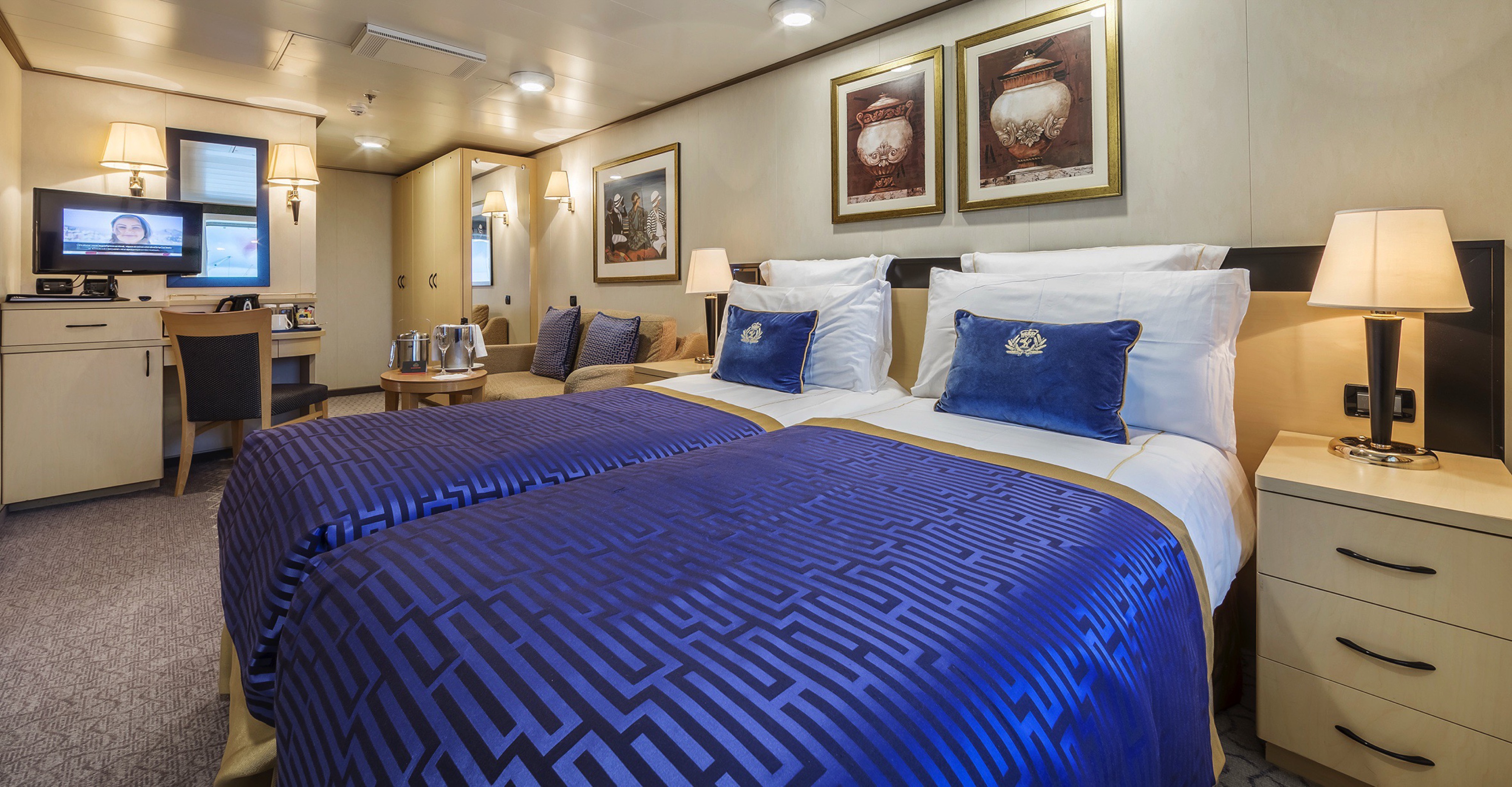
Britannia Oceanview (Obstructed View)
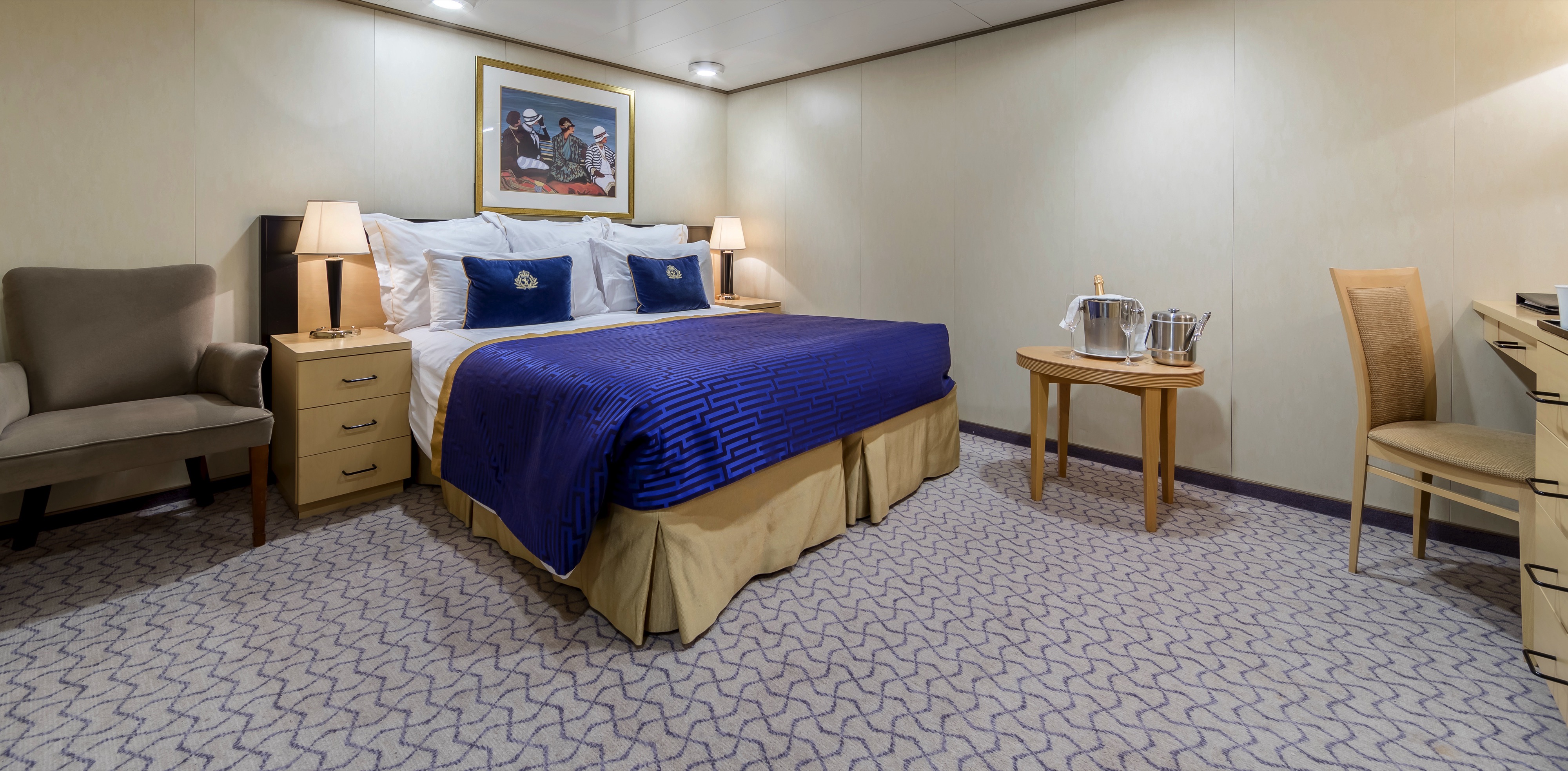
Britannia Deluxe Inside
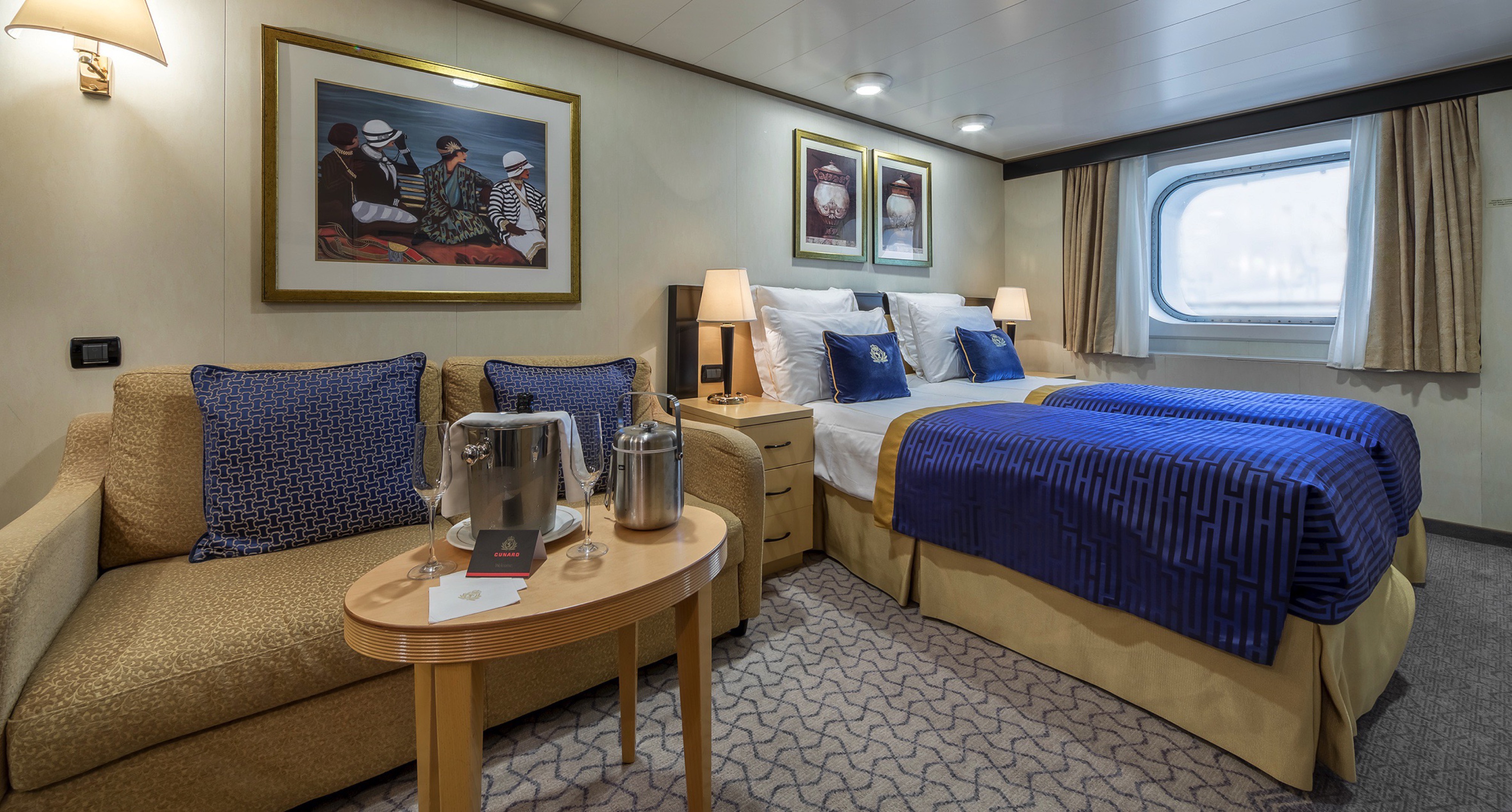
Britannia Oceanview
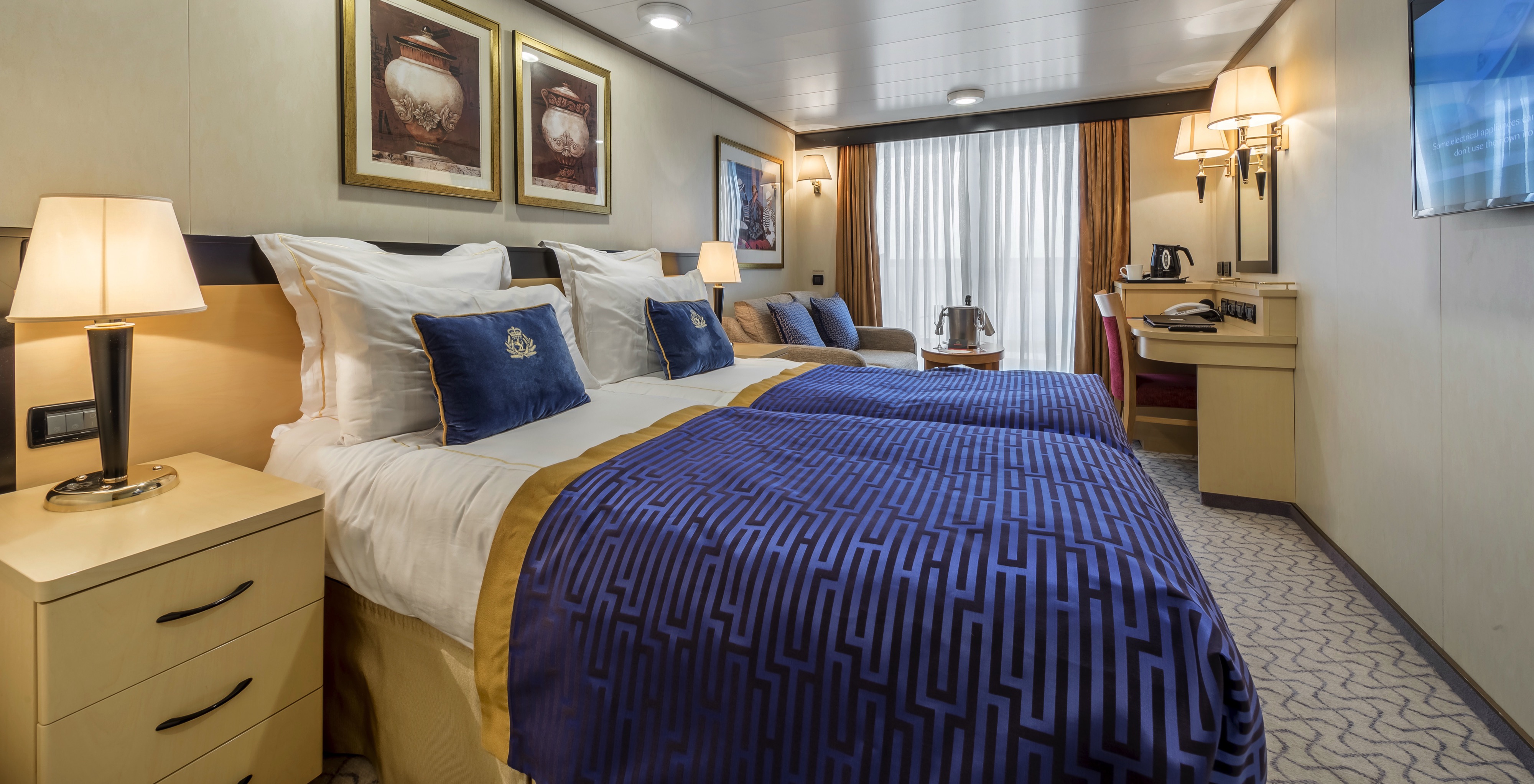
Britannia Balcony (Obstructed View)
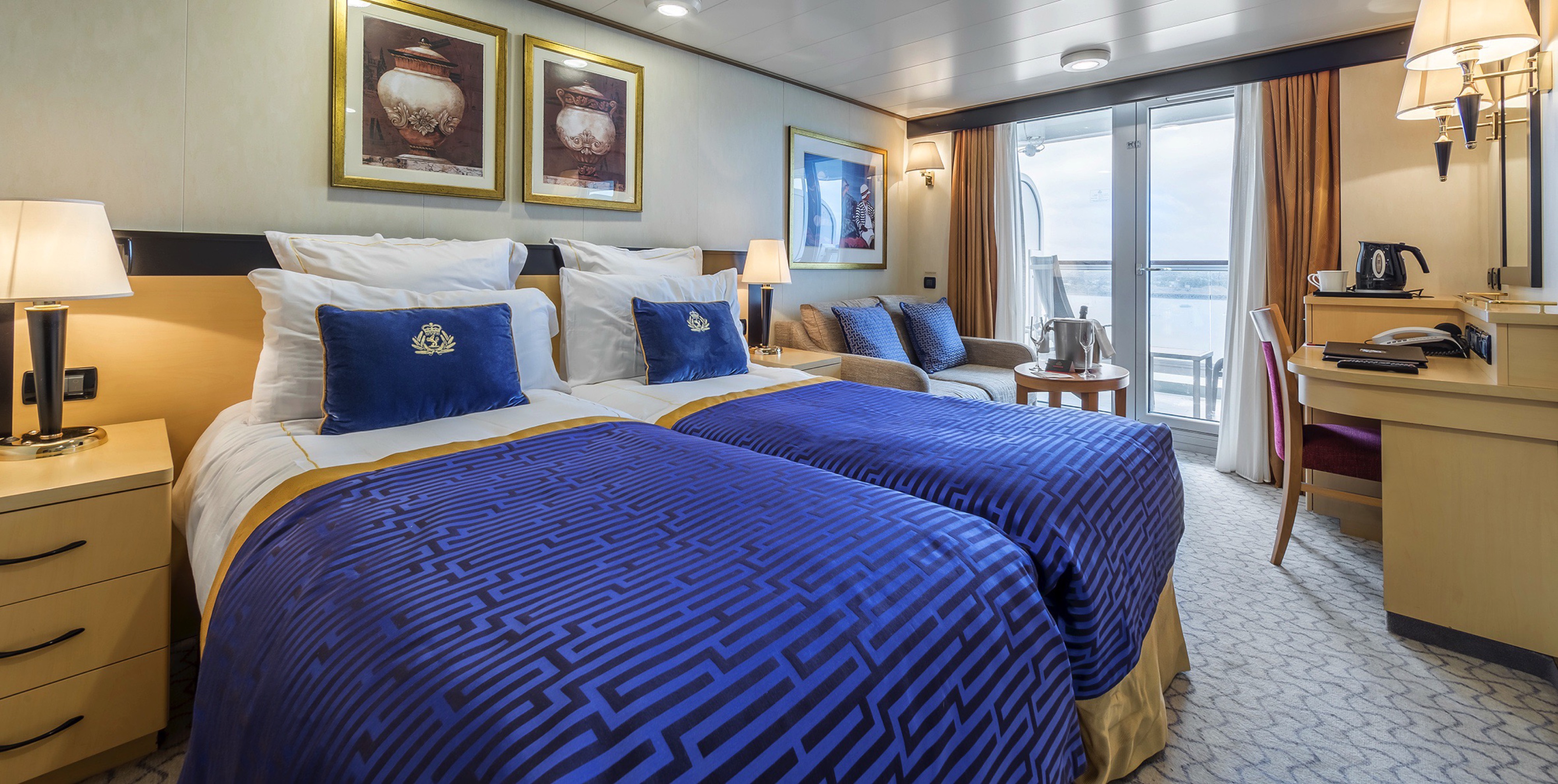
Britannia Balcony
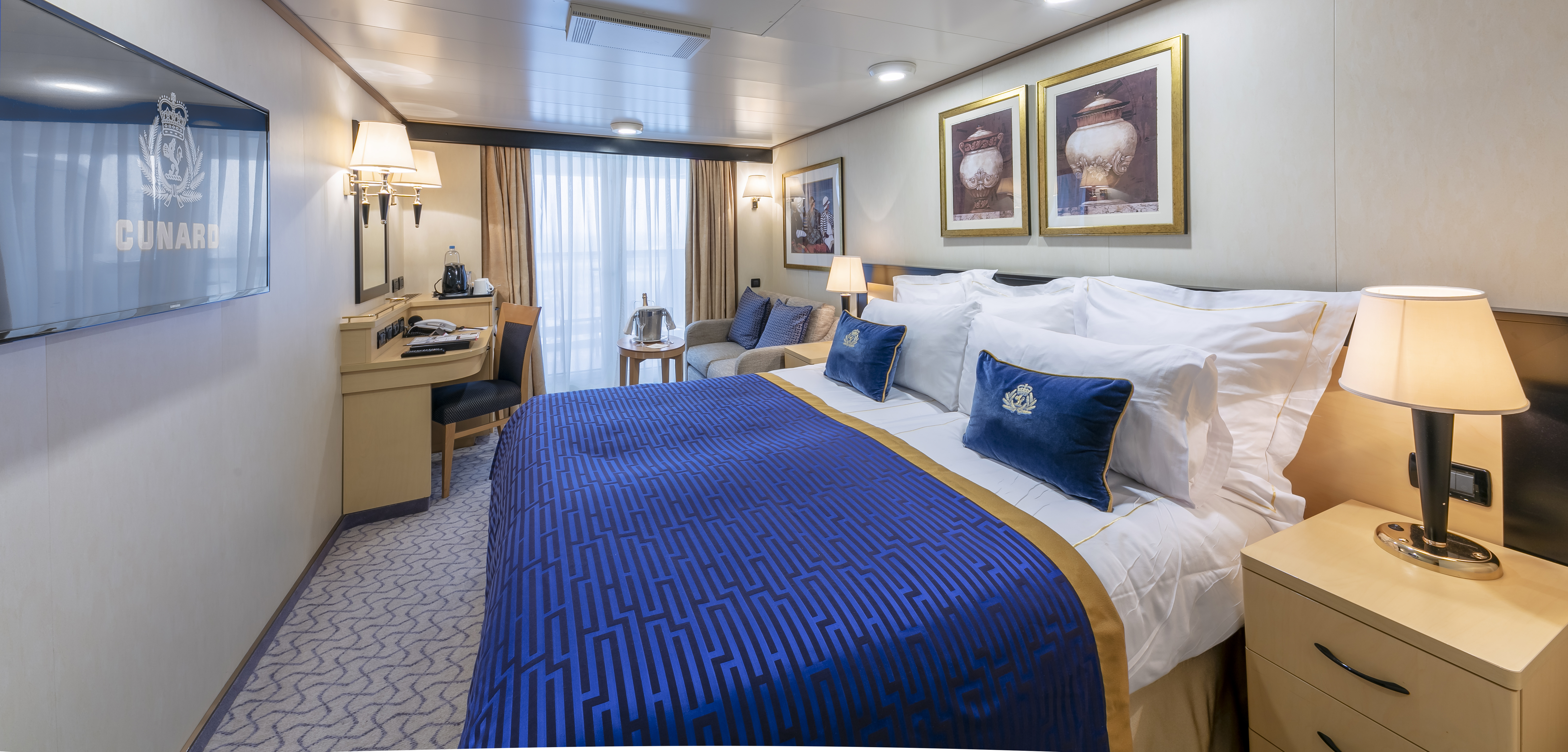
Britannia Club Balcony
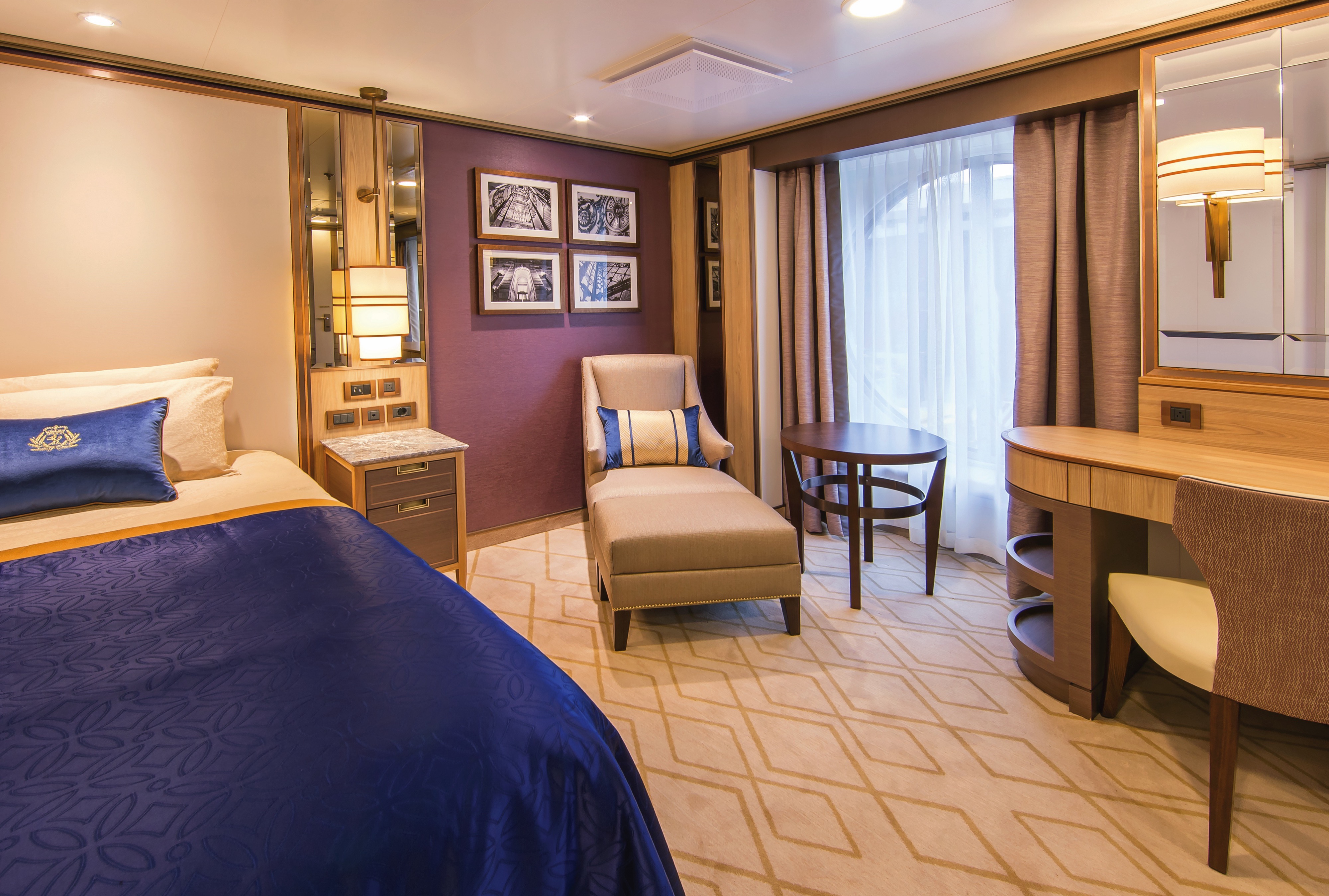
Britannia Single Oceanview
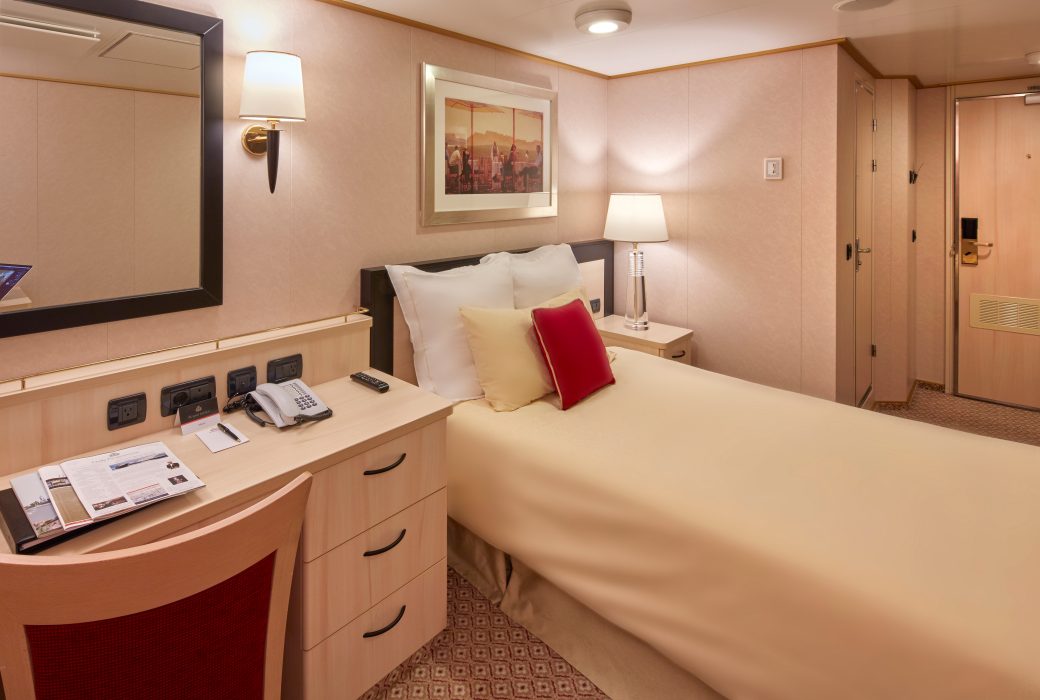
Britannia Single Inside
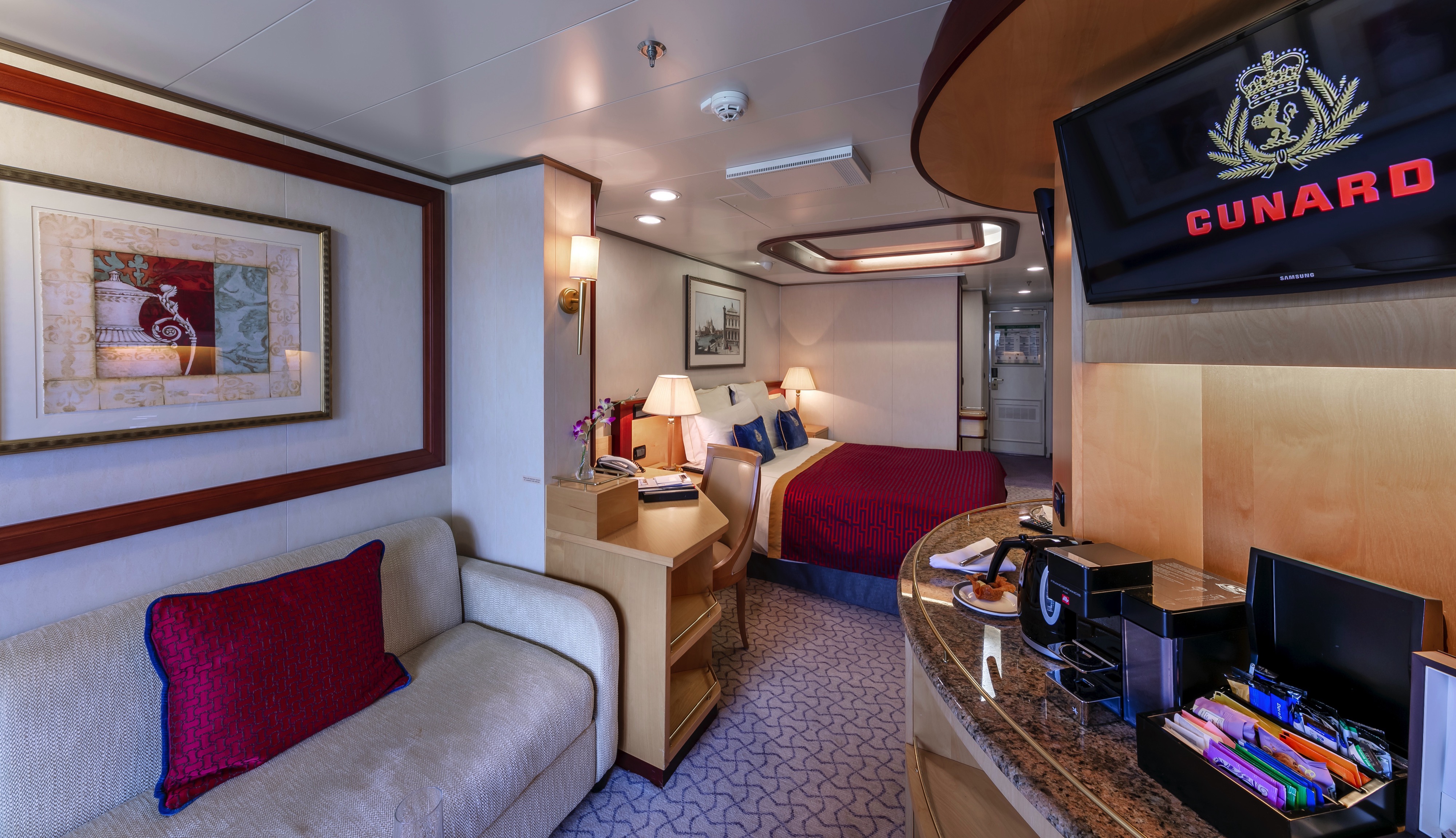
Princess Grill Suite
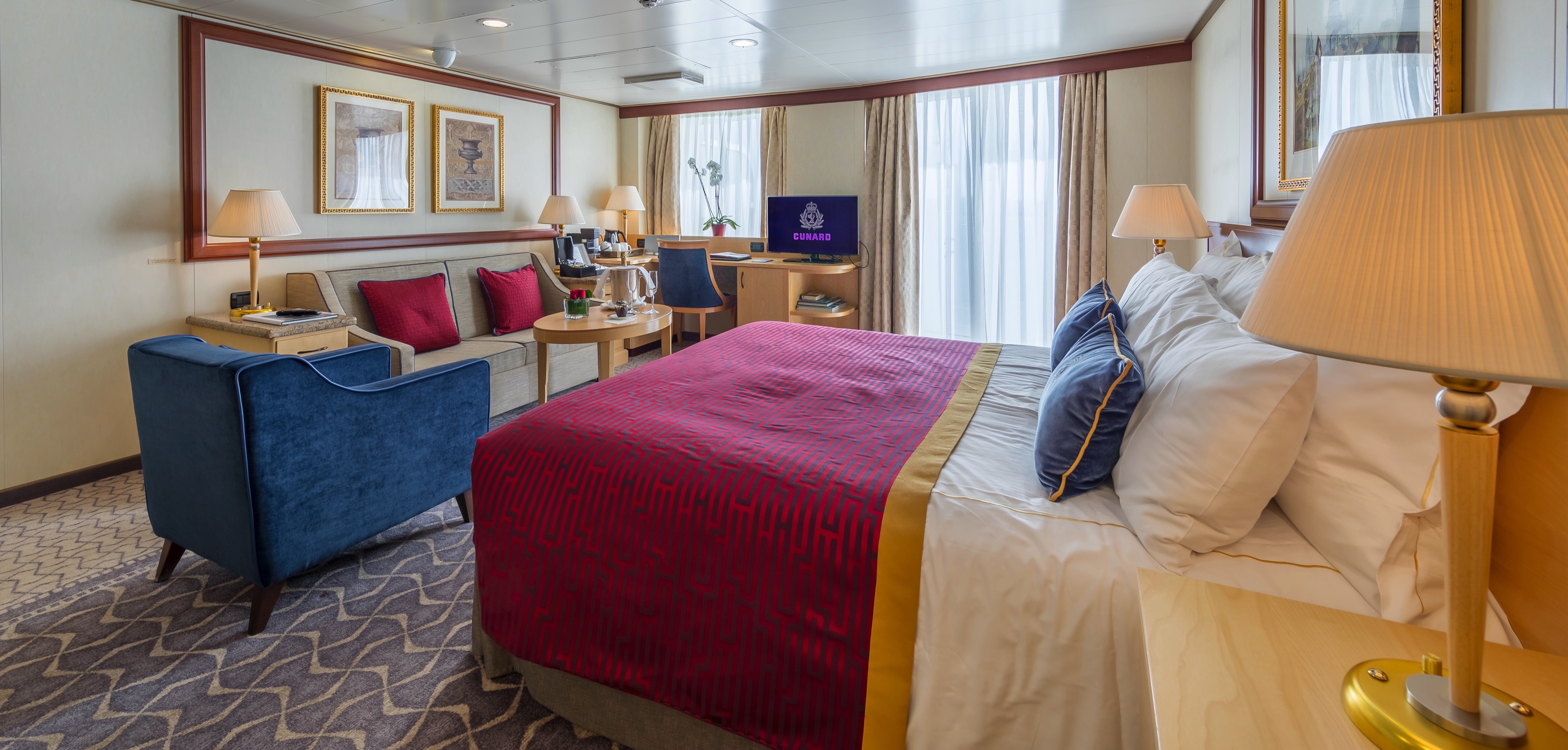
Queens Grill Suite
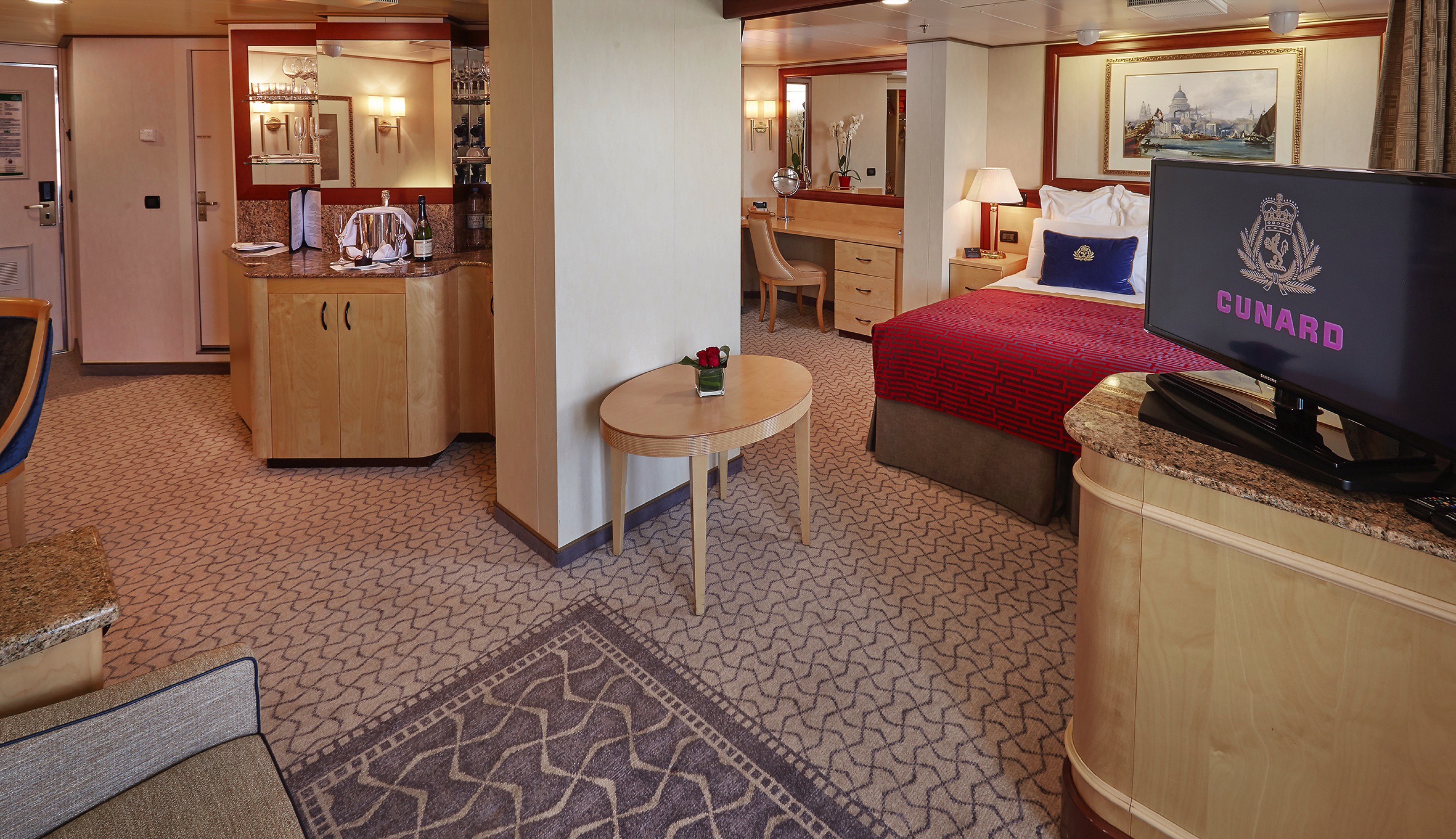
Queens Grill Penthouse
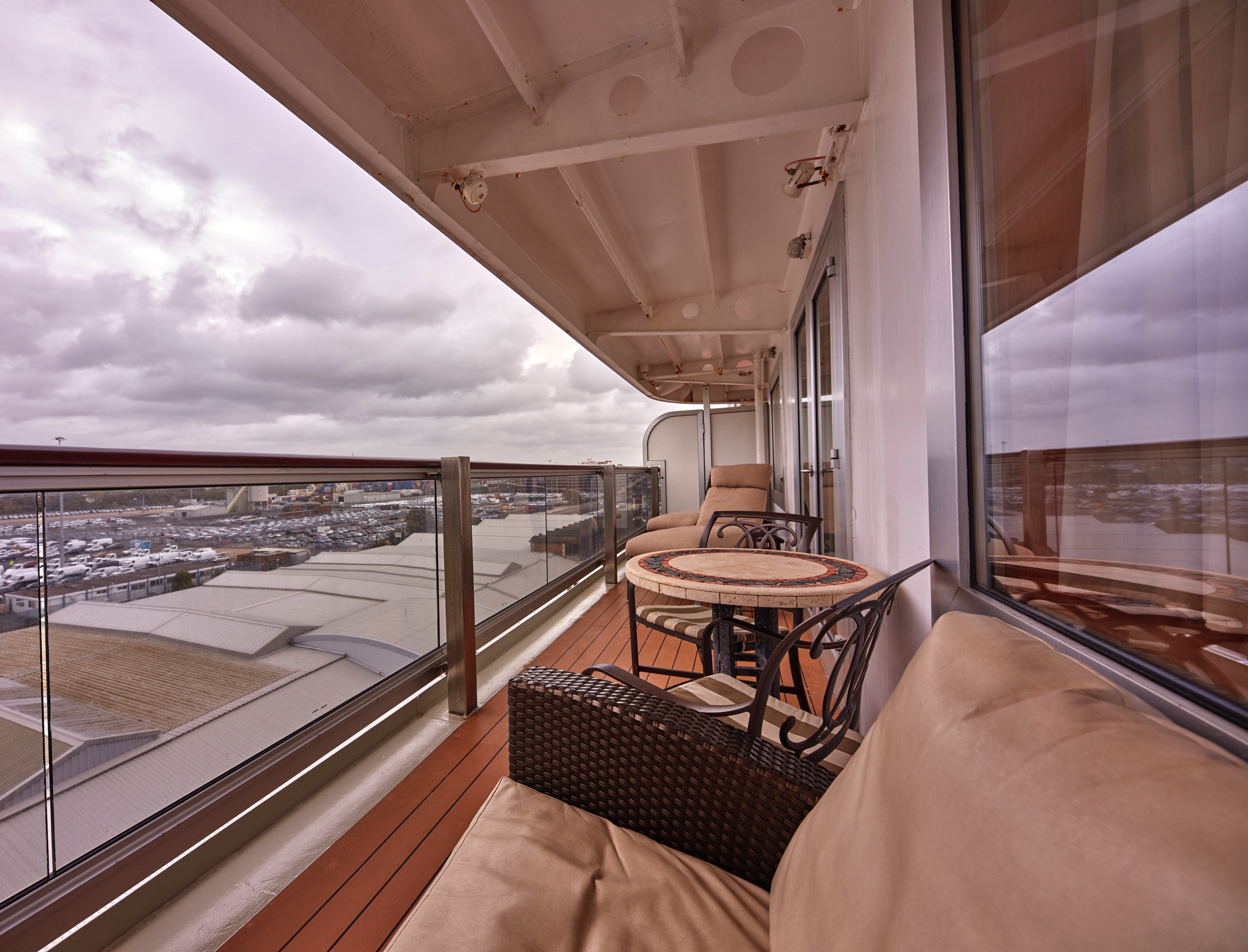
Queens Grill Master Suite
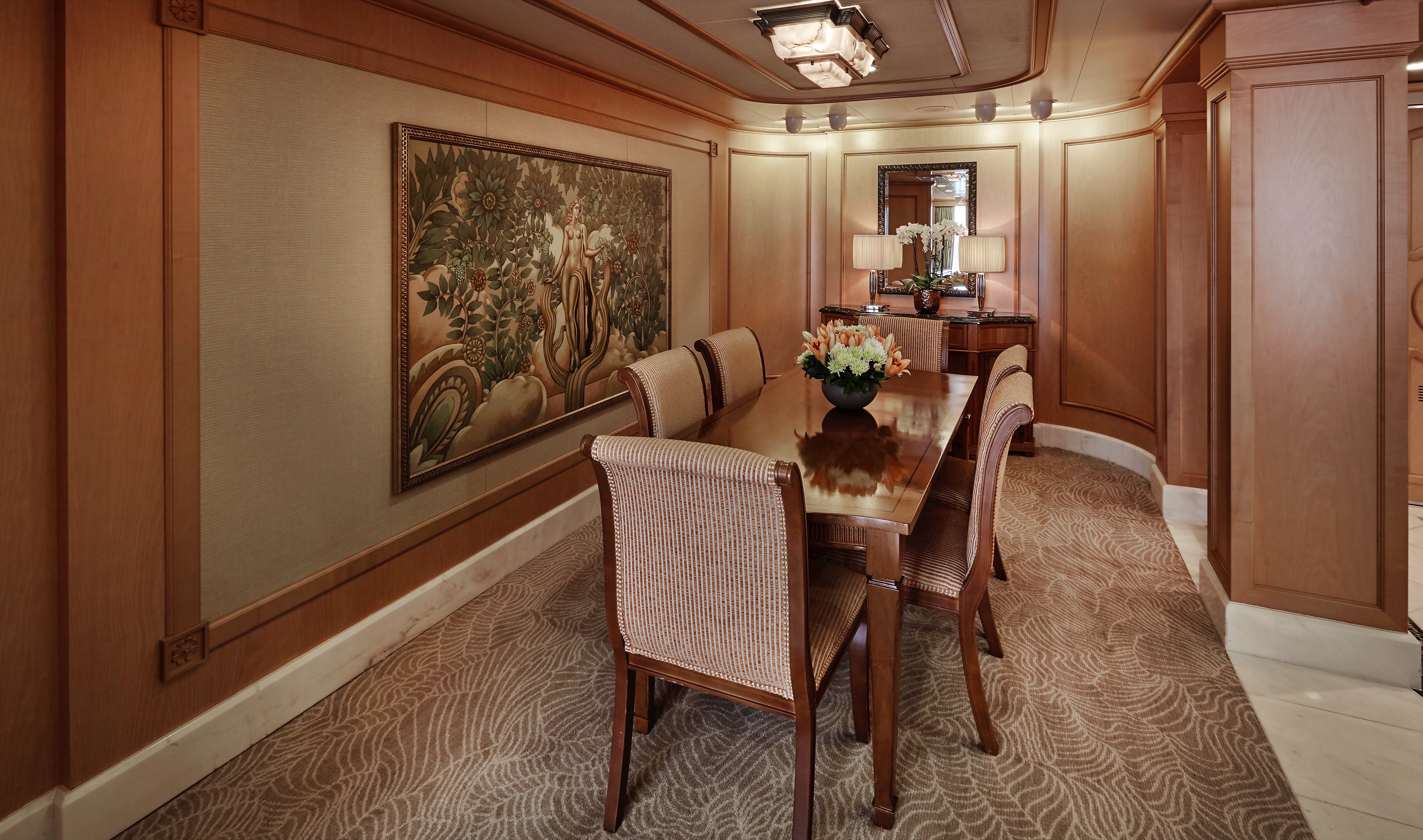
Queens Grill Grand Suite
Ship Facilities
Queen's Grill
The pinnacle of fine dining at sea, exclusively for guests staying in our Queens Grill Suites.
Drawing inspiration from the world’s finest kitchens, the Queens Grill restaurant offers a true taste of fine dining on board, elevated by a front of house team for whom nothing is too much trouble.
Open for breakfast, lunch and dinner daily, with a Grills Afternoon Tea served separately in the Grills Lounge, a visit to the Queens Grill always feels like a special occasion.
You’ll be dining among your fellow Queens Grill guests, with a table reserved for your exclusive use throughout your voyage. There’s no need to book. Simply arrive whenever you’re ready and your table will be waiting. You may even choose to take your meal in your suite, should you wish.
Each day introduces a coveted line-up of à la carte dishes, complemented by an ‘always-available’ menu of appetisers, entrees, and desserts, executed with exemplary flair and finesse.
Alternatively, opt for one of our chef’s speciality sharing dishes (orderable in advance at breakfast or lunchtimes). From beef wellington to rack of lamb, the choice is truly indulgent. Each dish (along with select offerings on our menu) is finished and presented to you table-side, only heightening the sense of theatre that’s a signature of Queens Grill dining.
Dining at the Queens Grill restaurant is exclusive to Queens Grill guests and included within your Cunard fare. The restaurant operates relaxed dress by day and smart attire (jacket optional) for dinner service after 6.00pm, except on Gala Evenings when we invite you to dress in black tie.
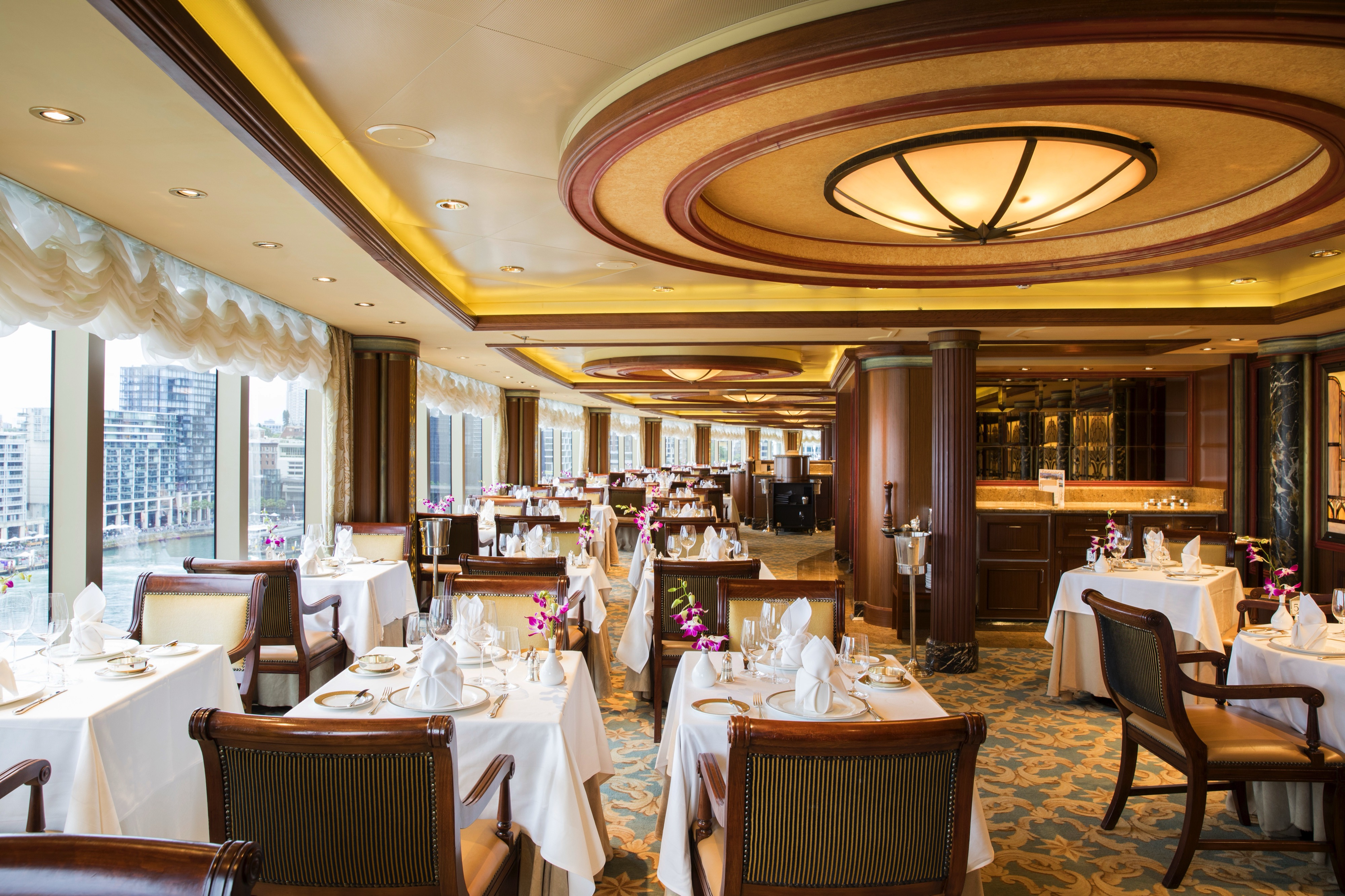
Princess Grill
Imaginative cooking and flawless service create a dining experience fit for royalty.
For the exclusive use of guests in our Princess Grill Suites, this exquisite restaurant offers à la carte dining at an elevated level.
With a dining room to rival the world’s most luxurious hotels and a menu that showcases classical flavour pairings, creatively reimagined, the Princess Grill restaurant is among the most prestigious of our on board dining experiences. Discreet but attentive service and a raft of personal touches make every meal special.
You’ll find a comprehensive selection of continental and cooked dishes ready to rouse you each morning, whilst lunchtimes introduce a delicious four course menu alongside lighter options.
Evenings are a particularly grand affair, with the theatre of tableside serving inspiring a greater sense of occasion. Your table for dinner is reserved throughout your voyage, with no need to book; simply take your seat whenever you wish, between 6.30pm and 9.00pm.
Dining at the Princess Grill restaurant is included in your fare if you’re staying in one of our Princess Grill Suites. Relaxed dress is welcomed at breakfast and lunch, and smart attire (jacket optional) after 6.00pm, except on Gala Evenings when we invite you to dress in black tie.
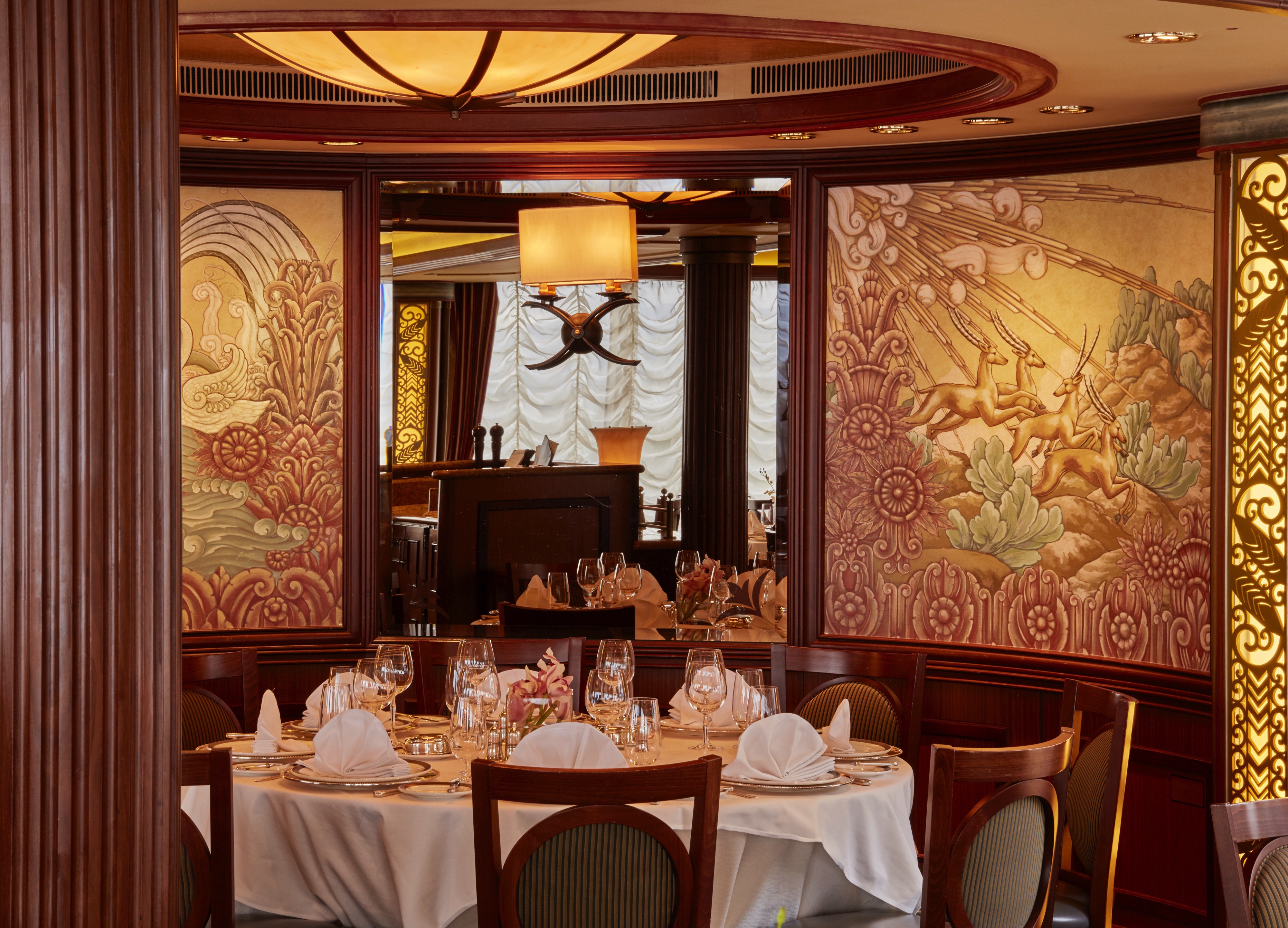
Britannia Restaurant
As the flagship dining venue on Queen Elizabeth, the Britannia Restaurant is an Art Deco-style space that invites you to dine happily among friends new and old. Step into a grand dining hall adorned with sparkling chandeliers and polished wood accents, and be surrounded by expertly set tables dressed in white linen.
Choose from a menu carefully curated to tantalise even the most discerning of palates. From succulent seafood to perfectly grilled steaks, each dish is a masterpiece of culinary craftsmanship. And, with White Star Service, you’ll find that every occasion here becomes an unforgettable dining experience sure to leave you with new, fond memories.
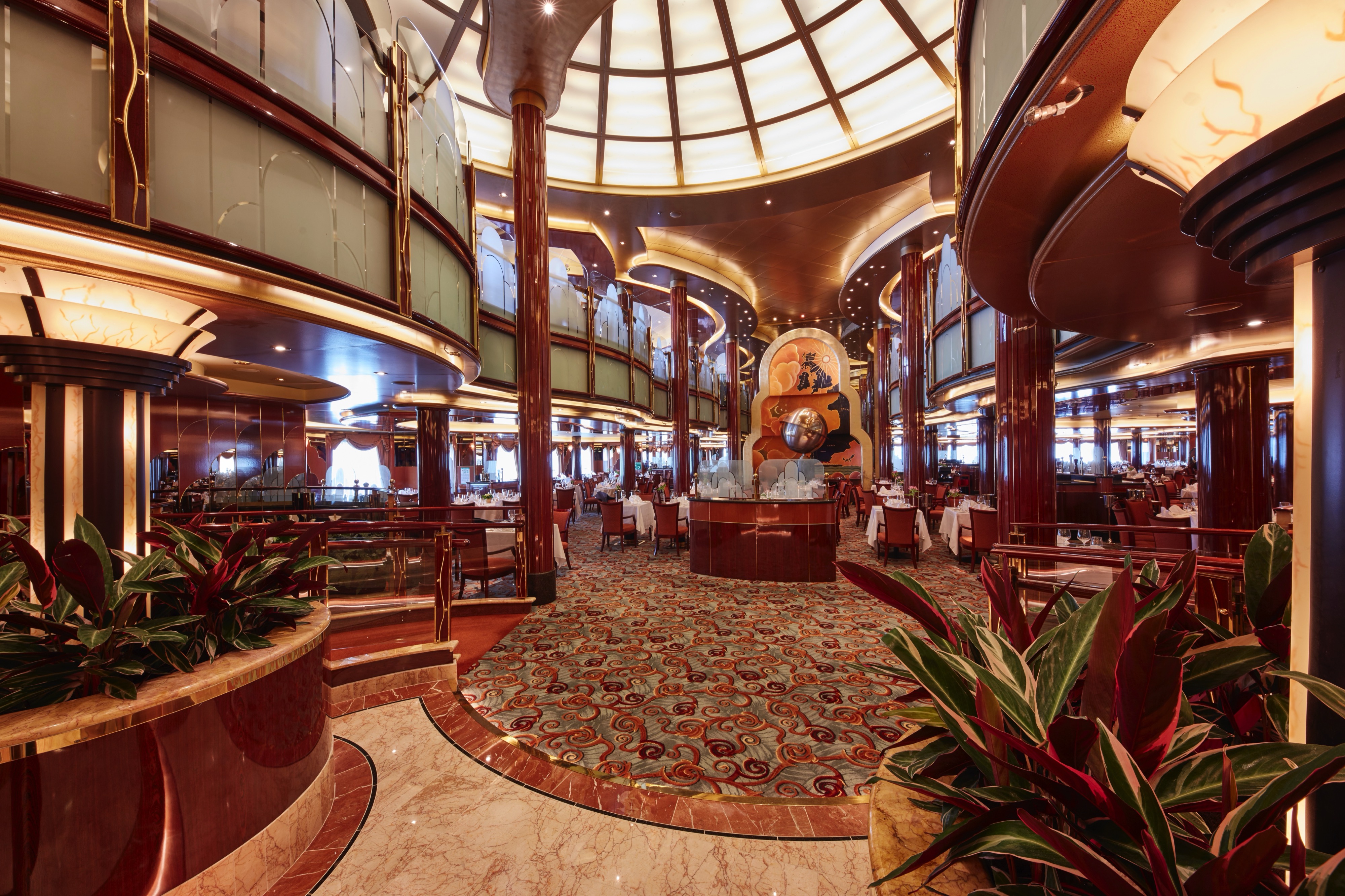
Britannia Club restaurant
An intimate and exclusive dining venue for Britannia Club guests.
If you’re staying in a Britannia Club Balcony stateroom, you’ll have the option to take breakfast, lunch, and dinner in this restaurant which is reserved exclusively for Britannia Club guests.
A beautifully designed art deco theme creates an atmosphere that is both classic and contemporary. Generously sized windows allow you to enjoy sea views while you dine.
White-gloved waiting staff add to the sense of occasion, as does the cooking. A classically inspired, flawlessly executed à la carte menu is the centrepiece, or you can choose from the five course Britannia Restaurant menu. Both menus change daily.
In the evening, you’ll be free to dine at any time between 6.30pm and 9.00pm, with a table reserved for you throughout your voyage. During the day, casual dress is welcomed, with smart attire (jacket optional) after 6.00pm, except on Gala Evenings when we invite you to dress in black tie.
If you are staying in a Britannia Club Balcony stateroom, dining at the Britannia Club Restaurant is included in your fare, with the option to indulge in some premium dishes available for an additional cost at dinner. There is no need to book.
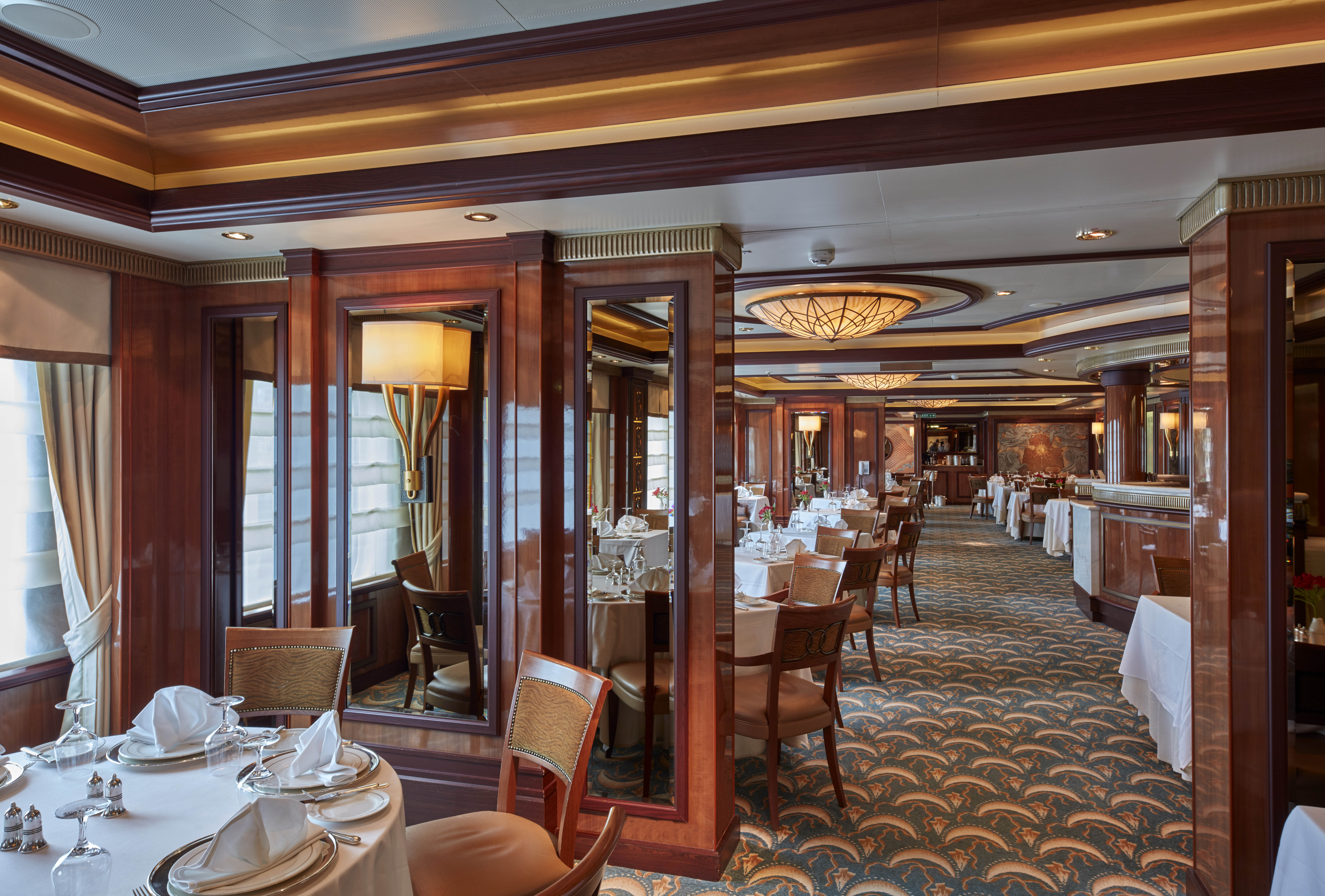
Lido Restaurant
When it comes to casual dining with a touch of sophistication, the Lido reigns supreme. This vibrant eatery offers a tempting range of culinary delights, from gourmet burgers to freshly prepared salads and everything in between.
Whether you’re craving a quick bite or a leisurely meal, the Lido has something for everyone. Help yourself to as much or as little as you like, whether you need a generous helping of pasta after a busy day exploring in port, or perhaps you only fancy a little something. With sweeping views of the ocean and a relaxed atmosphere, dining here is a true pleasure for the senses.
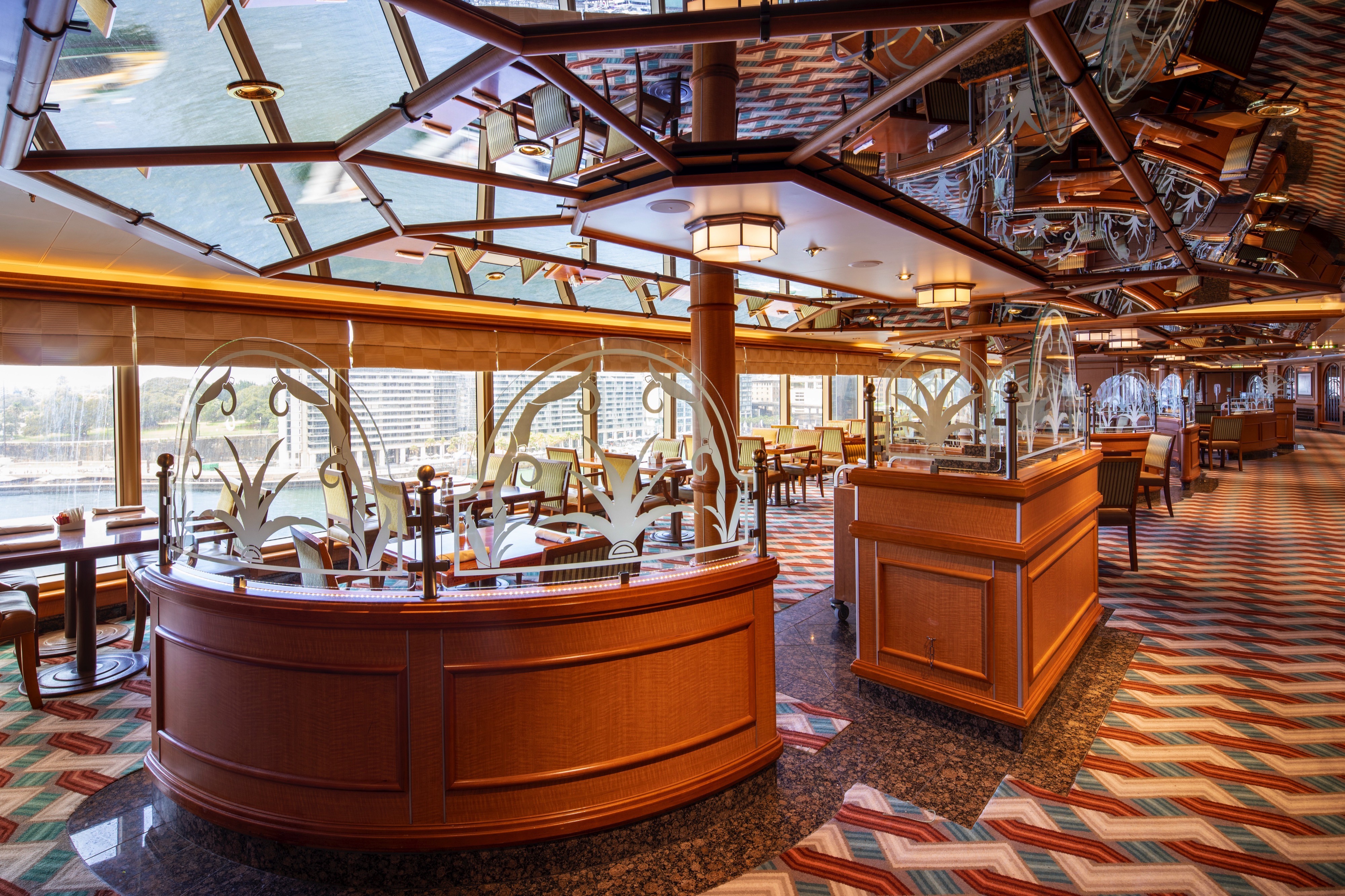
The Garden Lounge
Escape to the Garden Lounge and find yourself in something of an oasis. Reminiscent of Mediterranean olive groves and the conservatories of Kew Gardens, the Garden Lounge is a beautiful and serene place to spend an hour or two. With comfortable wicker furniture, plenty of greenery, and views out to sea, you’ll easily find a spot in which to enjoy a drink or two.
You could choose a beer or a refreshing cocktail, or perhaps a tea or coffee is in order. Open throughout the day and into the evening, the Garden Lounge offers a place to get lost in a book, play some card games, or take in some live music courtesy of resident musicians.
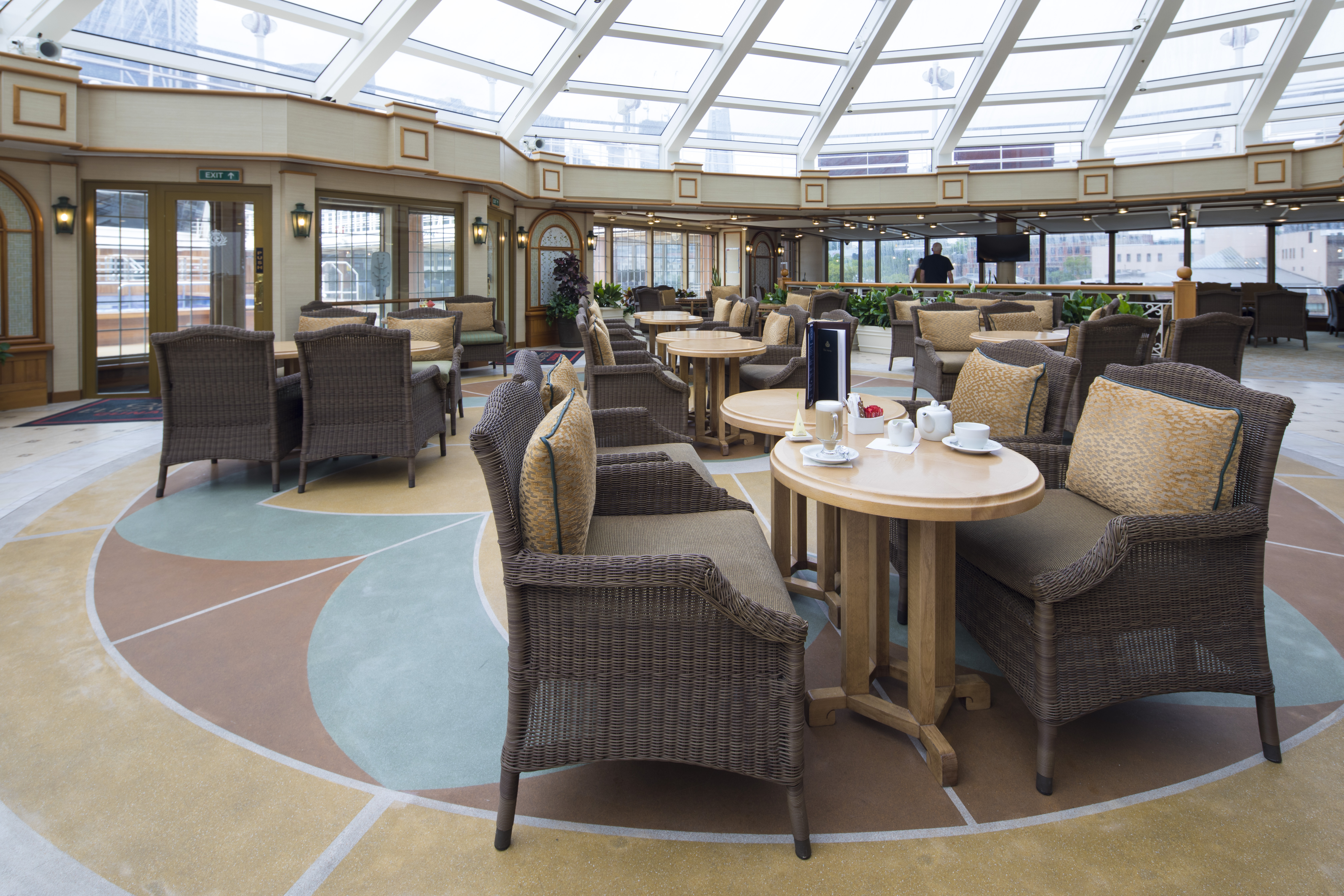
Queens Room
Many consider the Queens Room to be the heart of any Cunard ship, where live music and dancing reign supreme. With its gleaming dance floor and stylish feel, this iconic venue is the perfect setting for an evening of romance and revelry.
Whether you’re a seasoned dancer or a novice, the Queens Room offers a variety of dance sessions to suit every taste. From the sultry rhythms of the tango to the graceful steps of the waltz, there’s no shortage of opportunities to take to the floor and dance either at a daytime workshop or in the evening, beneath the glow of the glittering chandeliers.
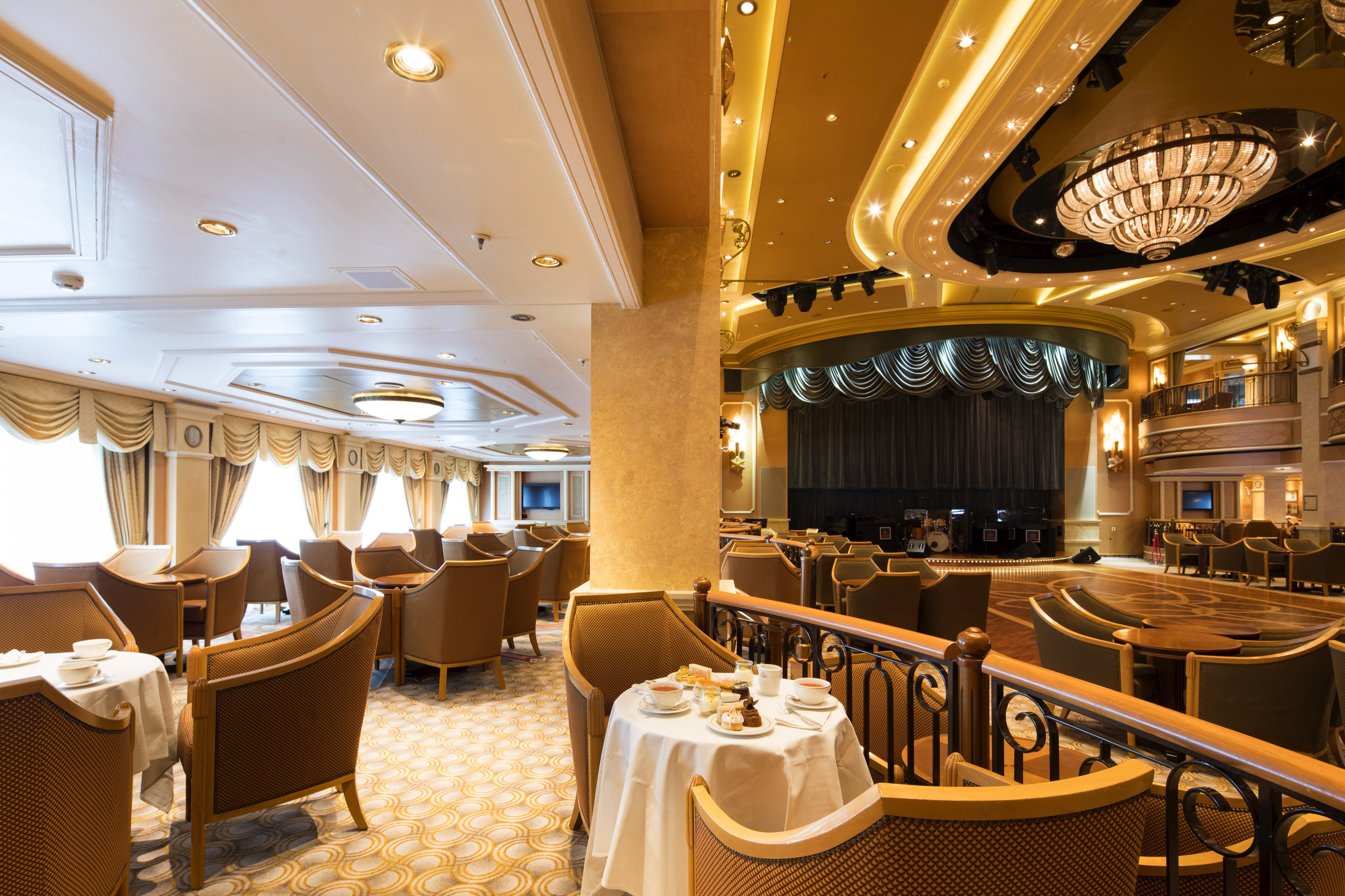
Empire Casino
The goings on at the Casino always provide a vibrant evening full of fun and excitement. Whether you feel like a little flutter yourself, or you’d simply like to order a drink or two and watch the peaks and dips of others’ luck, a night spent at the Casino is filled with sparkle.
Games here include Blackjack, Poker, Roulette, and slot machines. If you’re not sure how to play, why not pop along to one of the workshops to find out how? Expert croupiers can teach you their know-how, so you can place your own bets later on.
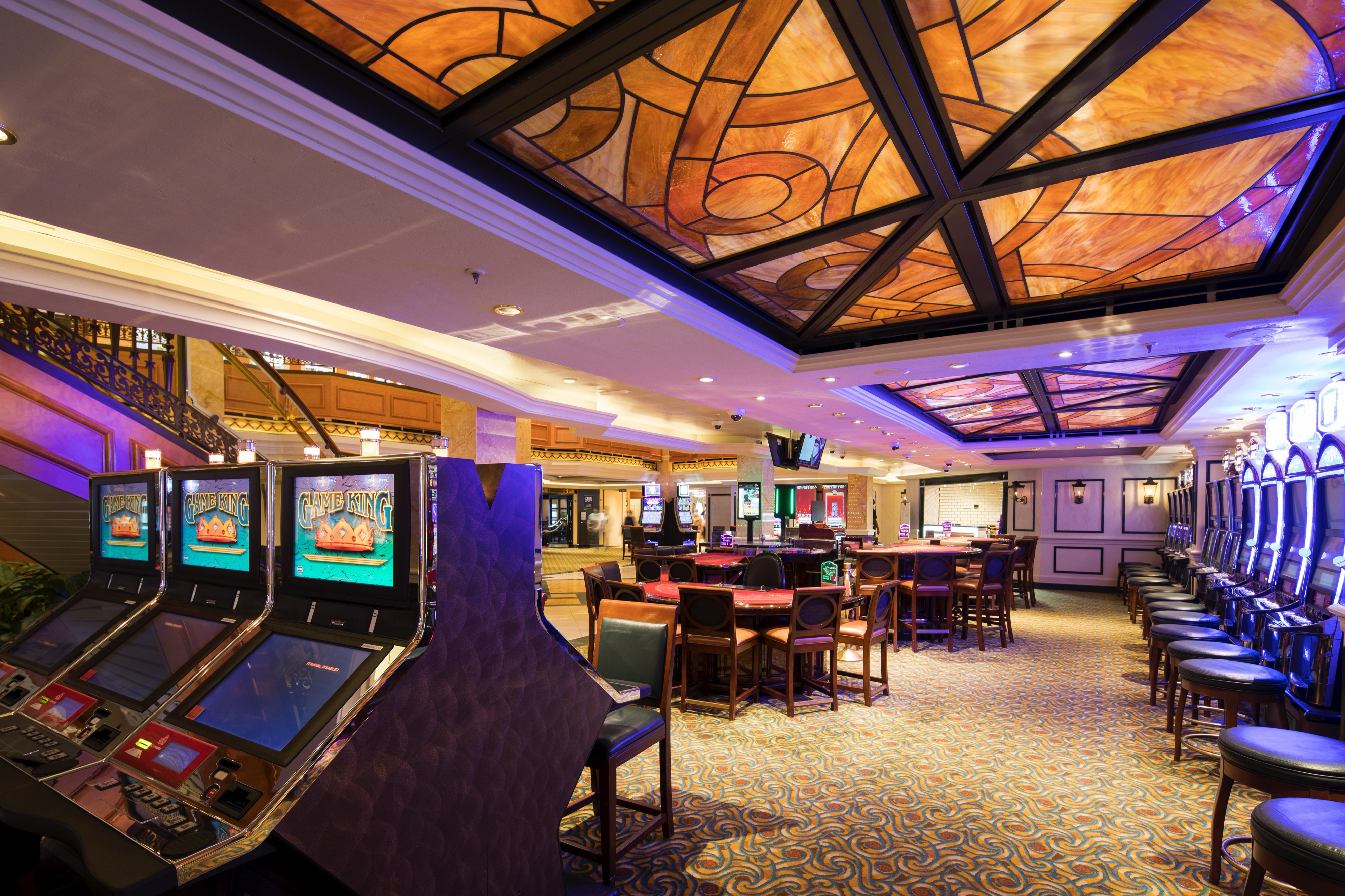
The Commodore Club
For those seeking a more intimate evening of entertainment, look no further than the Commodore Club. Perched high above the sea with panoramic views of the ocean, this elegant lounge offers the perfect setting to unwind and relax in style.
Sip on a handcrafted cocktail expertly prepared by skilled mixologists as you enjoy live piano music or engage in lively conversation with fellow guests. With plush seating and a warm ambience, the Commodore Club is the ideal spot to sip, savour, and soak in the breathtaking views.
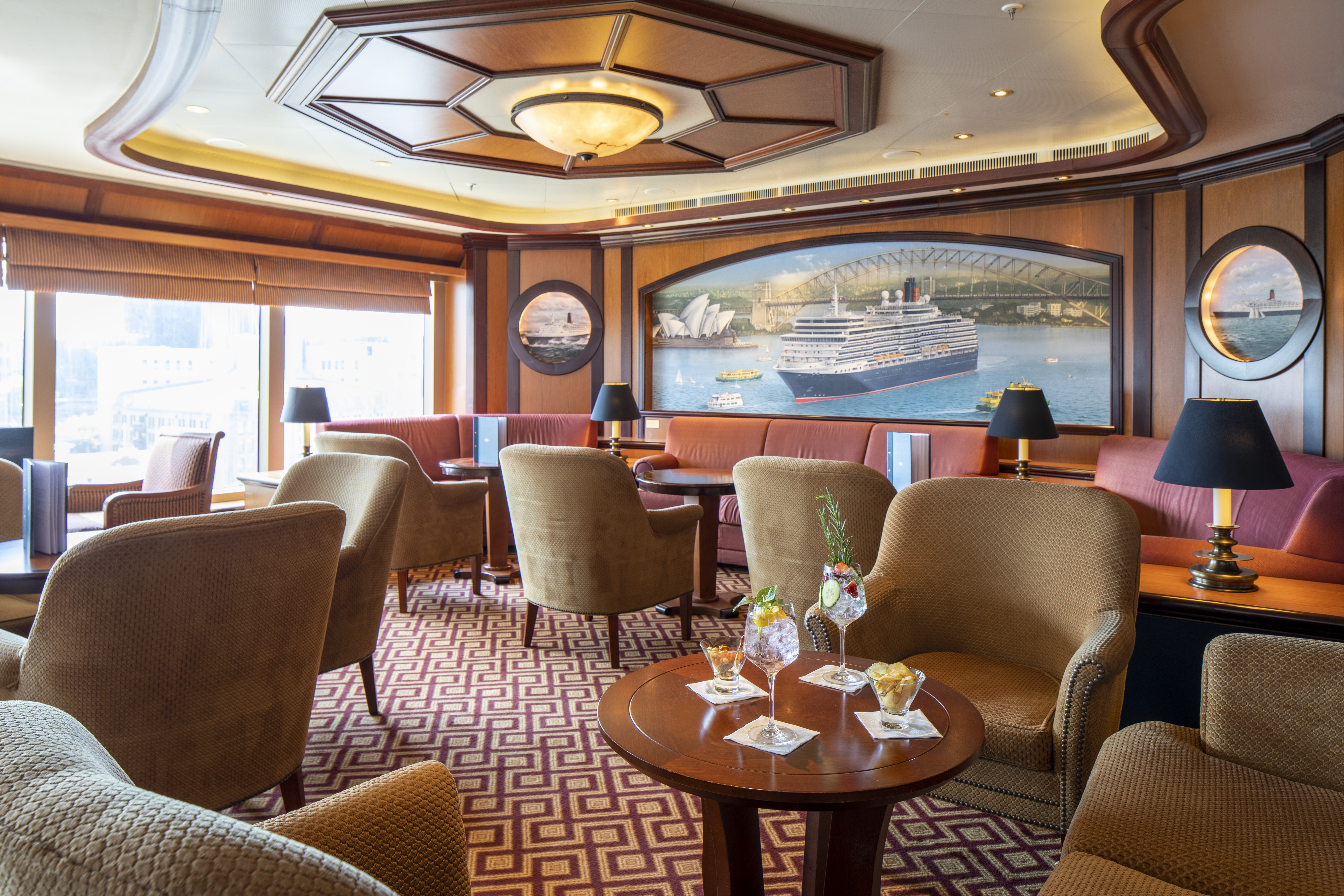
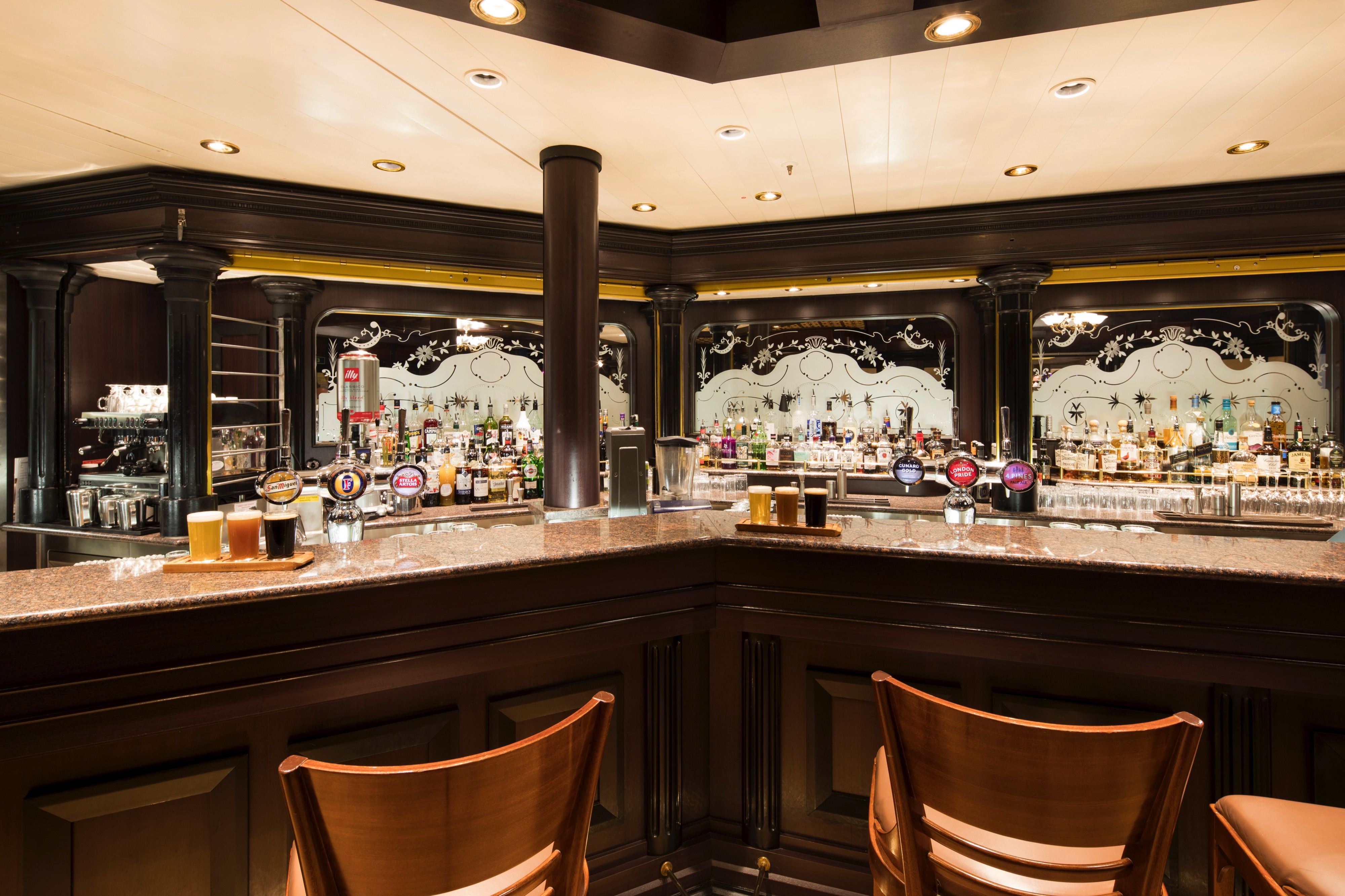
The Golden Lion Pub
Step into the cozy confines of the Golden Lion and experience the warmth and camaraderie of a traditional British pub. With its welcoming atmosphere and friendly bartenders, this beloved venue offers a taste of home away from home.
Enjoy live music as you sample a selection of classic pub fare, from hearty fish and chips to savoury pies and a good old-fashioned Ploughman’s. You could choose a signature Cunard ale, or perhaps a glass of wine, or your favourite short. With a full bar menu available, there’s something to suit all tastes. So come along for live sports, pub quizzes, or karaoke, or maybe just to raise a glass and toast to good times.
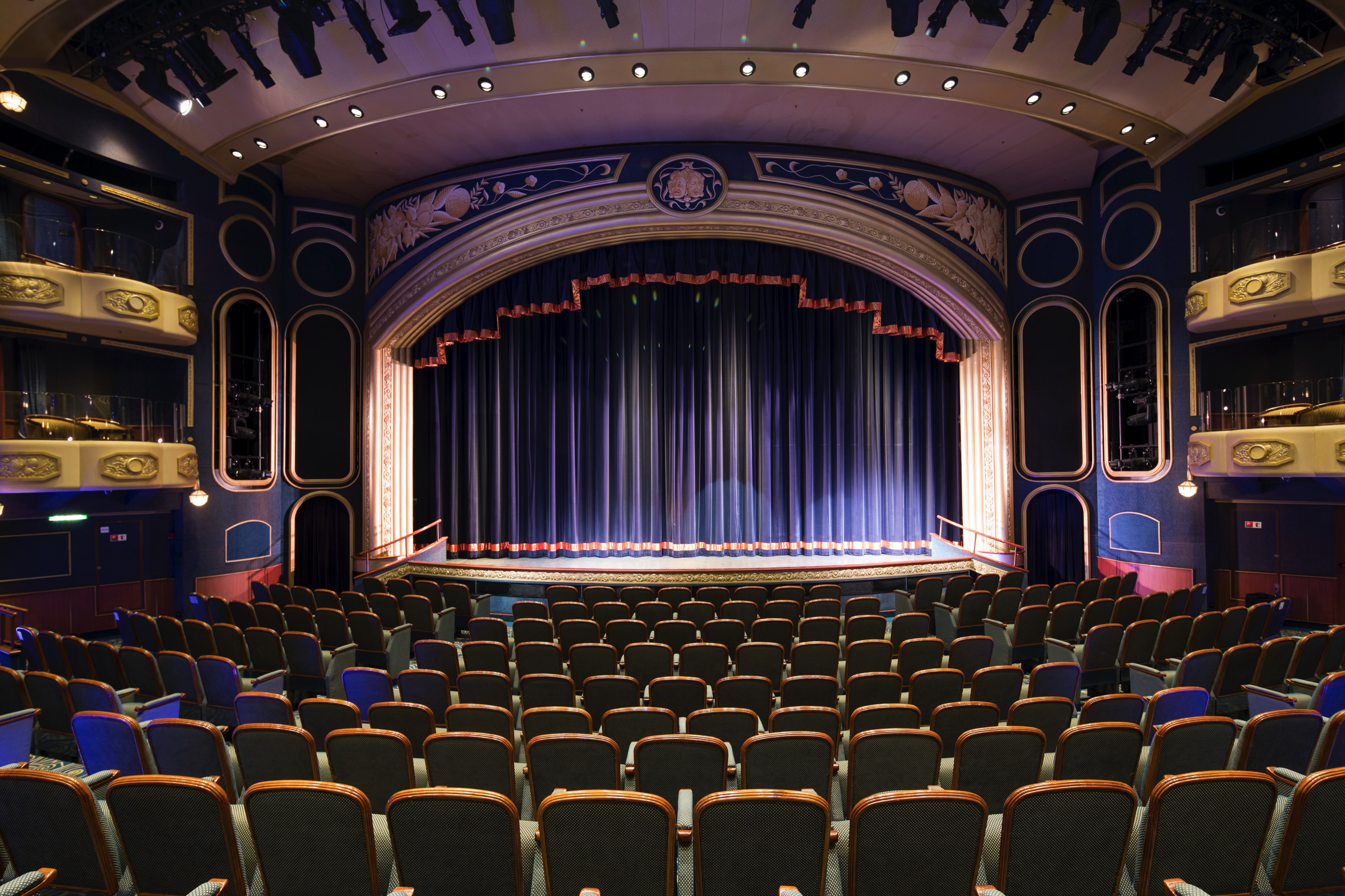
Royal Court Theatre
Enter the Royal Court Theatre and find yourself captivated by the glamorous atmosphere. Akin to fine European theatres, the setting is one of rich red velvets and gold trimming. Boxes are available to hire, should you wish to secure your own private seating area, complete with Laurent-Perrier and petit fours served before the show begins.
This grand venue sets the stage for unforgettable performances that rival the best of the West End. From lavish musical productions to guest speakers and talented musicians, there’s something for everyone to enjoy.
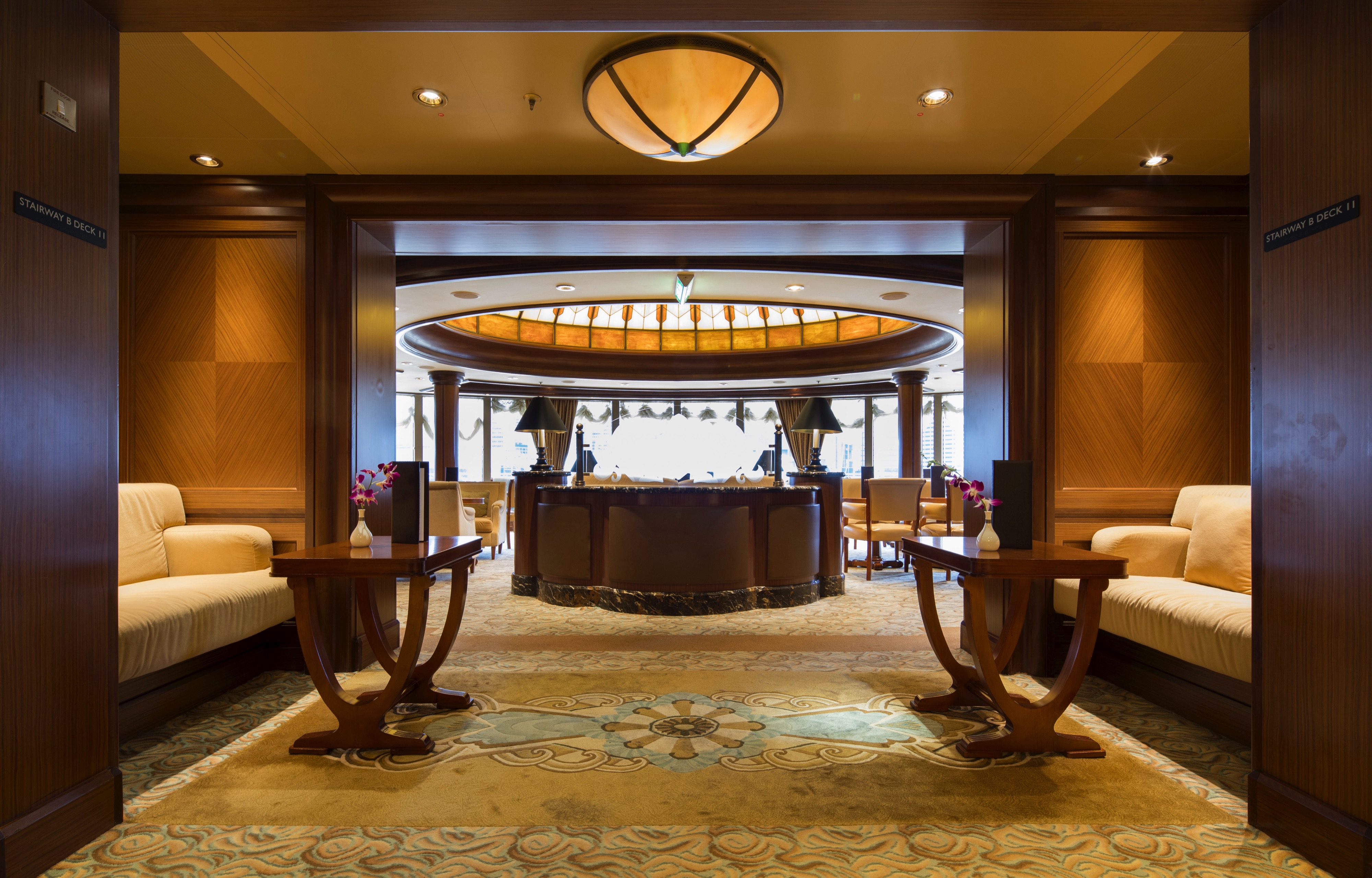
Grills Lounge
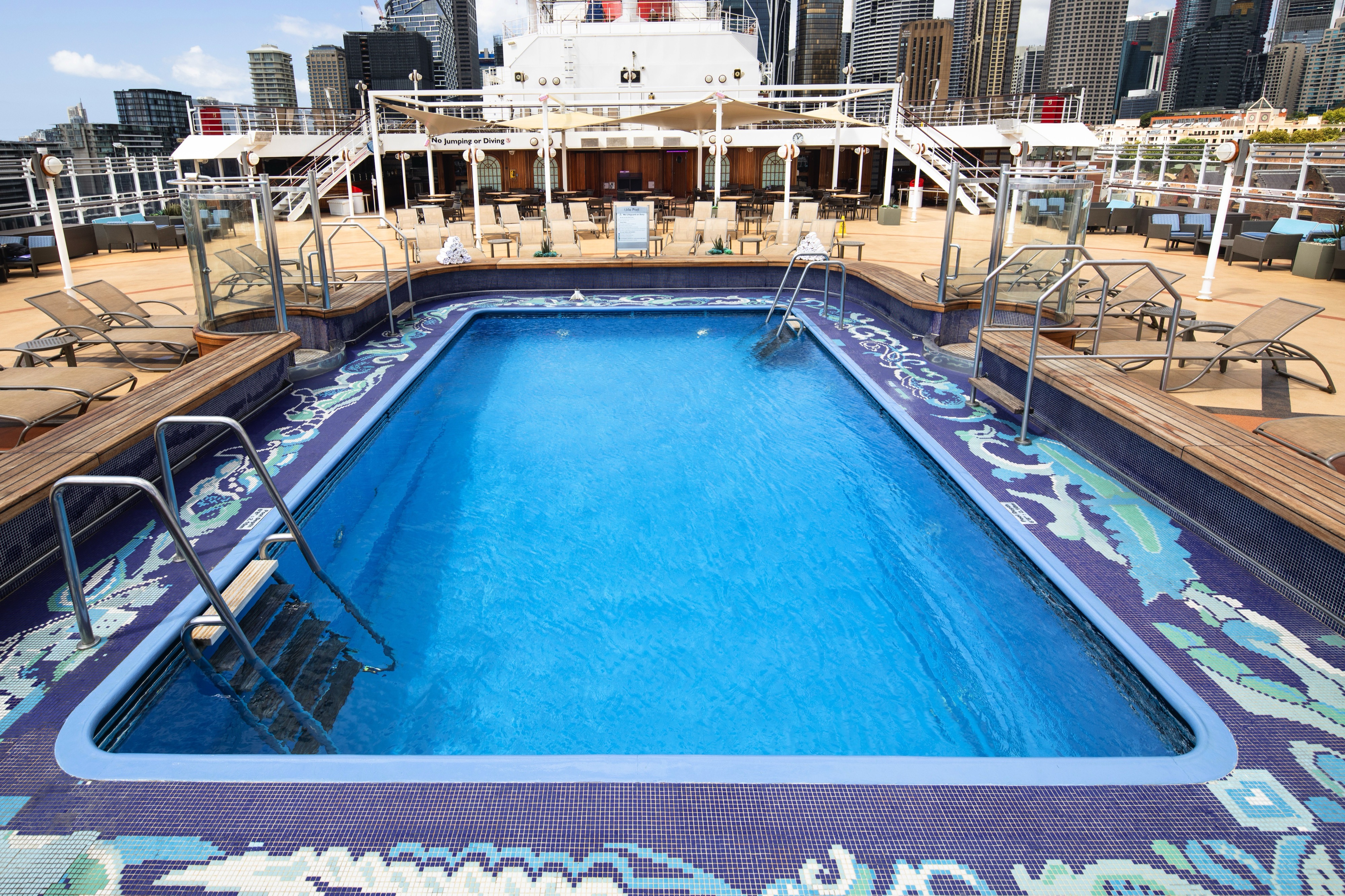
Lido Pool
If you’re looking for a blend of relaxation and recreation, the Lido Deck is a real oasis. Spend time sunbathing on loungers by the pool, taking a dip to escape the heat of the sun whenever you need to. Perhaps get lost in your holiday read, perfectly paired with a cocktail when the mood strikes. The Lido Deck is also home to a bar and grill, so refreshments are never far away.
Games Deck
On deck 11 you’ll find a host of fun activities to try your hand at. Among your choices are bowls, croquet, and deck tennis. You could also practice your swing in the golf nets or feel like part of the action in giant chess! Come along just for fun and to test your skills, or perhaps join a tournament if you’re feeling confident. The Games Deck is a great place to come if you’d like to meet some like-minded new friends.
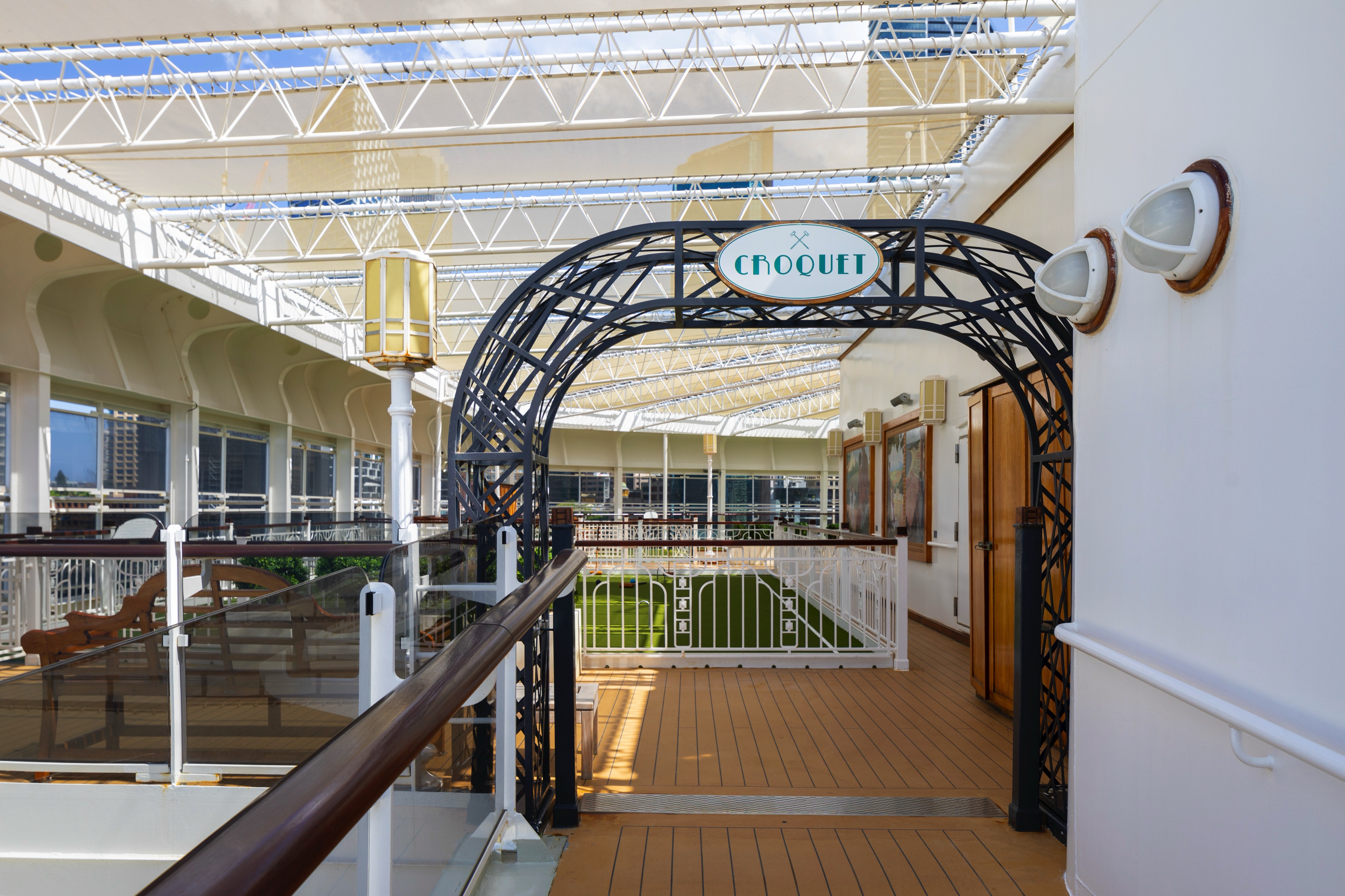
Mareel Spa
Mareel Wellness & Beauty spa is a haven of relaxation. From the calming, neutral colour scheme and the soft, dappled lighting, to the faint aromas of essential oils that escape from treatment rooms, find a tranquil quality here that will appeal to all your senses. Perhaps book a morning or afternoon session for some well-deserved ‘me-time.’ You could simply relax on a lounger and make use of the sauna, steam, and pool, or why not book a treatment? Skilled therapists are on hand to leave you feeling revitalised.
From soothing massages and invigorating facials to rejuvenating body scrubs and holistic healing rituals, you could be pampered from head to toe.
Wellness workshops and seminars
On some voyages, you could expand your knowledge and enhance your wellness journey at engaging workshops and seminars. Led by wellness practitioners with different areas of expertise, glean advice to apply to your life straight away. From nutrition and stress management to mindfulness and holistic healing, informative sessions offer valuable insights and practical tools. Simply check your Daily Programme each evening to find out what seminars are scheduled for the next day.
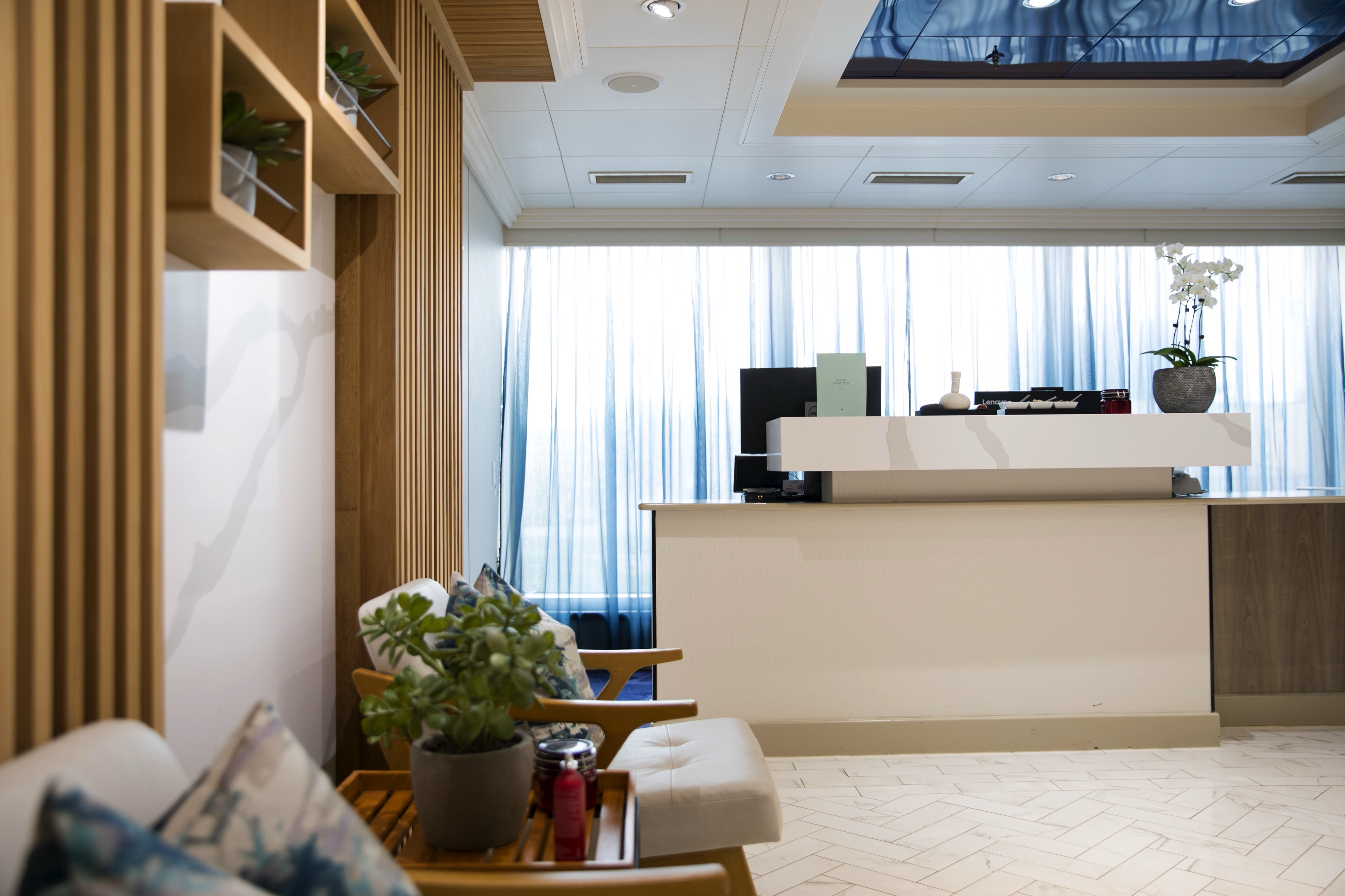
Fitness Centre
Stay active and energised during your voyage with a visit to our state-of-the-art fitness centre, where you’ll find everything you need to maintain your health and wellness routine at sea. Equipped with a range of cardio and strength training equipment, as well as free weights and fitness accessories, the centre offers a variety of options to suit every level and goal.
Fitness classes
You could join a group class, led by certified instructors who will motivate and inspire you to achieve your personal best. From invigorating yoga and Pilates to high-intensity interval training and spinning classes, there’s something for everyone to enjoy. Plus, you could take advantage of personalised fitness assessments and training programmes, designed to help you reach your goals and maximise your results. Classes and personal training sessions are available at an additional cost.
Night Nursery
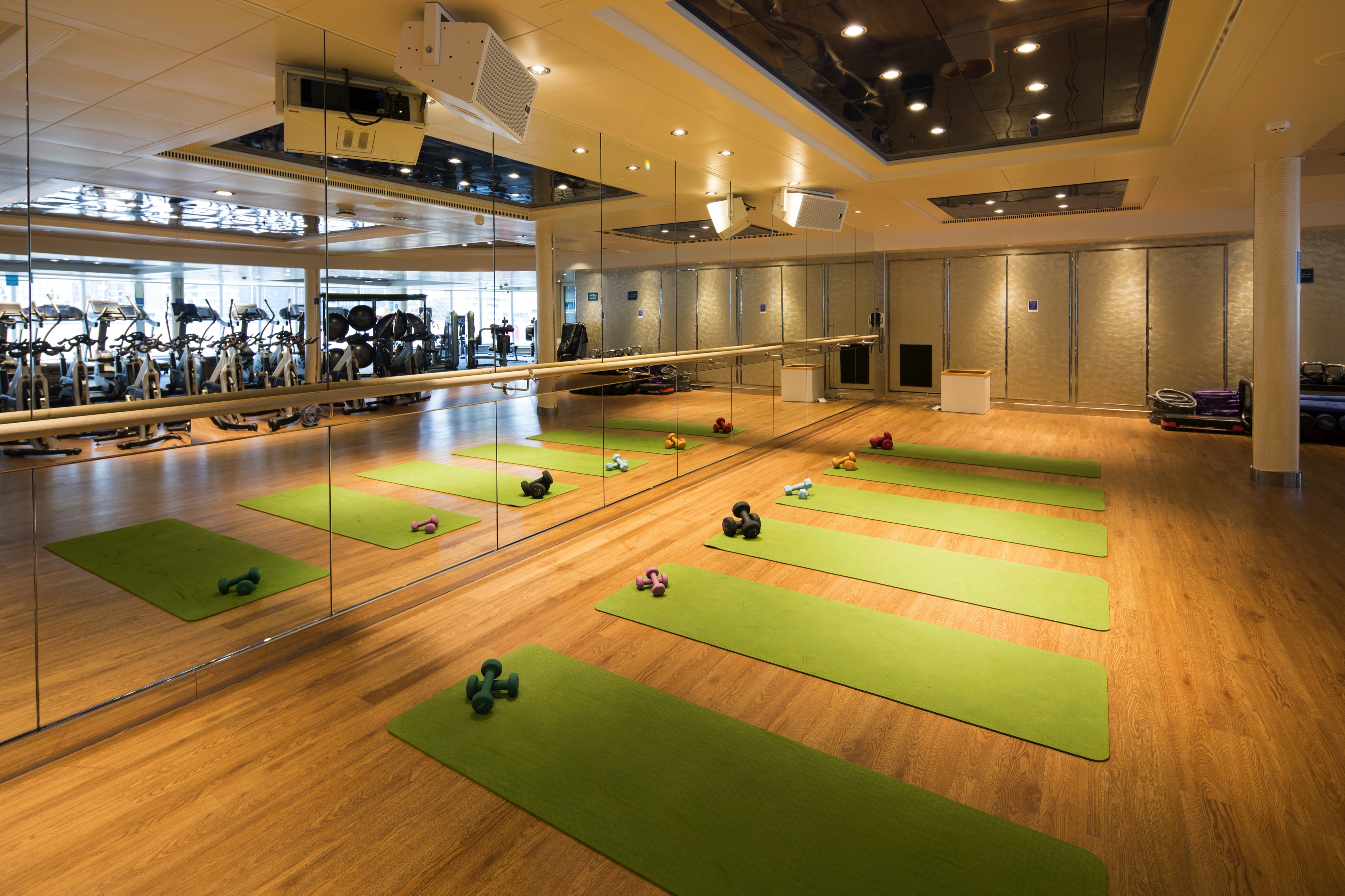
Enjoy your holiday even more, knowing that your little ones have a safe place to sleep each evening.
There’s a great sense of freedom to be had when you can enjoy drinks, dinner or a show knowing that your little ones are sleeping soundly. Available on a first come first served basis, our free of charge Night Nursery equips you with a pager so we can contact you if need be or, if you let us know your plans, we’ll come and find you. For that extra peace of mind professional childminders are on hand. Suitable for children aged 6 to 23 months and open from 6pm to 11pm.
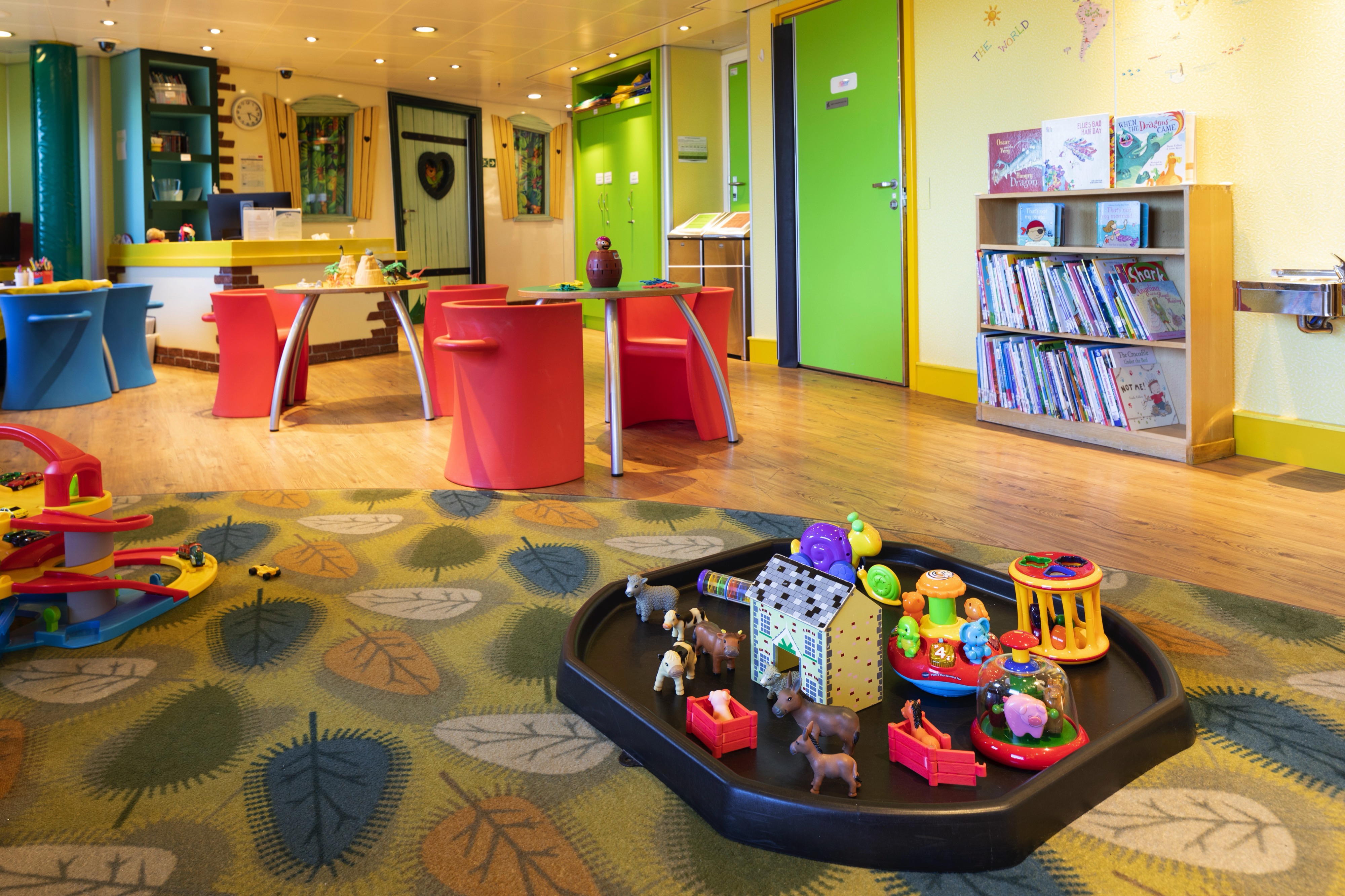
Play Zone
Children aged 2 to 7 will love the activities and themed days in this supervised haven.
The Play Zone is a fully supervised play area which younger members of your family will just love. They’re sure to have a fun-filled holiday with the structured activities provided by our fully trained Youth Team – including themed days, arts and crafts, games, books, puzzles, toys and computer games. There’s even a sheltered outdoor play area with a range of play equipment such as cars and tricycles. Infants from 6 months to 23 months are welcome to join in the fun, with parental supervision.
Access to The Play Zone is included in your fare.
Kids Zone
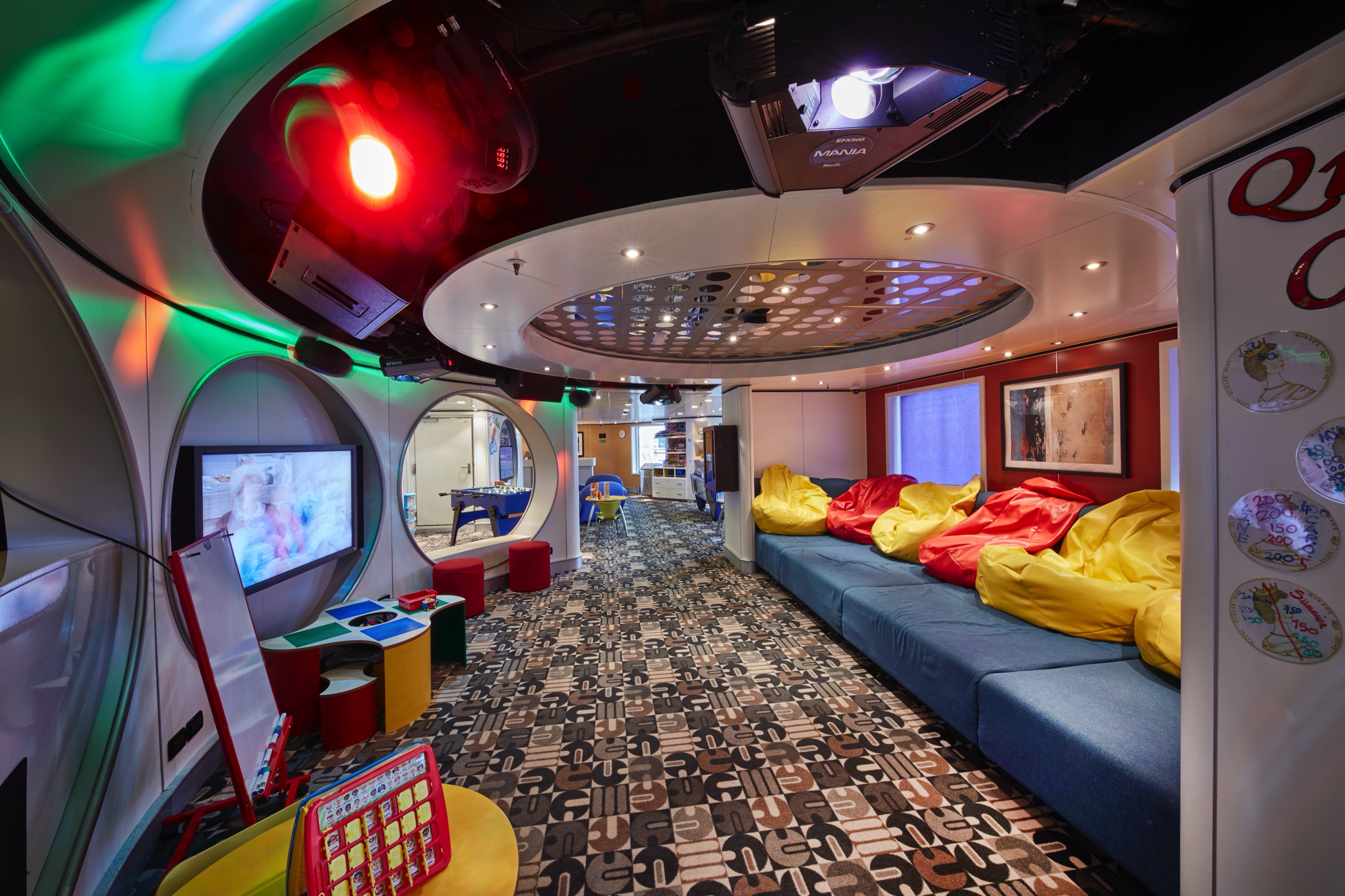
The varied activities running here throughout the day are just the thing for 8 to 12 year olds.
Kids aged 8 to 12 will experience the time of their lives with the games and activities available in this dedicated area. Our Youth Team provides the supervision and organises events so that each action-packed day has something for everyone including sports, arts and crafts, friendly challenges and, of course, games consoles. Note that the exact age groupings will depend on the number of children travelling on any particular voyage.
Access to The Kids’ Zone is included in your fare.
Our ships offer a range of entertainment and activities tailored to children of specific age groups in our children’s clubs on voyages of up to 29 nights. For voyages that sail for 30 nights or longer, including World Voyages, our teams will not be on board to manage the children’s club, however the areas will be open for parents to stay and play with their children, and enjoy the facilities together.
Teen Zone
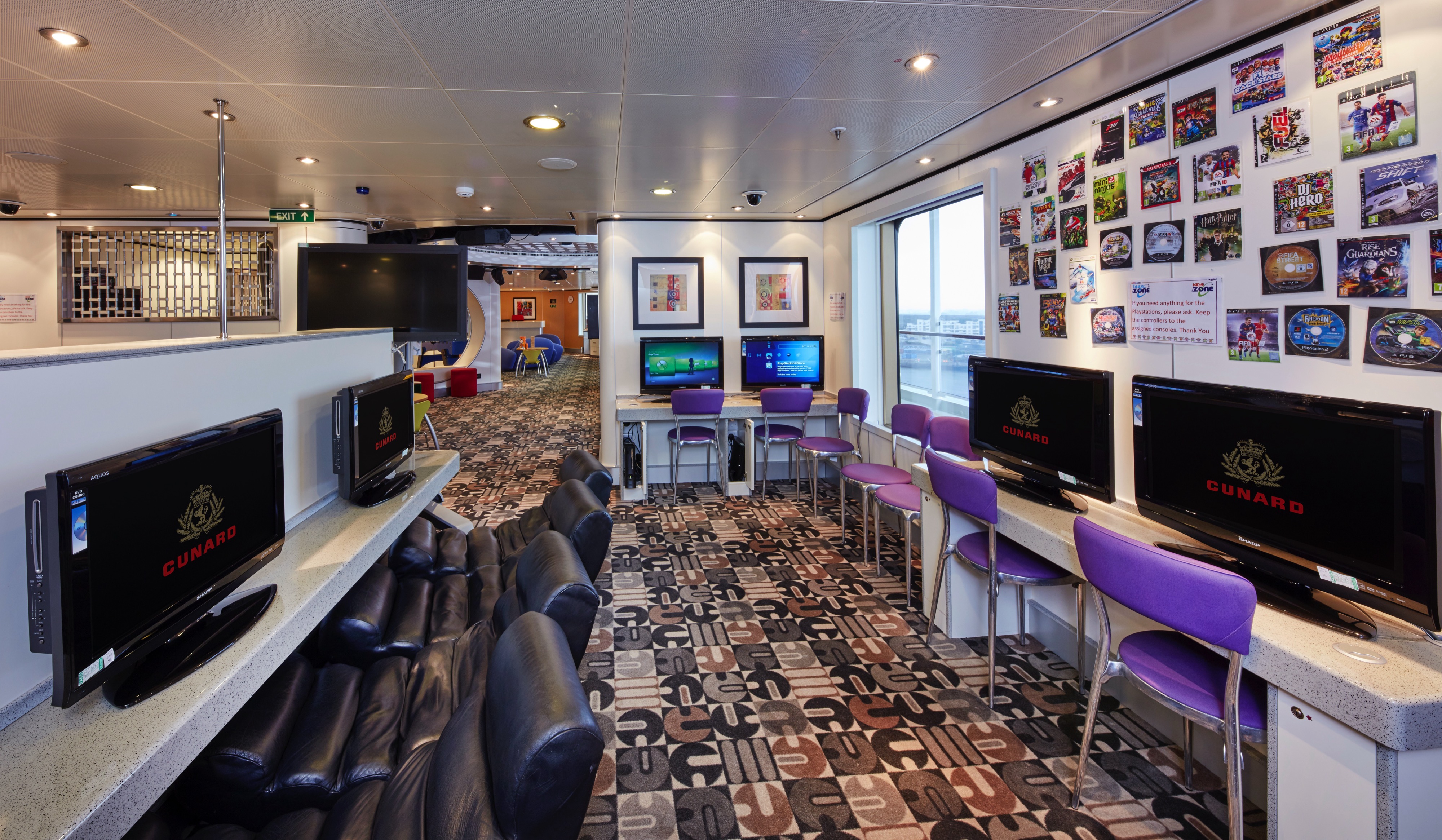
Teenagers 13 to 17 will have a great time with the sports, discos and games we run around the ship.
Teens in your party will have a whale of a time in this dedicated club for 13 to 17 year-olds. They can enjoy deck sports, discos, gaming consoles, quizzes and much more – ensuring an action-packed holiday. They’ll also appreciate the special Teen Zone area where they can challenge each other to the latest video games as well as the table tennis tournaments and team games we organise. Note that the exact age groupings will depend on the number of children travelling on any particular voyage.
Access to The Teen Zone is included in your fare.
Queen's Grill
The pinnacle of fine dining at sea, exclusively for guests staying in our Queens Grill Suites.
Drawing inspiration from the world’s finest kitchens, the Queens Grill restaurant offers a true taste of fine dining on board, elevated by a front of house team for whom nothing is too much trouble.
Open for breakfast, lunch and dinner daily, with a Grills Afternoon Tea served separately in the Grills Lounge, a visit to the Queens Grill always feels like a special occasion.
You’ll be dining among your fellow Queens Grill guests, with a table reserved for your exclusive use throughout your voyage. There’s no need to book. Simply arrive whenever you’re ready and your table will be waiting. You may even choose to take your meal in your suite, should you wish.
Each day introduces a coveted line-up of à la carte dishes, complemented by an ‘always-available’ menu of appetisers, entrees, and desserts, executed with exemplary flair and finesse.
Alternatively, opt for one of our chef’s speciality sharing dishes (orderable in advance at breakfast or lunchtimes). From beef wellington to rack of lamb, the choice is truly indulgent. Each dish (along with select offerings on our menu) is finished and presented to you table-side, only heightening the sense of theatre that’s a signature of Queens Grill dining.
Dining at the Queens Grill restaurant is exclusive to Queens Grill guests and included within your Cunard fare. The restaurant operates relaxed dress by day and smart attire (jacket optional) for dinner service after 6.00pm, except on Gala Evenings when we invite you to dress in black tie.
Princess Grill
Imaginative cooking and flawless service create a dining experience fit for royalty.
For the exclusive use of guests in our Princess Grill Suites, this exquisite restaurant offers à la carte dining at an elevated level.
With a dining room to rival the world’s most luxurious hotels and a menu that showcases classical flavour pairings, creatively reimagined, the Princess Grill restaurant is among the most prestigious of our on board dining experiences. Discreet but attentive service and a raft of personal touches make every meal special.
You’ll find a comprehensive selection of continental and cooked dishes ready to rouse you each morning, whilst lunchtimes introduce a delicious four course menu alongside lighter options.
Evenings are a particularly grand affair, with the theatre of tableside serving inspiring a greater sense of occasion. Your table for dinner is reserved throughout your voyage, with no need to book; simply take your seat whenever you wish, between 6.30pm and 9.00pm.
Dining at the Princess Grill restaurant is included in your fare if you’re staying in one of our Princess Grill Suites. Relaxed dress is welcomed at breakfast and lunch, and smart attire (jacket optional) after 6.00pm, except on Gala Evenings when we invite you to dress in black tie.
Britannia Restaurant
As the flagship dining venue on Queen Elizabeth, the Britannia Restaurant is an Art Deco-style space that invites you to dine happily among friends new and old. Step into a grand dining hall adorned with sparkling chandeliers and polished wood accents, and be surrounded by expertly set tables dressed in white linen.
Choose from a menu carefully curated to tantalise even the most discerning of palates. From succulent seafood to perfectly grilled steaks, each dish is a masterpiece of culinary craftsmanship. And, with White Star Service, you’ll find that every occasion here becomes an unforgettable dining experience sure to leave you with new, fond memories.
Britannia Club restaurant
An intimate and exclusive dining venue for Britannia Club guests.
If you’re staying in a Britannia Club Balcony stateroom, you’ll have the option to take breakfast, lunch, and dinner in this restaurant which is reserved exclusively for Britannia Club guests.
A beautifully designed art deco theme creates an atmosphere that is both classic and contemporary. Generously sized windows allow you to enjoy sea views while you dine.
White-gloved waiting staff add to the sense of occasion, as does the cooking. A classically inspired, flawlessly executed à la carte menu is the centrepiece, or you can choose from the five course Britannia Restaurant menu. Both menus change daily.
In the evening, you’ll be free to dine at any time between 6.30pm and 9.00pm, with a table reserved for you throughout your voyage. During the day, casual dress is welcomed, with smart attire (jacket optional) after 6.00pm, except on Gala Evenings when we invite you to dress in black tie.
If you are staying in a Britannia Club Balcony stateroom, dining at the Britannia Club Restaurant is included in your fare, with the option to indulge in some premium dishes available for an additional cost at dinner. There is no need to book.
Lido Restaurant
When it comes to casual dining with a touch of sophistication, the Lido reigns supreme. This vibrant eatery offers a tempting range of culinary delights, from gourmet burgers to freshly prepared salads and everything in between.
Whether you’re craving a quick bite or a leisurely meal, the Lido has something for everyone. Help yourself to as much or as little as you like, whether you need a generous helping of pasta after a busy day exploring in port, or perhaps you only fancy a little something. With sweeping views of the ocean and a relaxed atmosphere, dining here is a true pleasure for the senses.
The Garden Lounge
Escape to the Garden Lounge and find yourself in something of an oasis. Reminiscent of Mediterranean olive groves and the conservatories of Kew Gardens, the Garden Lounge is a beautiful and serene place to spend an hour or two. With comfortable wicker furniture, plenty of greenery, and views out to sea, you’ll easily find a spot in which to enjoy a drink or two.
You could choose a beer or a refreshing cocktail, or perhaps a tea or coffee is in order. Open throughout the day and into the evening, the Garden Lounge offers a place to get lost in a book, play some card games, or take in some live music courtesy of resident musicians.
Queens Room
Many consider the Queens Room to be the heart of any Cunard ship, where live music and dancing reign supreme. With its gleaming dance floor and stylish feel, this iconic venue is the perfect setting for an evening of romance and revelry.
Whether you’re a seasoned dancer or a novice, the Queens Room offers a variety of dance sessions to suit every taste. From the sultry rhythms of the tango to the graceful steps of the waltz, there’s no shortage of opportunities to take to the floor and dance either at a daytime workshop or in the evening, beneath the glow of the glittering chandeliers.
Empire Casino
The goings on at the Casino always provide a vibrant evening full of fun and excitement. Whether you feel like a little flutter yourself, or you’d simply like to order a drink or two and watch the peaks and dips of others’ luck, a night spent at the Casino is filled with sparkle.
Games here include Blackjack, Poker, Roulette, and slot machines. If you’re not sure how to play, why not pop along to one of the workshops to find out how? Expert croupiers can teach you their know-how, so you can place your own bets later on.
The Commodore Club
For those seeking a more intimate evening of entertainment, look no further than the Commodore Club. Perched high above the sea with panoramic views of the ocean, this elegant lounge offers the perfect setting to unwind and relax in style.
Sip on a handcrafted cocktail expertly prepared by skilled mixologists as you enjoy live piano music or engage in lively conversation with fellow guests. With plush seating and a warm ambience, the Commodore Club is the ideal spot to sip, savour, and soak in the breathtaking views.
The Golden Lion Pub
Step into the cozy confines of the Golden Lion and experience the warmth and camaraderie of a traditional British pub. With its welcoming atmosphere and friendly bartenders, this beloved venue offers a taste of home away from home.
Enjoy live music as you sample a selection of classic pub fare, from hearty fish and chips to savoury pies and a good old-fashioned Ploughman’s. You could choose a signature Cunard ale, or perhaps a glass of wine, or your favourite short. With a full bar menu available, there’s something to suit all tastes. So come along for live sports, pub quizzes, or karaoke, or maybe just to raise a glass and toast to good times.
Royal Court Theatre
Enter the Royal Court Theatre and find yourself captivated by the glamorous atmosphere. Akin to fine European theatres, the setting is one of rich red velvets and gold trimming. Boxes are available to hire, should you wish to secure your own private seating area, complete with Laurent-Perrier and petit fours served before the show begins.
This grand venue sets the stage for unforgettable performances that rival the best of the West End. From lavish musical productions to guest speakers and talented musicians, there’s something for everyone to enjoy.
Grills Lounge
Lido Pool
If you’re looking for a blend of relaxation and recreation, the Lido Deck is a real oasis. Spend time sunbathing on loungers by the pool, taking a dip to escape the heat of the sun whenever you need to. Perhaps get lost in your holiday read, perfectly paired with a cocktail when the mood strikes. The Lido Deck is also home to a bar and grill, so refreshments are never far away.
Games Deck
On deck 11 you’ll find a host of fun activities to try your hand at. Among your choices are bowls, croquet, and deck tennis. You could also practice your swing in the golf nets or feel like part of the action in giant chess! Come along just for fun and to test your skills, or perhaps join a tournament if you’re feeling confident. The Games Deck is a great place to come if you’d like to meet some like-minded new friends.
Mareel Spa
Mareel Wellness & Beauty spa is a haven of relaxation. From the calming, neutral colour scheme and the soft, dappled lighting, to the faint aromas of essential oils that escape from treatment rooms, find a tranquil quality here that will appeal to all your senses. Perhaps book a morning or afternoon session for some well-deserved ‘me-time.’ You could simply relax on a lounger and make use of the sauna, steam, and pool, or why not book a treatment? Skilled therapists are on hand to leave you feeling revitalised.
From soothing massages and invigorating facials to rejuvenating body scrubs and holistic healing rituals, you could be pampered from head to toe.
Wellness workshops and seminars
On some voyages, you could expand your knowledge and enhance your wellness journey at engaging workshops and seminars. Led by wellness practitioners with different areas of expertise, glean advice to apply to your life straight away. From nutrition and stress management to mindfulness and holistic healing, informative sessions offer valuable insights and practical tools. Simply check your Daily Programme each evening to find out what seminars are scheduled for the next day.
Fitness Centre
Stay active and energised during your voyage with a visit to our state-of-the-art fitness centre, where you’ll find everything you need to maintain your health and wellness routine at sea. Equipped with a range of cardio and strength training equipment, as well as free weights and fitness accessories, the centre offers a variety of options to suit every level and goal.
Fitness classes
You could join a group class, led by certified instructors who will motivate and inspire you to achieve your personal best. From invigorating yoga and Pilates to high-intensity interval training and spinning classes, there’s something for everyone to enjoy. Plus, you could take advantage of personalised fitness assessments and training programmes, designed to help you reach your goals and maximise your results. Classes and personal training sessions are available at an additional cost.
Night Nursery
Enjoy your holiday even more, knowing that your little ones have a safe place to sleep each evening.
There’s a great sense of freedom to be had when you can enjoy drinks, dinner or a show knowing that your little ones are sleeping soundly. Available on a first come first served basis, our free of charge Night Nursery equips you with a pager so we can contact you if need be or, if you let us know your plans, we’ll come and find you. For that extra peace of mind professional childminders are on hand. Suitable for children aged 6 to 23 months and open from 6pm to 11pm.
Play Zone
Children aged 2 to 7 will love the activities and themed days in this supervised haven.
The Play Zone is a fully supervised play area which younger members of your family will just love. They’re sure to have a fun-filled holiday with the structured activities provided by our fully trained Youth Team – including themed days, arts and crafts, games, books, puzzles, toys and computer games. There’s even a sheltered outdoor play area with a range of play equipment such as cars and tricycles. Infants from 6 months to 23 months are welcome to join in the fun, with parental supervision.
Access to The Play Zone is included in your fare.
Kids Zone
The varied activities running here throughout the day are just the thing for 8 to 12 year olds.
Kids aged 8 to 12 will experience the time of their lives with the games and activities available in this dedicated area. Our Youth Team provides the supervision and organises events so that each action-packed day has something for everyone including sports, arts and crafts, friendly challenges and, of course, games consoles. Note that the exact age groupings will depend on the number of children travelling on any particular voyage.
Access to The Kids’ Zone is included in your fare.
Our ships offer a range of entertainment and activities tailored to children of specific age groups in our children’s clubs on voyages of up to 29 nights. For voyages that sail for 30 nights or longer, including World Voyages, our teams will not be on board to manage the children’s club, however the areas will be open for parents to stay and play with their children, and enjoy the facilities together.
Teen Zone
Teenagers 13 to 17 will have a great time with the sports, discos and games we run around the ship.
Teens in your party will have a whale of a time in this dedicated club for 13 to 17 year-olds. They can enjoy deck sports, discos, gaming consoles, quizzes and much more – ensuring an action-packed holiday. They’ll also appreciate the special Teen Zone area where they can challenge each other to the latest video games as well as the table tennis tournaments and team games we organise. Note that the exact age groupings will depend on the number of children travelling on any particular voyage.
Access to The Teen Zone is included in your fare.
About the Ship
Deck Plans

- Royal Court Theatre
- Grand Lobby
- Voyage Sales Office
- Tour Office
- Pursers Office
- Oceanview Staterooms
- Inside Staterooms
- Connexions

- Royal Court Theatre
- Empire Casino
- The Golden Lion Bar
- Queen’s Room
- Queen’s Arcade
- Cunard Place
- Library
- Cafe Carinthia
- The Verandah Restaurant
- Grand Lobby
- Britannia Restaurant
- Britannia Club Restaurant
- Single Staterooms (Oceanview & Inside)

- Royal Court Theatre (Upper)
- Shops
- Royal Arcade
- Art Gallery
- Connexions
- Photo Gallery and Studio
- Library (Upper)
- The Alcove
- Grand Lobby
- Midship’s Bar
- Card Room
- Promenade Deck
- Britannia Restaurant

- Penthouses
- Queens Suites
- Princess Suites
- Balcony Staterooms
- Oceanview Staterooms
- Inside Stateroom

- Penthouses
- Queen Suites
- Princess Suites
- Inside Staterooms

- Grand Suites
- Penthouses
- Princess Suites
- Balcony Staterooms
- Deluxe Inside Cabins

- Penthouses
- Queens Suites
- Princess Suites
- Balcony Staterooms
- Club Balcony Staterooms
- Inside Staterooms

- Grand Suites
- Master Suites
- Princess Suites
- Queens Suites
- Penthouses
- Inside Staterooms
- Balcony Staterooms

- Royal Spa & Fitness Centre
- Aerobic Area
- Hair Salon
- Spa Reception
- Thermal Suites
- Pavilion Bar
- Hydropool
- Pavilion Pool
- The Garden Lounge
- Lido Restaurant
- Lido Grill
- Lido Bar
- Lido Pool
- Stage
- Whirlpools

- Commodore Club
- Royal Spa Treatment Rooms
- Bar
- Admiral’s Lounge
- Churchill’s Cigar Lounge
- Yacht Club
- Children’s Outdoor Area
- Teen’s Outdoor Area
- The Playzone
- The Zone

- Games Deck
- Grills Terrace
- Grills Lounge
- The Courtyard
- Queen’s Grill
- Princess Grill

- Upper Grill Terrace Area
- Royal Court Theatre
- Grand Lobby
- Voyage Sales Office
- Tour Office
- Pursers Office
- Oceanview Staterooms
- Inside Staterooms
- Connexions
- Royal Court Theatre
- Empire Casino
- The Golden Lion Bar
- Queen’s Room
- Queen’s Arcade
- Cunard Place
- Library
- Cafe Carinthia
- The Verandah Restaurant
- Grand Lobby
- Britannia Restaurant
- Britannia Club Restaurant
- Single Staterooms (Oceanview & Inside)
- Royal Court Theatre (Upper)
- Shops
- Royal Arcade
- Art Gallery
- Connexions
- Photo Gallery and Studio
- Library (Upper)
- The Alcove
- Grand Lobby
- Midship’s Bar
- Card Room
- Promenade Deck
- Britannia Restaurant
- Penthouses
- Queens Suites
- Princess Suites
- Balcony Staterooms
- Oceanview Staterooms
- Inside Stateroom
- Penthouses
- Queen Suites
- Princess Suites
- Inside Staterooms
- Grand Suites
- Penthouses
- Princess Suites
- Balcony Staterooms
- Deluxe Inside Cabins
- Penthouses
- Queens Suites
- Princess Suites
- Balcony Staterooms
- Club Balcony Staterooms
- Inside Staterooms
- Grand Suites
- Master Suites
- Princess Suites
- Queens Suites
- Penthouses
- Inside Staterooms
- Balcony Staterooms
- Royal Spa & Fitness Centre
- Aerobic Area
- Hair Salon
- Spa Reception
- Thermal Suites
- Pavilion Bar
- Hydropool
- Pavilion Pool
- The Garden Lounge
- Lido Restaurant
- Lido Grill
- Lido Bar
- Lido Pool
- Stage
- Whirlpools
- Commodore Club
- Royal Spa Treatment Rooms
- Bar
- Admiral’s Lounge
- Churchill’s Cigar Lounge
- Yacht Club
- Children’s Outdoor Area
- Teen’s Outdoor Area
- The Playzone
- The Zone
- Games Deck
- Grills Terrace
- Grills Lounge
- The Courtyard
- Queen’s Grill
- Princess Grill
- Upper Grill Terrace Area